















No products in the cart.

Shop this story
Loop Quiet 2 or Sony WH-1000XM5 for remote-work sensory overload?
by Elizabeth H
Working from home can make your own space feel unpredictable. That’s why loop quiet 2 vs Sony WH-1000XM5 isn’t a simple shopping question for remote work strugglers, it’s a decision about how much friction your brain can absorb before focus starts to slip.
The hard part is that sensory overload doesn’t show up in one clean form. Sometimes it’s the low hum that never stops. Sometimes it’s the small interruptions that keep pulling your attention back to the room you’re trying to ignore. A device can make things quieter and still make your day harder if it clashes with the way you work, move, and recover between tasks.
Noise-reduction mechanism: Low-frequency ANC vs passive seals
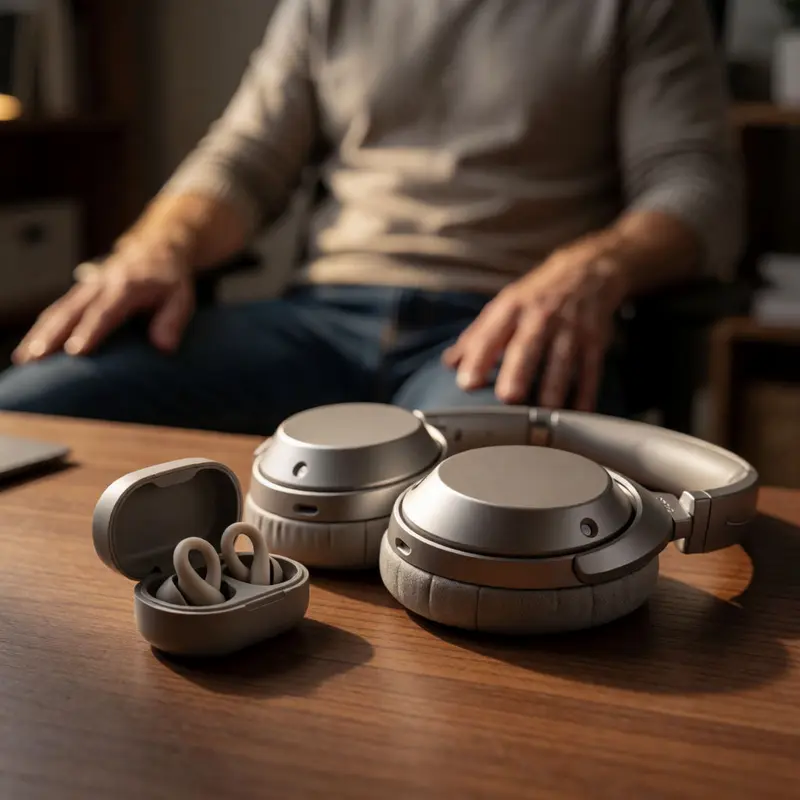
Remote workers trying to find quiet at home are dealing with two fundamentally different machines. The Loop Quiet 2 is a passive earplug: a soft-touch silicone insert that physically blocks the ear canal and, according to Loop’s certified testing, attenuates sound by up to 24 dB (SNR). The Sony WH-1000XM5 is an active noise-cancelling over-ear headphone that uses onboard microphones to capture ambient sound, generate a phase-inverted signal, and cancel that noise at the driver before it reaches your ear. One blocks sound; the other counters it.
That distinction matters because the two approaches don’t cover the same frequencies equally well. Passive attenuation, which is what the Loop Quiet 2 delivers, tends to work best at mid-range and high frequencies. SoundGuys’ lab measurements of the Quiet 2 Plus show high-frequency reductions reaching up to 37 dB, while low-frequency reduction landed around 11 dB. That gap is real: lower-pitched ambient sounds, the rumble of an HVAC system, a neighbor’s bass-heavy music, get through a passive seal more easily than conversation does.
This is where ANC earns its keep. It works through destructive interference instead of physical blocking, so it can target the bass range that passive isolation struggles with. The Sony’s ANC reduced ambient noise by up to 84% in SoundGuys’ testing, and The Verge’s lab work called out the XM5 for offering both strong passive attenuation and very good ANC on top of it. ANC also doesn’t improve attenuation at upper-mid and treble frequencies relative to a good passive seal, so the Sony’s advantage is concentrated at the low end where the Loop falls shortest. And the XM5’s ANC, while genuinely strong, trails the performance of Sony’s own newer XM6, which is a useful baseline if you’re treating the XM5 as a current benchmark.
If you’re weighing loop quiet 2 vs Sony WH-1000XM5 for a loud home office, start with the frequency profile of the noise, because that’s the first question to settle, ahead of price or brand.
Speech and communication: No mic vs beamforming calls
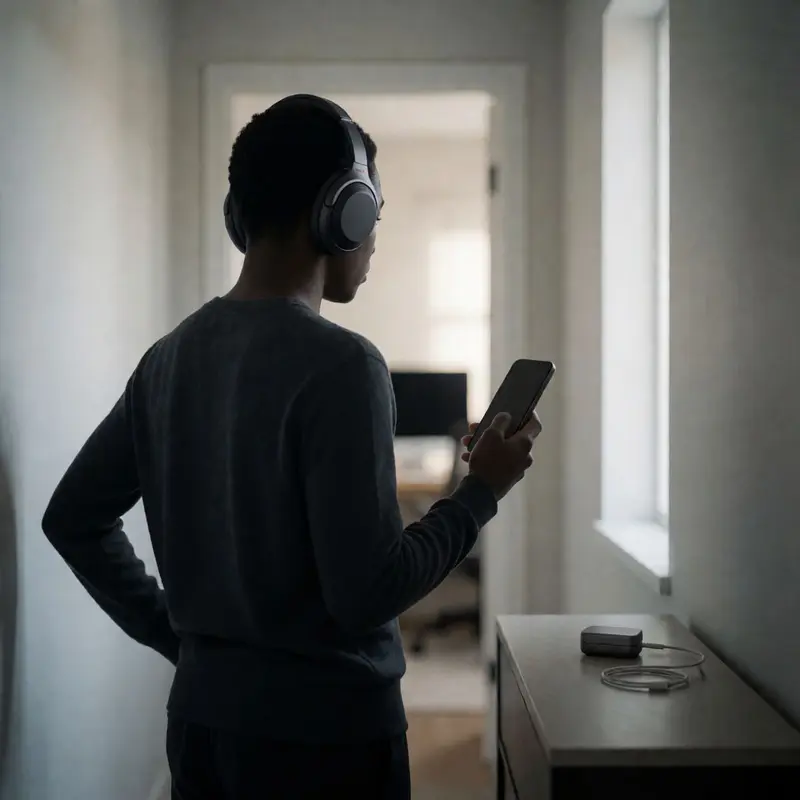
The biggest difference in loop quiet 2 vs Sony WH-1000XM5 has nothing to do with noise cancellation depth or frequency response. The Loop Quiet 2 has no microphone. Full stop. It is a passive silicone earplug rated to attenuate up to 24 dB SNR, and Loop positions it explicitly for sleep and concentration, not communication. You cannot join a call with it as your only audio device and expect your voice to reach anyone on the other end. If your work involves meetings, and for most people it does, the Quiet 2 simply doesn’t compete in this category.
The Sony WH-1000XM5 was built for calls from the start. Sony uses multiple beamforming microphones arranged to focus on your voice and reject the surrounding sound, combined with AI-based noise reduction that targets both ambient sound and wind noise specifically. The Verge noted a meaningful improvement over the previous generation in noisy outdoor and nearby-voice scenarios, crediting updated microphone placement and more refined processing algorithms. In practice, that mix means your voice reaches the other end of a video call more cleanly than it would through a generic headset, and the call quality is genuinely strong, though reviewers note it isn’t perfect in every challenging acoustic scenario, with occasional processing artifacts surfacing under unusually dense noise conditions.
For day-long meeting schedules, battery life matters as much as microphone quality. The XM5 ran for just under 32 hours in active noise cancellation mode during independent testing, which covers two full workdays of calls before you need a charge.
So the real dividing line is usability in actual work. If your remote setup includes back-to-back video calls, the Quiet 2 is not a viable primary device, and pairing it with a separate microphone adds friction that defeats its convenience. The XM5 works as a complete communication tool: you wear it, join the call, and your voice is handled. Whether that communication performance justifies the price difference depends on how much of your day actually lives in meetings, which is a usage question only you can answer honestly.
Sensory overload management: Predictability vs 30 dB adaptivity

Sensory overload has a clinical definition worth taking seriously: the state in which incoming stimuli exceed your ability to selectively filter them, leaving your brain unable to distinguish signal from noise. That filtering burden doesn’t disappear when you sit down to focus work. It compounds, because focused cognition requires you to actively suppress irrelevant input at the same moment you’re trying to hold a complex thought.
In the loop quiet 2 vs Sony WH-1000XM5 comparison, the two products operate on genuinely different principles, and that difference has real consequences for how much cognitive overhead you spend managing your sound environment.
Loop Quiet 2 earplugs are passive: silicone tips create a physical seal, rated at up to 24 dB SNR. What that number means for focus work is consistency. The attenuation is fixed, mechanical, and indifferent to your environment. You insert them, and the acoustic world becomes uniformly quieter, with no software layer deciding how quiet. That predictability matters more than it sounds. When occlusion is stable, your brain stops monitoring the boundary between inside and outside. It accepts the new baseline and gets on with the work.
The Sony WH-1000XM5 delivers measured noise reduction around 30 dB across the frequencies where most ambient noise lives, which is a meaningfully larger reduction on paper. Its eight-microphone array samples the environment actively, and the ANC algorithm responds in real time. Sony also lets you run noise cancellation without any audio playing at all, which makes it a genuine silence tool rather than just a listening device. The ceiling is higher. But the XM5’s Auto NC Optimizer continuously adjusts cancellation based on environment and wearing conditions, so the degree of occlusion you experience can shift as you move through a workday, from desk to kitchen to outside. For some people that adaptability is useful; for anyone whose focus depends on a predictable sensory baseline, that variability introduces a small but real cognitive tax each time the sound floor shifts beneath them.
With earplugs, fixed attenuation gives your brain one less variable to keep checking while you work.
Comfort for long sessions: Where discomfort starts

At 250 grams, the Sony WH-1000XM5 sits squarely in the middle of the over-ear headphone weight range. That sounds unremarkable until hour four of a call-heavy day. Distributed across a headband pressing against your skull and two ear cups sealing against the sides of your head, that weight adds up in ways a spec sheet doesn’t capture. Multiple reviewers, including The Verge and TechRadar, note that Sony’s redesigned structure improves on its predecessor for extended wear, and the softer clamping force that came with the new form shows up consistently in long-session assessments.
Heat gets less attention in those assessments than it should. Over-ear headphones create a sealed environment around each ear, and after a couple of hours that space warms up. The WH-1000XM5 has no water or sweat resistance, which means warm-environment users, or anyone who runs hot at a desk, is working with a comfort ceiling the headphones themselves can’t raise. That’s a real constraint, and it’s worth naming honestly before you commit to wearing them for a 30-hour battery cycle.
The Loop Quiet 2 sidesteps the heat problem entirely because there’s no cup, no pocket of warm air, and no clamping force across your head. The silicone tips sit in the ear canal rather than around it, and Loop offers multiple tip sizes to reduce pressure for smaller ears and longer sessions. The company frames this as a “pressure-free fit” designed for extended wear, and the logic of the design supports that framing. What’s harder to verify independently is how well it holds up on the specific pressure-point and heat-buildup measures that matter most, since the comfort case rests largely on Loop’s own descriptions rather than third-party lab data.
In the loop quiet 2 vs Sony WH-1000XM5 comparison, the deciding factor is where your discomfort starts. Weight and clamping point to the earplug on physics alone. Ear canal pressure from an in-ear fit that never quite settles makes the over-ear headphone’s spacious cup an advantage. Comfort here is personal and highly specific, which is a more honest takeaway than most comfort sections offer.
Workflow control comes down to automation vs simplicity
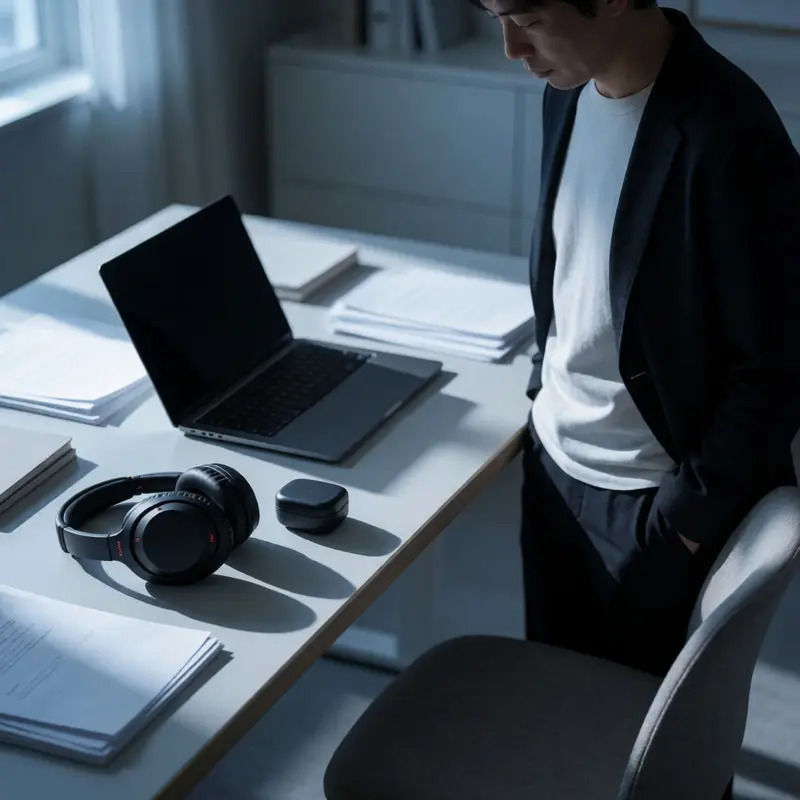
The difference between these two devices on workflow control is stark. Loop Quiet 2 has one mode: in or out. Sony’s XM5 sits inside a small software ecosystem built on the idea that your listening environment keeps changing, and your headphones should change with it.
That simplicity in the Quiet 2 is genuinely useful for a specific kind of worker. There’s no app to open, no firmware to update, no settings that drift back to defaults after a factory reset. SoundGuys confirmed the Quiet 2 is entirely passive, with no electronics or software layer at all, which means its 72.8% average noise reduction is delivered through physical attenuation alone. Insertion and removal are the only controls. If your sessions are long, uninterrupted blocks of focus where you never need to modulate what you’re hearing, that frictionlessness becomes a real advantage.
The XM5 starts from the opposite premise. Sony’s Headphones Connect app gives you a five-band equalizer with saveable custom presets, Adaptive Sound Control profiles that can switch automatically based on detected activity or learned locations, and multipoint Bluetooth for two simultaneous device connections. The Quick Attention gesture, covering the right ear cup briefly, temporarily floods in ambient sound without breaking your ANC session. Speak-to-Chat goes further: the headphones detect when you start talking and automatically pause playback while opening up ambient sound, so a quick exchange with a housemate requires no manual switching at all. Those features only deliver real value, though, if you spend the time to configure them correctly upfront, and not every user finds that investment intuitive.
For anyone managing a workday that shifts between deep focus, video calls, and incidental hallway conversations, the XM5’s workflow advantages matter more than the Quiet 2’s 24 dB SNR ceiling. The Quiet 2 leaves the environmental management to you. The XM5 handles some of that work itself, and mostly succeeds.
With loop quiet 2 vs Sony WH-1000XM5, the real split is how much control you want to do yourself. Put the Quiet 2 in and the world goes quiet. Or pick up the XM5, cover the right cup for two seconds, and let a colleague’s question reach you clearly before the noise floor drops again. Both are real workflows, built for people who move through a typical workday in very different ways.
Decision matrix: Linear focus blocks or interrupt-heavy days
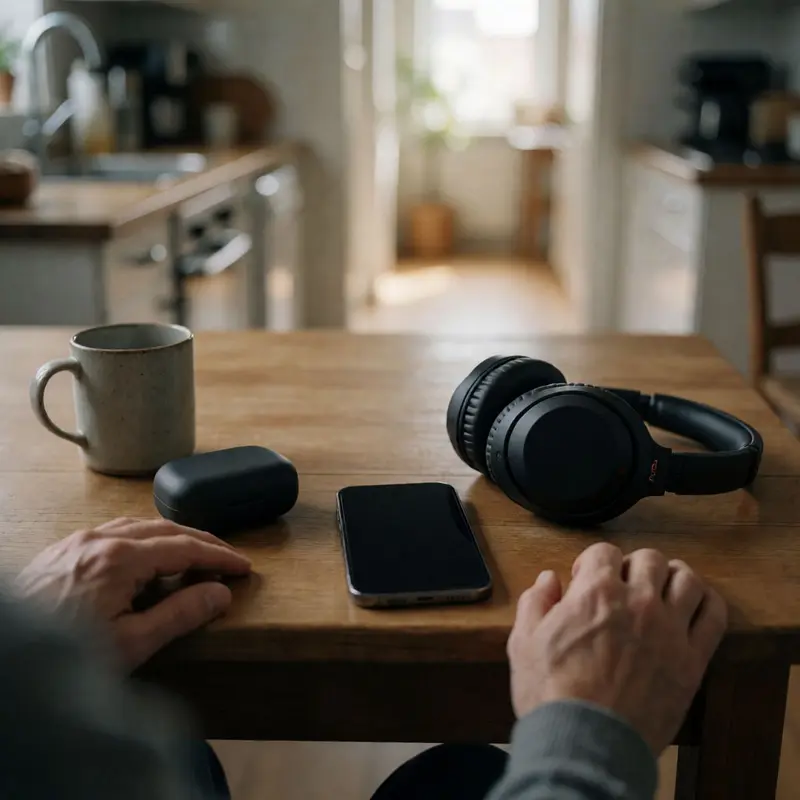
Your sensory triggers and your work patterns are the real decision criteria here, and each device maps cleanly to a different profile.
If your hardest hours are the ones that demand sustained, unbroken concentration, and you don’t need to communicate for stretches of an hour or more, the Loop Quiet 2 makes a straightforward case. It has a certified 24 dB SNR noise reduction rating, and independent measurements show it cuts high-frequency noise by as much as 37 dB, which means the sharp, intrusive sounds, a neighbor’s TV, an alert chime, a car passing, get reduced the most. There’s no charging, no app, and no mid-session choice to make. You put them in and they work reliably, but only when the fit does: a meaningful share of buyers find the silicone tips either too large or too small to create the seal that makes those numbers real, so treat fit as a prerequisite.
If your day is fragmented, the Sony WH-1000XM5 earns its complexity. The case for it centers on two things. First, multipoint connectivity lets it stay paired to your laptop and your phone simultaneously, which removes the friction of constantly re-pairing when a call comes in on a different device. Second, the battery holds up across nearly 32 hours of continuous ANC use in real-world testing, meaning a full workweek on a single charge is realistic for most schedules. Those features matter if you move between video calls, focus blocks, and quick verbal exchanges all day.
The XM5 does cost significantly more, and its touch controls frustrate some users enough that they reach for a physical button that isn’t there. For anyone on a tight budget, or anyone who finds even minor UI friction destabilizing during a stressful afternoon, that’s a real consideration.
A cleaner way to frame loop quiet 2 vs Sony WH-1000XM5 is by the shape of your day. The Quiet 2 fits a work pattern that is mostly linear. The XM5 fits a work pattern that is mostly interruptive. If your day tends to be one long push, silicone wins. If your day tends to be a negotiation between focus and availability, the headphones give you the controls to manage that balance without taking them off.
Final thoughts
Taken together, the strongest takeaway is this: the better choice depends on whether you need quiet itself, or a system for staying functional inside a noisy day. That distinction only becomes clear when sound reduction, comfort, communication, and workflow all sit in the same frame.
A remote work setup lives or dies by how many decisions it adds back into your hours. In the loop quiet 2 vs Sony WH-1000XM5 decision, the real cost isn’t only money or decibels. It’s the mental effort of managing your boundary with the outside world, minute by minute, while still trying to do your job.
Further reading


Leave a comment