
















No products in the cart.

Shop this story
The AI hierarchy reset: What it really means for tech leaders
by Joseph L
The AI hierarchy reset in tech is reshaping infrastructure economics yet delivers no cloud spend reduction as many anticipated. Centralized AI infrastructure continues aggressive expansion while decentralized alternatives remain nascent, with 75% of global data center projects now focused exclusively on AI workloads. Major investments like Oracle’s $100 billion to $500 billion Stargate project underscore this centralization trend, defying expectations of cost savings. Tech leaders must navigate this complex coexistence where blockchain-enabled alternatives show promise but lack measurable financial impact.
This strategic shift demands immediate attention from executives responsible for infrastructure decisions. The article analyzes how economic forces drive hyperscale growth, technological innovations enable sub-50ms latency benchmarks, regulatory penalties redefine risk calculus, and vertical-specific AI adoption accelerates at 35% annually. These interconnected dynamics reveal why infrastructure economics now dictate competitive advantage. Leaders who master this complexity will secure irreversible advantages in their operational fabric.
Economic impact: Centralized AI growth defies cloud spend reduction expectations

The AI hierarchy reset in tech is reshaping infrastructure economics. But here’s the twist: this shift isn’t delivering the cloud spend reduction many anticipated.
Centralized AI infrastructure continues its aggressive expansion while decentralized alternatives remain nascent. US data center construction grows at a steady 6.09% CAGR from 2025 to 2030+, ballooning from a $17 billion market in 2024 to $28.95 billion by 2033. This surge is overwhelmingly fueled by hyperscale AI, machine learning, and IoT demand. Approximately 75% of global data center projects now focus exclusively on AI workloads.
Major investments underscore this centralization trend. Oracle’s Stargate project with OpenAI and SoftBank, launching in January 2025, adds 500,000 square feet of capacity representing a staggering $100 billion to $500 billion commitment. Similarly, Amazon’s US government AI data centers signal a $50 billion investment by November 2025, while Amazon NC alone commits $10 billion in June 2025. These figures reflect a broader pattern where centralized cloud and AI infrastructure consistently outpaces decentralized alternatives with 6% to 9% CAGRs. Over $100 billion in global investments now backs this trajectory.
Decentralized AI infrastructure presents a different economic narrative. Platforms like SingularityNET and Fetch.ai enable non-corporate alternatives through blockchain synergy, yet no specific CAGR exists for this segment. Instead, it ties to the Web 3.0 blockchain market, which grows at 42.36% CAGR from $7.23 billion in 2025 to $42.29 billion by 2030. Edge computing surges for latency reduction, yet research shows no quantified cloud spend savings exist for decentralized AI investment versus hyperscale growth. Despite the edge computing hype, most enterprises see only limited short-term spend reductions.
Crucially, no near-term cloud spend cuts are signaled across the industry.
The global data center market, heavily AI-powered, reaches $386.71 billion in 2025 and rises to over $430 billion in 2026. Meanwhile, inference economics drop token costs 280-fold per Deloitte, making real-time AI deployment suddenly viable at scale. Centralized growth continues to dominate, particularly in energy-intensive regions like Europe where AI drives data center consumption up 28% by 2030.
This economic reality demands strategic clarity. The AI hierarchy reset in tech isn’t a sudden shift toward decentralized cost savings but a complex coexistence where centralized infrastructure growth shows no signs of slowing. Tech leaders must navigate both trajectories, understanding blockchain-enabled alternatives remain positioned for disruption without yet delivering measurable cloud spend reduction.
These economic foundations will ultimately determine which infrastructure models can support the sub-50ms latency and parameter efficiency benchmarks ahead.
Technology stack: $18B inference surge resets AI infrastructure economics
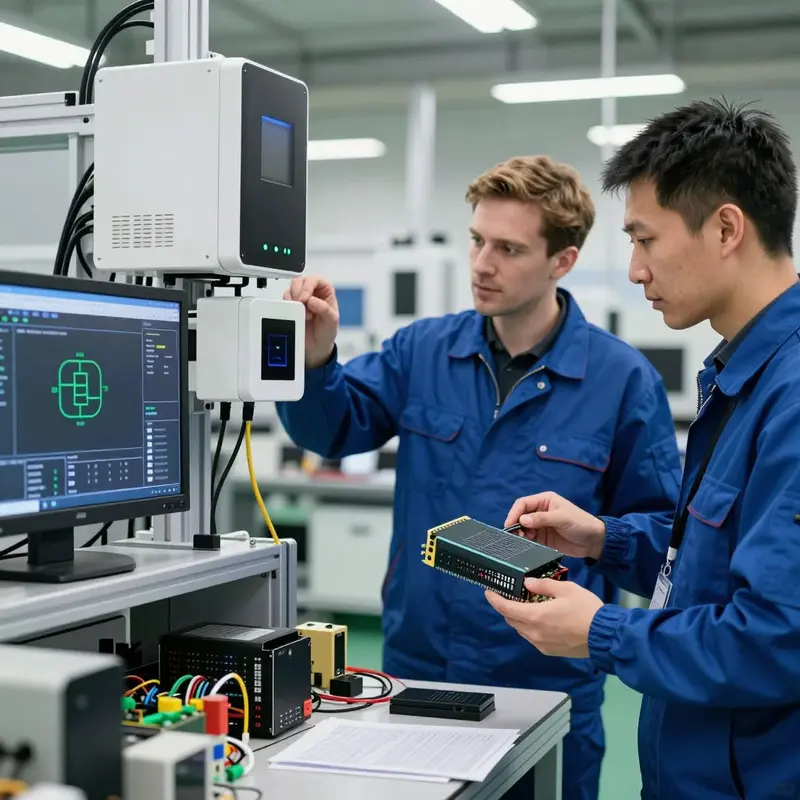
Milliseconds now define the competitive edge in AI infrastructure. Market leaders and laggards are separated by mere instants as sub-50ms latency and sub-1B parameter efficiency become non-negotiable benchmarks. This shift carries immediate strategic weight for every player in the field. Inference workloads will dominate AI compute by 2030, accounting for over half of AI processing while growing at a 35% annual rate.
Enterprise urgency is clear. Enterprise AI spending on inference infrastructure reached $18 billion in 2025, with investments doubling year-over-year. Real-time applications like chatbots now prioritize sub-50ms latency as standard, while training tolerates up to 100ms. This divergence creates distinct infrastructure paths.
Three technical pillars enable this efficiency leap:
-
Model architectures: RLVR maintains performance while reducing parameter needs, enabling longer reasoning traces on sub-1B models.
-
Hardware innovations: Custom silicon including ASICs and NPUs, combined with edge co-location, achieves sub-50ms latency.
-
Software stack refinements: Fused kernels and optimized GPU serving stacks deliver 2x+ speedups from startups like Fireworks, Baseten, and Modal.
Together, these innovations transform theoretical limits into operational reality.
Gemma open-source models exemplify this convergence. They deliver 70B-level reasoning within 27B parameter packages. Gemini 3 Flash achieves sub-50ms performance by default for high-frequency agentic workflows. Network optimization proves equally critical. DAC offers lowest latency for short GPU links under 100 meters and AEC balances reach with sub-50ms efficiency for distributed inference.
Modular data centers accelerate deployment, cutting build times by 50-70% through preapproved liquid-cooling-ready shells. Rack densities now span 30-150 kW, supporting inference demand projected to reach 90 GW by 2030. The 2025 progress emphasized efficiency over raw scale, with benchmark saturation signaling maturity.
Optimized stacks under 1B parameters prove essential for speed. Inference dominance reshapes infrastructure economics, creating immediate pressure to rebalance investments between training scale and inference efficiency.
This shift is already transforming data centers worldwide.
Yet meeting these benchmarks is just the starting line.
Regulatory barriers: Why penalties dominate AI’s financial risk calculus

Regulatory realities now collide with the economics of AI inference dominance, reshaping competitive hierarchies. Tech leaders navigate the EU AI Act’s compliance landscape where cost projections remain elusive yet strategic implications are unmistakable.
Research confirms no quantifiable per-enterprise deployment cost data exists for 2025 compliance. Industry reports and academic studies consistently emphasize qualitative burdens over numeric estimates. This gap reflects the regulation’s deliberate focus on penalty structures rather than upfront implementation expenses. Leaders who grasp this distinction can navigate budget planning with far greater precision.
Penalties dominate the financial risk calculus. Non-compliance triggers fines ranging from €7.5 million to €35 million or 1-7% of global turnover depending on violation severity. Specific consequences include:
- Prohibited AI practices: Up to €35 million or 7% of global turnover.
- High-risk system failures: Up to €15 million or 3% of global turnover.
- Incorrect information submissions: Up to €7.5 million or 1% of global turnover.
These figures immediately reframe cost-benefit analyses.
Market withdrawal for non-compliant systems compounds financial exposure beyond fines alone.
High-risk AI systems bear the heaviest compliance burden. Conformity assessments require technical documentation, risk management protocols, data governance frameworks, and cybersecurity measures. Providers shoulder pre-market assessment costs whether conducting self-assessments with comprehensive technical files or engaging third-party Notified Bodies. Operational expenses continue post-deployment through mandatory logging and oversight requirements.
Timelines create strategic urgency. High-risk compliance becomes mandatory by August 2026. Although Omnibus proposals may extend this deadline to December 2027 or August 2028 based on harmonized standards availability, businesses consistently report needing 12+ months per standard for full compliance. Delaying action inflates costs through rushed implementations and avoidable errors.
Expert consensus strongly favors proactive mitigation. Early risk assessment and consideration of AI ethical implications significantly minimize long-term expenditure. The Digital Omnibus proposal offers meaningful relief through streamlined conformity assessments and reduced registration requirements for low-risk exemptions. Yet these changes don’t eliminate the fundamental truth: qualitative burdens today prevent precise 2025 cost forecasting.
Compliance represents infrastructure layer integration where regulatory requirements reshape deployment architectures. Tech leaders treating this as a mere budget line item rather than a strategic enabler will fall behind.
This regulatory landscape fundamentally reshapes how AI infrastructure must evolve to meet 2030’s hierarchical demands.
2030 outlook: Specialized AI drives 35% annual growth across verticals

By 2030, specialized AI will drive 35% annual growth across every major vertical. Enterprise adoption patterns reveal an accelerating reality: 79% of organizations have already implemented Agentic AI systems, with 96% actively expanding deployments throughout 2025. This isn’t theoretical evolution; it’s operational transformation where AI now handles autonomous supply chain management, regulatory compliance, and strategic decision-making.
Healthcare leads vertical adoption with digitalization accelerating at 23.6% CAGR, outpacing manufacturing. FDA-validated AI agents now ensure quality control and supply chain traceability across critical medical workflows. By 2025, 90% of hospitals will deploy AI agents specifically for diagnostics and research acceleration, making AI-driven diagnostics a daily reality for patients.
Manufacturing’s AI integration follows a different trajectory. Anchored by its massive $260 billion 2025 base, the sector’s 23.5% CAGR slightly lags healthcare. Yet the sheer scale drives the Industry 4.0 market toward $747 billion by 2030. Robotics and collaborative bots specifically target $7.2 billion in value as China, Japan, and India scale electric vehicle production. Manufacturers embed AI within product lifecycle management and enterprise resource planning systems, enabling predictive configuration and real-time knowledge capture that directly addresses regional labor shortages.
Three cross-industry patterns define the AI hierarchy reset in tech.
- Healthcare: FDA-validated AI agents transform diagnostic accuracy and research velocity.
- Manufacturing: Edge AI and digital twins enable hyper-customization while blockchain secures supply chains at 28.4% CAGR.
- Retail and Finance: Vertical-specific agents deliver personalized customer experiences and sophisticated fraud detection models.
These specialized deployments signal a decisive shift from general-purpose AI toward industry-tailored solutions growing at 35% annually. By 2026, the vertical AI growth rate of 35% annually will drive multi-agent systems integrating large and small language models to revolutionize customer service and finance operations, proving hierarchical automation’s strategic necessity.
The Asia-Pacific region accelerates adoption at 25.8% CAGR as nations deploy hierarchical automation systems to overcome workforce constraints. This regional momentum underscores a universal truth: hierarchical AI adoption isn’t about technology alone. It’s about embedding intelligence where it creates irreversible competitive advantage within each vertical’s unique operational fabric.
Success belongs to leaders who recognize that specialized AI agents now define industry-specific value chains.
Final thoughts
The AI hierarchy reset in tech reveals a complex reality where centralized infrastructure growth shows no signs of slowing despite decentralized alternatives gaining traction. Economic analysis confirms no near-term cloud spend reductions while inference efficiency pushes latency below 50ms, and regulatory penalties now dominate financial risk assessments across all verticals. This confluence reshapes competitive hierarchies as specialized AI becomes operational necessity in healthcare diagnostics, manufacturing automation, and financial services. Success hinges on navigating infrastructure economics and regulatory landscapes simultaneously.
Tech leaders must recognize hierarchical automation as a strategic imperative embedded in industry-specific value chains rather than mere technological evolution. The AI hierarchy reset in tech ultimately separates market leaders from laggards based on milliseconds and strategic foresight in infrastructure decisions. Organizations that integrate vertical-specific AI agents while balancing centralized and decentralized models will dominate their sectors. Will your compliance strategies and infrastructure investments align with this irreversible shift toward specialized AI by 2030?
Ready to stay ahead with cutting-edge tech insights and innovations? Contact OnInitiative.com ([email protected]) today and let our experts guide you through the future of technology—today!
About us
OnInitiative.com is an innovative marketplace that helps e-commerce businesses boost productivity and community growth through advanced automation tools.
Further reading


Leave a comment