
















No products in the cart.

Shop this story
AI agent shopping searches are pressuring indie stores: You’re feeling it
by Joseph L
If you’re a regular at an indie shop, you’ve felt the vibe shift. You ask for something specific, and someone says, “My phone says it’s cheaper elsewhere.” That moment carries the AI shopping agents impact on small businesses into the real world, because the “elsewhere” is often a shortlist built before anyone steps through a door.
What makes this pressure different is where it lands. It hits in the quiet space between curiosity and commitment, when comparisons get made and options get filtered. If a store’s details can’t be read cleanly by the systems doing that filtering, the store can vanish from consideration without any drama. People still love browsing and human advice, but discovery is moving upstream, and it’s tightening fast.
Market disruption: How AI agents rewrite retail power

McKinsey estimates that agentic commerce could represent up to $1 trillion in orchestrated US retail revenue by 2030, and somewhere between $3 trillion and $5 trillion globally. For independent shop owners and the regulars who rely on them, those figures aren’t abstract projections about Silicon Valley. They point to a structural reordering of how products get discovered, compared, and purchased, and indie stores are sitting at the center of it whether they opted in or not.
The mechanism is specific. AI shopping agents are stepping into what the industry calls the middle of the funnel, the comparison work that used to happen inside a shopper’s head or across a dozen browser tabs. Price differentials, return-policy language, review credibility, inventory availability. Agents now handle it automatically, before a human makes a conscious choice. The persuasive product description your store spent hours writing, the carefully curated storefront that rewards browsing, even the SEO work that made you findable last year all matter less when an agent does the evaluating and a human only ratifies the output.
Nine in 10 retail executives, according to Deloitte, expect AI to be used increasingly over traditional search engines by 2026. That’s a near-term timeline, not a speculative horizon. And the shift touches discovery at its root. Shoppers who once typed a query into Google and landed on your product page are increasingly beginning their journeys inside an AI interface, which assembles a comparison set on their behalf. Who gets included in that set depends on whether your product data is machine-readable, structured, and accessible via the kind of API infrastructure that large platforms have maintained for years.
That infrastructure gap is where the disruption becomes asymmetric, though nearly three-quarters of consumers still make purchases in physical stores, which means the disruption is uneven by category and journey stage. The cost of exposing real-time pricing, fulfillment, and inventory data through standardized feeds falls proportionally harder on a 12-person operation than on a national chain. Without common standards for agent communication, as Harvard Business Review has observed, smaller merchants face a fragmented landscape of competing technical requirements. The AI shopping agents impact on small businesses comes down to who can afford to stay visible when visibility requires infrastructure.
Adoption challenges: Why small shops fall behind
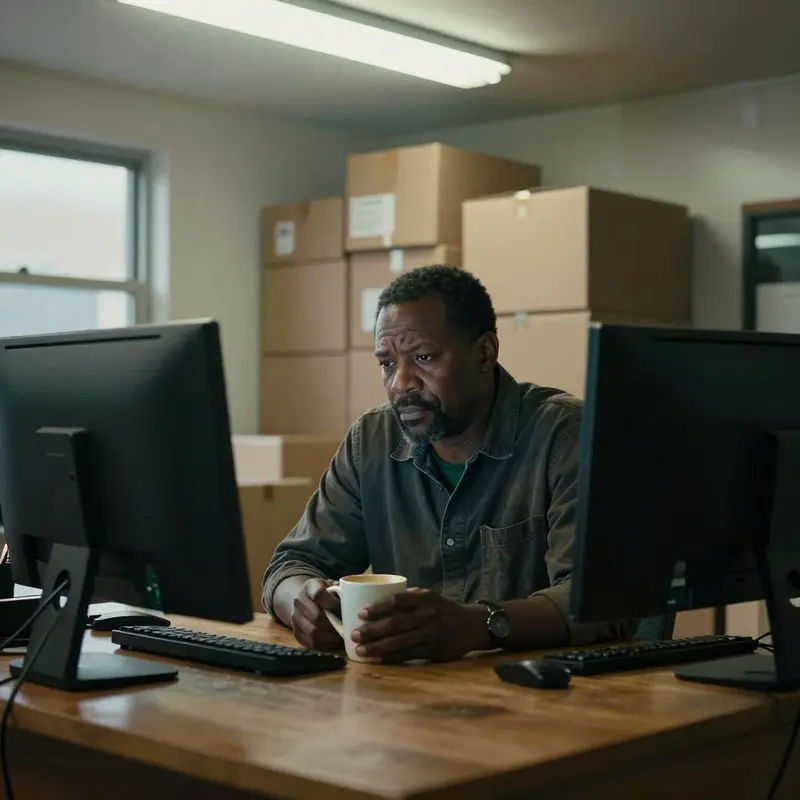
The scale of what’s coming isn’t evenly distributed across the merchants who have to respond. McKinsey puts US B2C retail mediated by AI agents at up to $900 billion by 2030, and the merchants best positioned to capture any of that volume are the ones whose systems already speak the language agents require. For larger retailers with dedicated technical teams and mature infrastructure, becoming what the industry now calls “agent ready” is an expensive project. For a small independent shop, it can feel closer to an impossible one.
The OECD’s research on SME adoption makes the structural problem visible. Smaller businesses tend to adopt AI tools at the edges, embedding them in peripheral tasks while keeping core workflows largely intact. Skills gaps, limited capital, data that’s neither clean nor structured, and integration challenges with legacy systems compound one another. No single barrier is fatal, but together they create a kind of friction that larger organizations can absorb and smaller ones can’t easily route around.
The workforce dimension adds another layer. Demand for AI fluency in US job postings grew sevenfold in two years, and the assumption embedded in that figure is that firms can hire or train their way toward the capability they need. Small merchants, running lean by design, rarely have the slack to redesign workflows around new hiring, let alone compete for talent in a market where the largest technology companies and retail chains are setting the price.
What McKinsey describes as the shift from SEO to “AI visibility” sharpens the stakes further. Competing for placement in an AI-driven shopping journey requires machine-readable content, strong product taxonomy, and credible third-party signals, none of which come from a well-maintained Instagram account or a manually updated product page. The infrastructure expectations are structural, and they favor merchants who were already investing in data quality before agents became the relevant audience.
There’s a counterweight worth holding onto: meaningful consumer hesitancy around letting AI agents finalize purchases, particularly around payment delegation, suggests the fully autonomous shopping journey is still ahead of actual buyer behavior. That gap buys time. The AI shopping agents impact on small businesses will hinge on what merchants do with it, because the shops that win will treat data readiness as an operational priority right now, not a future-state aspiration.
Data visibility: Staying on the map for AI buyers

By 2030, analysts project that 25% of global e-commerce sales will flow through AI agents, and 55% of digital consumers will have handed at least part of their shopping journey to one. That points to a structural shift in who controls discovery, and the implications for smaller merchants are sharper than the headline figures suggest.
When an AI agent shops on someone’s behalf, it doesn’t browse the way a human does. It queries. It pulls structured data on price, availability, specifications, and shipping windows, weighs those inputs against the user’s stated preferences, and surfaces a shortlist before the human ever enters the picture. A shop whose inventory lives in an unstructured format, buried in a storefront built for human eyes, effectively disappears from that transaction. The agent can’t read what it can’t access.
That’s where data visibility becomes the operative variable. McKinsey’s guidance to retailers aiming to be “agent ready” centers on building well-documented APIs and moving toward interoperable, API-first systems so product, pricing, and inventory data are legible to external agents. For a large retailer with an engineering team, that transition is an investment. For an independent shop running on a standard e-commerce platform with no custom infrastructure, it’s a genuinely steep lift, which means the access problem isn’t equally distributed across the industry.
The urgency here isn’t abstract. The shops that structure their data well now, ensuring product attributes, stock levels, and fulfillment details surface in formats agents can read, are the ones that stay in the consideration set when the funnel compresses. When agents accelerate the path from intent to purchase, the margin for a slow or opaque data presence narrows quickly.
One check on the alarm is worth holding: nearly 72% of consumers still shop in physical stores even as AI reshapes how journeys begin. Agentic commerce shifts where discovery happens while people still want tangible retail. For most independent merchants, that physical experience is the product, and showing up legibly for AI shopping agents impact on small businesses is what gets someone to the door before the agent moves on.
Controversies in AI commerce: Who the agents really serve

The commerce controversy centers on who AI agents work for and under what conditions.
When an AI agent browses on your behalf, it operates inside a set of rules its designers wrote. It decides what counts as trustworthy data, which product signals get surfaced, and whose inventory is even visible in the first place. PwC calls this the widening trust gap: AI systems can amplify information asymmetry, quietly tilting transactions toward whichever party controls the data architecture. Consumers who think they’re getting a neutral price comparison may actually be getting a curated one, shaped by which retailers paid to be discoverable and which ones haven’t yet built the right technical scaffolding.
That scaffolding question is where the access problem gets concrete. Becoming legible to AI agents now requires what McKinsey calls an API-first, interoperable system: a live feed of product data, pricing, and inventory that agents can query in real time. This is achievable for a retailer with a dedicated engineering team. For a shop running on a lean platform with one person handling both the buying and the back office, the investment is a different kind of ask entirely. By most honest assessments, the technical transformation required is meaningfully harder for smaller operators than for larger ones, which means the agent economy doesn’t distribute access evenly from the start.
Brookings points to a parallel risk building on the consumer side: privacy concerns, lack of transparency, and documented biases in AI systems are accumulating into pressure that’ll eventually shape regulation. That regulatory moment hasn’t arrived yet, and in its absence, the rules governing agentic commerce are mostly being written by the companies building the agents. Governance frameworks that prioritize accountability and fair transactions, which Deloitte explicitly recommends, remain aspirational rather than required.
For indie shops, the AI shopping agents impact on small businesses may show up less as a headline and more as a quiet shift in who gets seen, who gets compared, and who gets to play by default.
Roadmap to 2030: The narrow window to get seen by AI

The shift is already measurable in dollars, and the numbers are moving. AI platforms are projected to account for roughly $20.57 billion in US retail ecommerce sales in 2026, a figure that sounds modest until you consider how quickly it compounds. McKinsey estimates that AI-powered search alone could influence $750 billion in consumer spending by 2028, and the referral numbers emerging from large platforms confirm the direction: ChatGPT already accounts for 20% of Walmart’s incoming traffic, so one of the largest retailers in the world is watching a meaningful share of its discovery channel move toward AI intermediaries in real time.
For a small independent store, the strategic window between now and 2030 is genuinely narrow, and the shape of the problem is specific. AI agents surface brands that have structured, machine-readable product data, third-party coverage from publishers and user-generated content, and API-accessible inventory that lets an agent confirm availability without a human click. Most indie retailers lack these pieces because none of it mattered five years ago. Back then, what mattered was a well-curated Instagram grid and a loyal local following. Those assets don’t translate automatically into agent visibility.
The path forward is incremental but directional. It starts with product data: clean descriptions, clear specifications, structured metadata an AI can parse without guesswork. It extends to earning mentions in the kinds of sources agents actually draw on, local journalism, niche review sites, community forums, the places where real editorial voice lives outside the major platforms.
Becoming visible to agents is, in this sense, a continuation of the same work that made a store visible to humans, just oriented toward a different reader.
The honest complication is that full agent autonomy, where an AI completes a purchase without the consumer ever seeing a product page, may arrive more slowly than the headline numbers suggest, because trust erodes as agents move from advising to acting. That deceleration is a real reprieve. But the influence layer, where agents decide which three options a person even considers, is already operational and won’t wait for trust in autonomous checkout to catch up.
The AI shopping agents impact on small businesses will be set by the unglamorous work done early: the product data you clean up, the mentions you earn in sources agents trust, and the inventory access you make legible before the defaults harden.
Final thoughts
After you zoom out, one implication keeps surfacing: the fight is drifting away from persuasion and toward eligibility. When shopping starts with an automated comparison, being a great store matters less if you’re missing from the set of stores the agent can even evaluate.
That’s why the most practical response looks unglamorous. It’s closer to housekeeping than marketing: clean product facts, reliable availability, and signals an outside system can trust. Indie retail still wins on taste, service, and place. The AI shopping agents impact on small businesses will depend on whether those strengths stay visible when discovery gets mediated by software, and whether shops get a say in the defaults before they harden.
Further reading


Leave a comment