












No products in the cart.

Shop this story
Forget Apple Watch: Why Oura Ring’s the new standard for builders
by Joseph L
You don’t need more metrics. You need fewer decisions. That’s why the Oura Ring vs Apple Watch debate hits different when you’re already running on caffeine, adrenaline, and half a night of sleep.
Most wearables act like a second inbox. They buzz, flash, and beg for attention, then dump a pile of charts on you and call it insight. But if you’re burned out, the real question isn’t which device has more features. It’s which one tells the truth about your capacity without adding another thing to manage, another thing to charge, and another reason to feel behind before your day even starts.
Performance audit: Why Oura’s scores beat wearable noise

Picture this: it’s 6:47 a.m. on a Tuesday. Your third consecutive late night is behind you, and your wrist buzzes with a notification you don’t have time to interpret. That’s the problem with most wearables designed for general consumers. They surface data constantly but rarely tell you whether your body is actually ready to perform.
Oura Ring takes a different approach, and for burned-out founders, engineers, and product leads who need signal over noise, the difference is worth paying attention to. Rather than monitoring you from a wrist where blood flow is inconsistent and sensor contact is unreliable, it reads from your finger, where arterial blood flow runs closer to the surface. That physical advantage compounds across every metric it tracks, because cleaner raw data means the patterns it identifies are genuinely trustworthy rather than best guesses.
The ring synthesizes all of that input into three primary scores, each weighted by proprietary algorithms. Here’s what each one actually does for a builder running on fumes:
- Readiness Score: This tells you whether today is a day to push hard or pull back, drawing on your resting heart rate, heart rate variability, and recovery patterns from the night before.
- Sleep Score: This maps the quality and structure of your rest, not just duration, so you stop confusing eight hours in bed with eight hours of recovery.
- Activity Score: This tracks your movement balance across the day, accounting for strain without penalizing you for the kind of sedentary focus work that pays the bills.
Together, these scores give you a coherent operational picture rather than a flood of disconnected graphs.
The clinical validation behind the ring’s sleep data is strong enough to matter. Sensitivity and specificity in sleep staging are both documented at high levels, meaning the ring rarely misclassifies whether you’re in light, deep, or REM sleep. In reproductive health tracking, its detection accuracy reaches 96.4%, a figure that reflects just how precise finger-based sensing becomes when the hardware is correctly positioned. Step count accuracy does vary with context, but for builders, granular movement data was never the point. Recovery intelligence is.
The practical contrast when weighing Oura Ring vs Apple Watch comes down to optimization: one device is built for interaction and broad consumer appeal, while the other is built for background monitoring that doesn’t ask anything of you. A builder who already checks their phone constantly doesn’t need another screen on their wrist.
If that’s the real trade, then the next thing to audit is whether your devices surface data constantly but rarely tell you whether your body is actually ready to perform. What happens when that intelligence sits behind a paywall, and what do you actually own when the subscription lapses?
Feature dissection: The hidden cost of wearable data
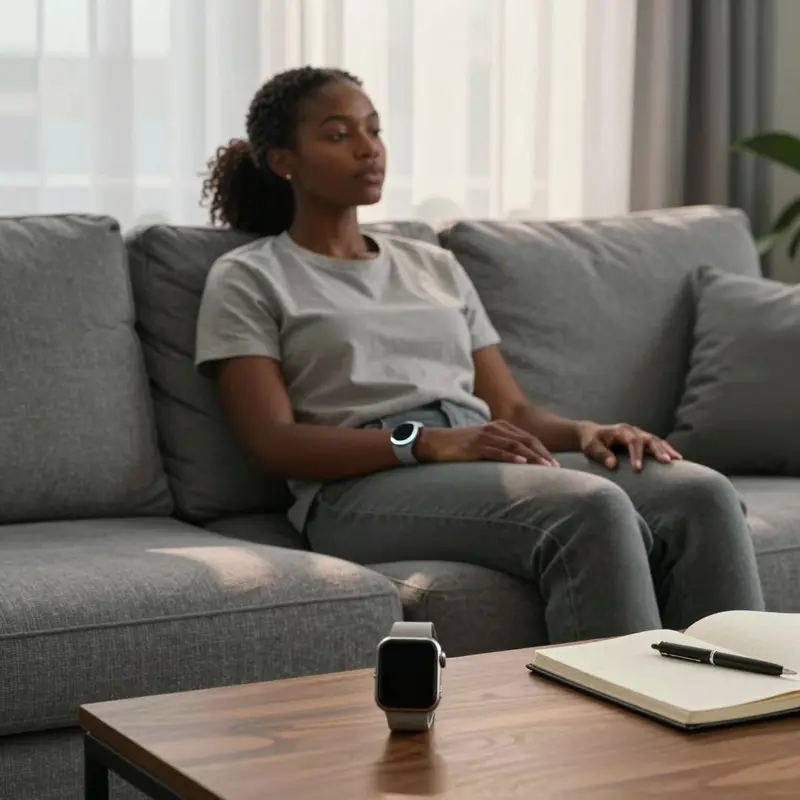
The paywall question isn’t hypothetical. It’s the actual fault line in the Oura Ring vs Apple Watch comparison, and how you answer it decides which device earns a permanent place on your hand.
Start with what the subscription actually gates. Oura’s full sleep intelligence, the detailed breakdown of deep sleep stages, heart rate trends overnight, temperature fluctuations, and blood oxygen shifts sit behind a monthly membership. Without it, you get fragments. The ring is still tracking, but you’re looking at the data through frosted glass. That’s a real cost to factor in, not a footnote.
Apple Watch flips the equation. Its core features, workouts, heart rate, notifications, all run without a subscription. What you pay for is the hardware, and then the hardware works. But there’s a structural problem baked into that arrangement: a watch designed to sit on your wrist during the day carries a battery that struggles to survive overnight. You can track your sleep with it, technically, but doing so means you’ll spend the day charging instead of wearing. Sleep tracking on Apple Watch is a feature fighting the device’s own design.
This is where the comfort and battery argument stops being abstract. A ring charges quickly and lasts through multiple nights, which means your sleep data is continuous rather than patchy. The deeper accuracy Oura delivers around sleep stages isn’t useful if the device isn’t on your hand half the time.
So here’s the real trade: Oura asks you to pay for access to your own data. Apple Watch asks you to accept a device with a fundamental tension between its daytime purpose and its overnight utility. Neither is a clean win.
When a subscription lapses, you don’t lose the ring, but you do lose readability. When your watch battery dies at 2am, you don’t lose the watch, but you do lose the night.
The uncomfortable follow-on is what happens when the data you’ve collected needs to move somewhere else entirely, and whether either device makes that handoff without friction.
Integration challenges: When sync breaks your training flow
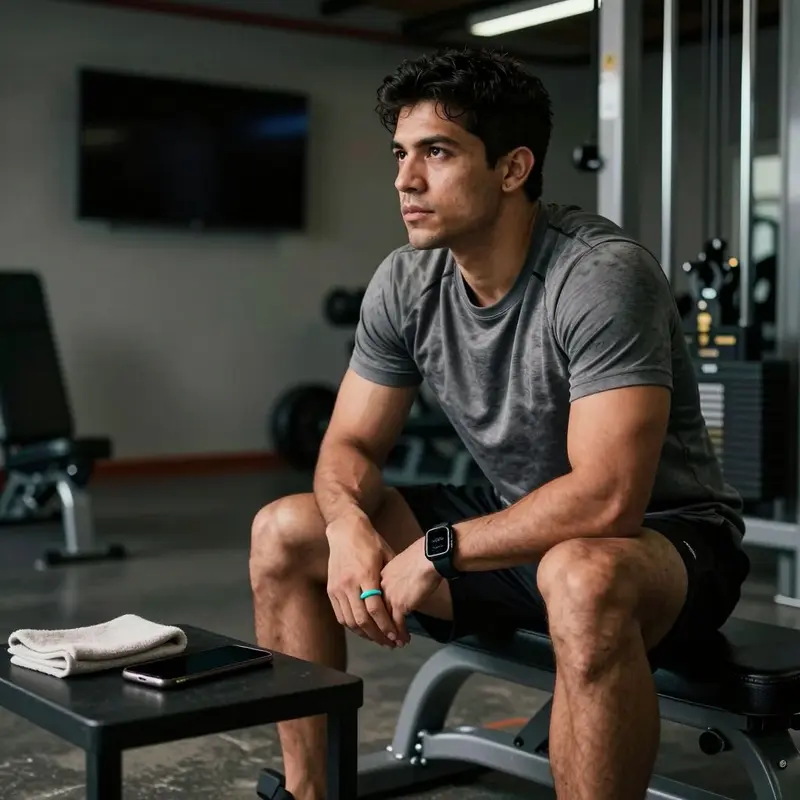
The handoff friction is real, and you feel it the moment you try to connect your Oura data to anything outside the app’s own walls. Strava is the most common test case, and it exposes the gap clearly.
When you push activity data from Oura to Strava, the sync doesn’t cover everything you’ve done. It only carries Workout Heart Rate recordings, which means the broader view of your movement, whether auto-detected or logged manually, stays invisible to Strava. That’s a narrower pipeline than most people expect when they first enable the connection.
The flow in the other direction is smoother. Strava-to-Oura imports land as activity cards inside the Oura app, giving you a readable timeline without much effort. Both import and export toggles default to on, so the connection activates without demanding manual configuration beyond the initial setup. That first step, heading into Oura’s settings and handing over your Strava credentials, is where the friction concentrates.
That reauthorization requirement doesn’t disappear after setup, either. If permissions lapse or credentials need refreshing, you’re back in the settings menu re-entering login details. It’s a small interruption, but a telling one. Any workflow that depends on passive, unattended sync can turn into quietly degraded failures here without warning.
This is where the Oura Ring vs Apple Watch comparison gets practical rather than theoretical. Apple Watch pushes workout data to HealthKit and onward with fewer manual gatekeeping steps at the integration layer. Oura’s architecture asks more of you at the connection boundary, and whether that tradeoff is acceptable depends entirely on how central third-party data portability is to your tracking setup.
So treat integrations like a load-bearing part of your system, not a nice-to-have checkbox. If your tracking setup depends on Strava being able to see more than just Workout Heart Rate recordings, or if you can’t afford a silent break when permissions lapse, you’ll feel the cost of that boundary fast.
Verdict: Which device actually buys you fewer decisions
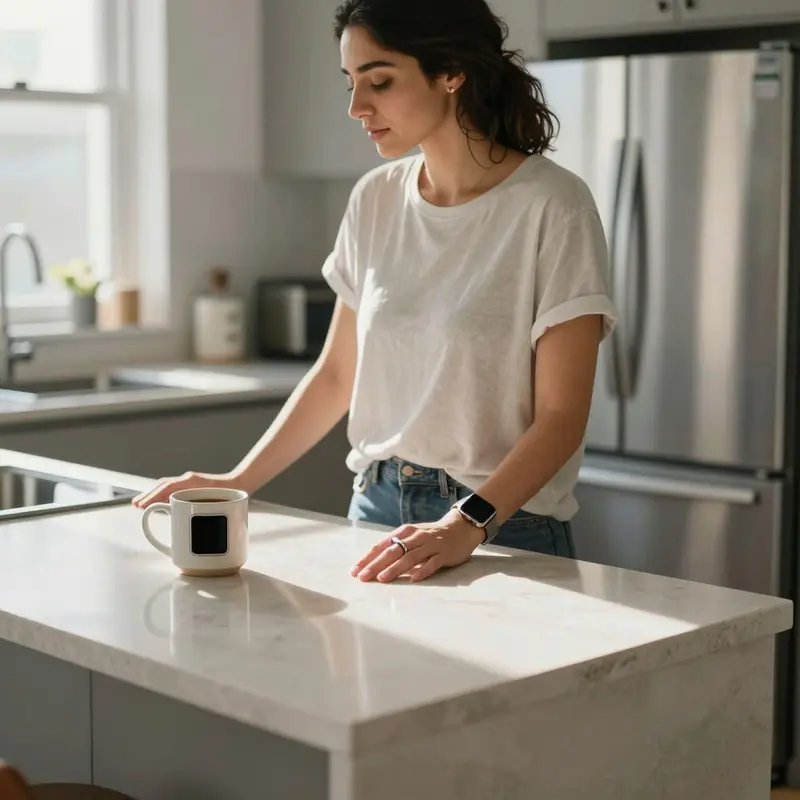
Picture the moment, two weeks in: you wake up, glance at your readiness score, and decide whether to push hard or pull back. That single interaction is either the most useful ten seconds of your morning or a low-grade source of dread, depending entirely on which device you trusted to collect the data.
The Oura Ring vs Apple Watch decision doesn’t hinge on specs. It hinges on what you’re optimizing for and how much cognitive overhead you’re willing to carry every single day.
If recovery quality is your bottleneck, Oura is built for that job. It tracks REM cycles, deep sleep, latency, and efficiency, then synthesizes those signals into a readiness score you can act on before your first meeting. The ring form factor compounds this advantage: no notifications, no glanceable inbox, no pull to check it at 11pm. Users who’ve made the switch consistently cite the lack of distraction as the feature they didn’t know they needed. Just account for the subscription cost up front, because it doesn’t appear in the sticker price and it adds up quietly over time.
Apple Watch earns its place if medical-grade monitoring or real-time activity tracking matters to your situation. It captures more total sleep time in its logs, handles on-wrist workout tracking more fully, and connects to a health ecosystem that’s genuinely hard to replicate. If you’re managing a specific condition, working with a care team, or simply need a device that keeps you connected, that utility is real and it’s worth paying for.
Here’s the clearest way to frame the choice:
- Choose Oura if your bottleneck is recovery quality. You need honest data about how well you’re rebuilding between efforts, not just a sleep duration log.
- Choose Apple Watch if your bottleneck is health breadth. You want cardiac monitoring, activity records, and a platform built to handle more than one job at once.
- Choose Oura if distraction is actively costing you. The ring doesn’t compete for your attention, which means it can’t steal it.
Neither device is universally superior. One is a precision instrument. The other is a platform.
The wrong pick won’t just miss your needs. It’ll tax you with one more daily decision when what you’re really buying is fewer of them.
Final thoughts
The real separator isn’t ring versus watch. It’s whether your tracking system lowers your mental load or quietly raises it, day after day, until self care turns into another project you fail at.
Think of wearables like tools you either touch constantly or tools that do their job in the background. Builders don’t need more places to check. They need a single signal they can trust, plus a setup that won’t punish them with subscriptions, dead batteries, or broken handoffs when their week gets messy. That’s the only honest way to choose in Oura Ring vs Apple Watch: pick the option that buys you fewer decisions, then protect that simplicity like it’s part of your build.
CesarFeed: Automate Product Feeds on the Go
May 18, 2026
Further reading


Leave a comment