













No products in the cart.

Shop this story
Who’s winning the home workspace race: Warm nooks or corporate cubes?
by Anabel Figueroa
Most cozy home office setup ideas look perfect in photos, then fall apart by Tuesday. In a rental, your “office” is usually a corner you’re borrowing from sleep, dinner, or downtime. You want it to feel like home, and you still need to show up sharp on calls.
That’s the real race right now: warm nooks that help you settle in versus corporate vibes that keep you on task. The tricky part is you can’t renovate, you can’t make noise all day, and you can’t buy a whole new furniture set every lease. So every choice has to pull double duty, comfort you can live with and support your body can count on.
Design trends: Why warm nooks are replacing corporate cubes
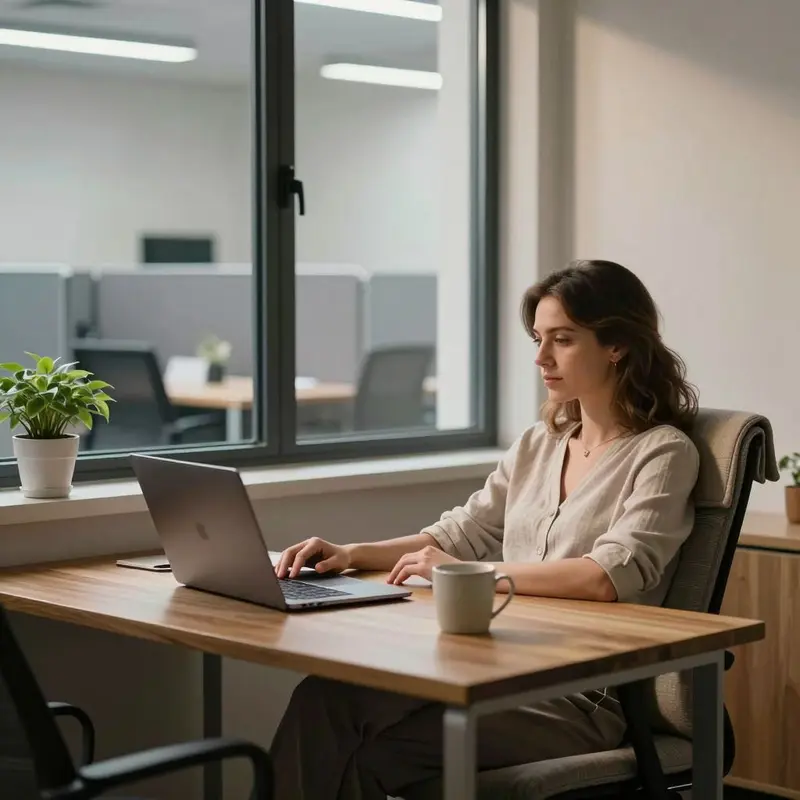
Picture a rental bedroom at 8:47 a.m.: a laptop balanced on a wobbly desk floating in the middle of the room, overhead light blazing, a swivel chair that screams “conference room B.” If you’re a remote worker renting your home, you’ve probably lived some version of this scene. And if it felt slightly wrong, designers now have language for why. That freestanding desk centered in the room, once the default way to carve out a workspace, is getting retired in favor of something that actually belongs in a home.
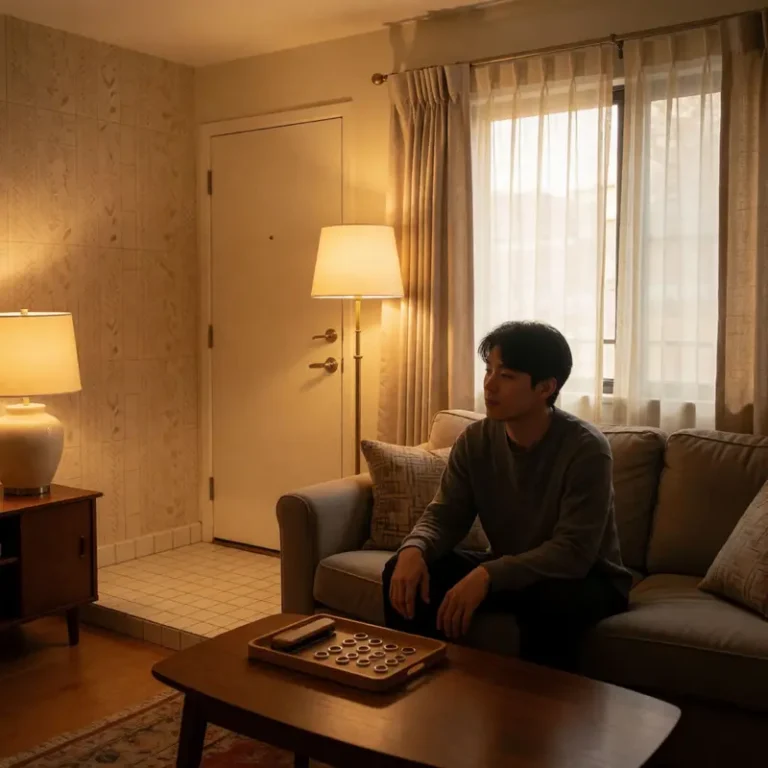
The replacement is what designers call the “warm nook.” Push the desk flush against a wall. Swap the overhead fluorescent for a couple of table lamps that cast soft, layered pools of light. Choose materials with texture and history: stone trays, wooden shelves, a desk surface that’ll look better with a few scratches on it next year. The palette shifts too: saturated, joyful colors are edging out the safe grays and whites that dominated rental-friendly décor for a decade. If you’ve been searching for cozy home office setup ideas, this is the direction worth paying attention to.
The logic runs deeper than aesthetics. An emerging “Analog Home” movement encourages replacing the digital-corporate feel with physical media, warm lighting, and objects that carry personal meaning. Renters who can’t renovate are finding clever workarounds: “cloffices,” workspaces tucked inside closets, let you literally close the door on your office at the end of the day and turn a permanent fixture into a flexible one. The goal is a space shaped by memory and identity instead of algorithmic trend cycles.
Soft lighting and rich textures do create genuine comfort, though they can complicate the moments when you need to project crisp professionalism on a video call or block out household noise during a high-stakes meeting. A warm nook works beautifully for focus and recovery; it may need a ring light and a noise-canceling headset stashed nearby for the hours when the camera is on.
What’s striking is how little this takes once you see it. When your workspace stops pretending it’s a mini office and starts acting like part of your home, even small moves can change how your day feels, especially when nobody from work’s watching.
Market dynamics: How hybrid demand is upgrading home office furniture
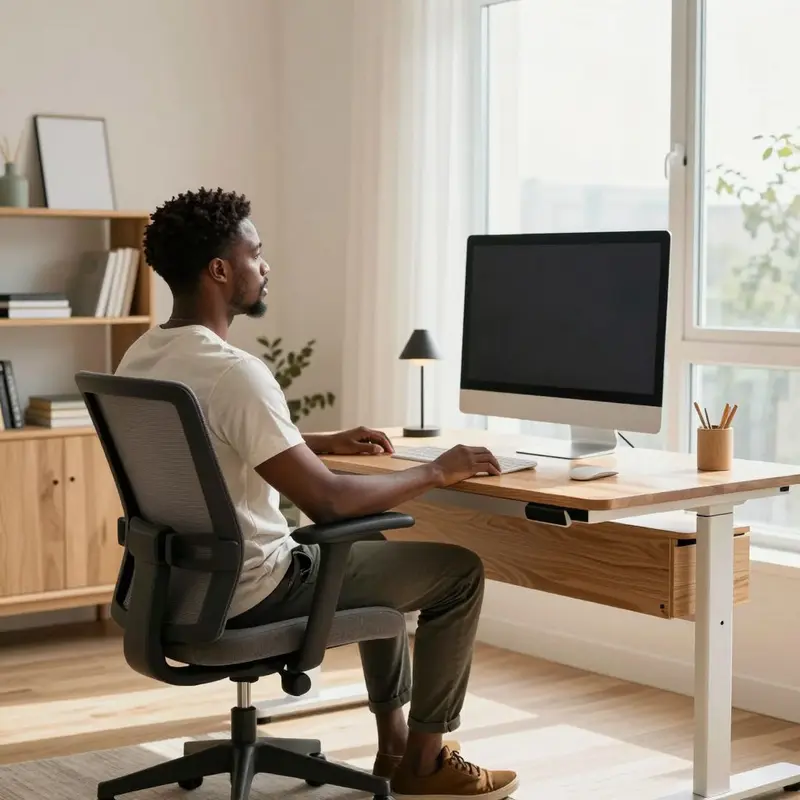
That shift in how your workspace feels has a dollar figure behind it, and the numbers tell a surprisingly complicated story. U.S. furniture and furnishings wholesaling is projected to hit $61.1 billion in 2026, a huge pool of spending that covers everything from sectional sofas to the compact desk you’ve been eyeing. Office furniture manufacturing, meanwhile, keeps growing at a modest 0.6% annual clip. Together, those figures show the home workspace category is real, funded, and drawing serious design attention from brands that once focused exclusively on commercial accounts.
West Elm’s recent move shows the trend in miniature. The retailer launched a contract-grade home office line built around durability, flexibility, and modularity, the same qualities commercial buyers demand but scaled for a spare bedroom or living room corner. A major lifestyle brand investing in pieces engineered to survive years of daily use tells you where manufacturers see lasting demand. They’re betting your home office is permanent infrastructure, and they’re designing accordingly.
The picture gets murkier when you pull back. Return-to-office mandates drove a spike in corporate furniture orders starting in 2022, and broader headwinds like elevated interest rates and tariff uncertainty are squeezing the wider furniture wholesale market into a declining five-year trajectory even as individual segments hold steady. For you, that tension creates an odd but useful moment: manufacturers competing for both corporate and residential buyers are producing better home-grade products at more accessible price points because they can’t afford to ignore either customer.
If you’re hunting for cozy home office setup ideas that also hold up over time, the market dynamics are working in your favor right now. Brands are pouring R&D into pieces that blend residential warmth with commercial resilience, so the gap between a chair that looks good on Instagram and one that actually supports your back through a full workday is narrower than it was even two years ago.
What remains unclear is whether this wave of better-designed, hybrid-friendly furniture will keep landing at rental-friendly price points, or whether rising costs will push the best options out of reach before your lease renews. Either way, it’s a smart moment to treat “contract-grade” as a search filter and a buying standard, not just a buzzword.
Adaptation patterns: Turning tiny rentals into resilient workspaces
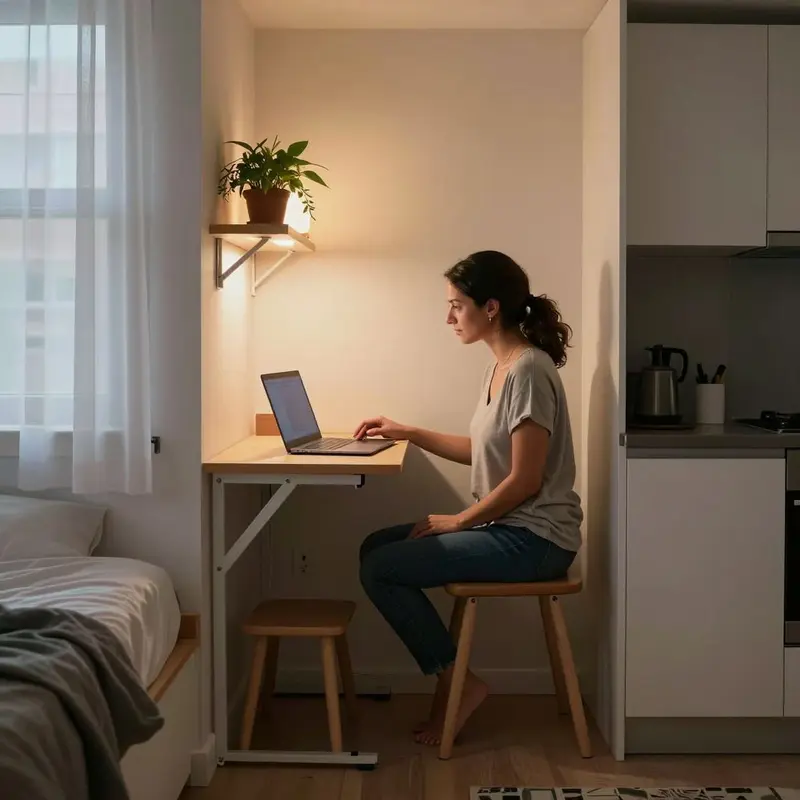
CDC and NIOSH guidance on office environments boils down to three points that sound simple until you try them in a one-bedroom rental: avoid awkward postures, don’t sit or stand in one position too long, and manage your space so it supports your health. Those recommendations were written with adjustable corporate furniture in mind. Translating them into cozy home office setup ideas takes a different kind of problem-solving.
Start with the furniture itself. Corporate workstations typically offer pneumatic seat-height adjustment, tilt-locking backrests, and monitor arms that swing to your eye line. The chair you bought because it looked good next to your bookshelf probably offers none of that. Consumer products marketed for comfort and style fill a real desire, and they’re commercially visible everywhere right now, but comfort and ergonomic support aren’t synonyms. A plush seat cushion feels great for the first forty minutes; what matters is whether it still feels great at hour three, when your lumbar spine starts to disagree.
That charming vintage desk chair, or the woven rattan piece you found at a flea market, locks you into a single posture because nothing on it adjusts. NIOSH flags nonadjustable furniture as a specific limitation, and in a home context the gap widens because you don’t have a facilities team swapping out parts or scheduling assessments. You’re the facilities team.
So the practical move is to compensate with behavior: stand up and move every hour, alternate between two seating options if you have the space, and treat your breaks as structural shifts in posture instead of quick phone checks on the same chair.
Space utilization compounds the challenge. When your desk, your dining table, and your couch all live within fifteen feet of each other, zoning matters more than square footage. Orienting your work surface so your screen faces away from your bed, or placing a small rug to mark the boundary of your “office,” turns a psychological trick into a spatial one. These micro-decisions about where things sit in a room shape how long you can work before your body or your focus gives out.
Adaptation, then, comes down to the repeatable choices you make each hour: where you set things, when you stand, and how you reset your posture before discomfort turns into strain. Even the prettiest corner of your apartment can wreck your back if you never stand up.
Debating productivity when comfort becomes your quiet driver
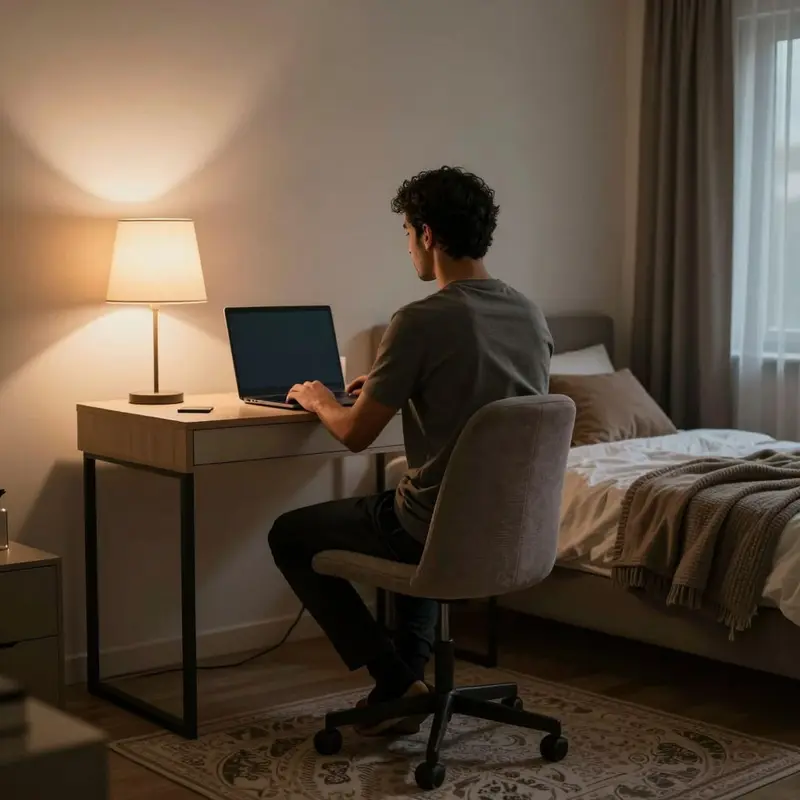
Comfort and focus have been framed as opposites for so long that the framing itself has become the real obstacle. The assumption goes something like this: if your workspace feels warm and inviting, you’ll drift toward lounging. If it looks sharp and corporate, you’ll stay on task. Current design thinking rejects that split entirely and treats adaptive, intention-built interiors as the path where coziness and output coexist.
The practical bridge between the two is structure. Calming color schemes, textured throws, and soft lighting can stay in your workspace, but they need a layout that tells your brain what this space is for. A living room corner with a soft rug and no boundaries between your couch and your desk will blur the line between relaxing and working, so zoning becomes essential. Screens, open shelving units, or even a length of heavy drapery can carve a visible edge around your work area inside an open-plan apartment. That edge does something psychological: it signals a shift in mode when you cross it, even if you’re only moving three feet.
Modular and moveable furniture matters here more than people expect. A desk on casters, a rolling file cart, a lightweight shelf you can reposition in under a minute, these let you reshape the zone as your needs change week to week. You can pull the desk closer to the window on bright mornings and tuck it against the wall when you need a larger floor area for evening stretching. Flexibility like this keeps a cozy home office setup ideas list from turning into a one-time decorating project that goes stale.
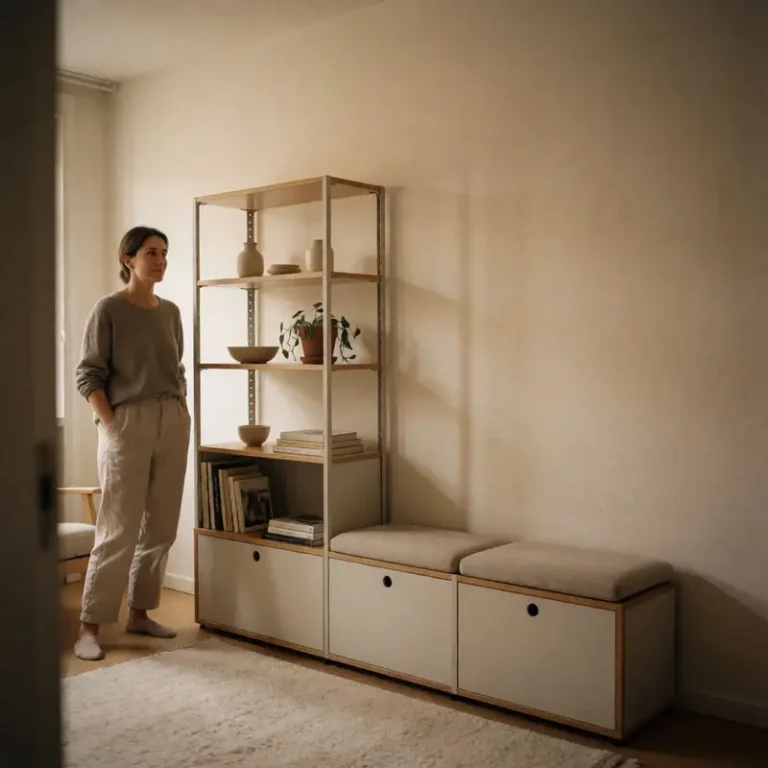
Clutter is the sleeper issue. You can get the lighting, the chair, and the zoning exactly right and still lose your momentum to a desk surface buried in cables, mail, and half-empty mugs. Hidden storage, whether it’s a closed cabinet, a drawer organizer, or a basket tucked under the desk, keeps your sightline clean without forcing you into a minimalist aesthetic you don’t actually want.
When the room feels inviting and the rules are clear, you stop negotiating with your own habits. The workspace starts doing quiet work for you, nudging you into “work mode” as soon as you sit down, and letting you leave it just as cleanly when you stand up.
Final thoughts
The biggest shift isn’t about style. It’s about control. When you’re renting, the workspace that wins is the one you can tune, for focus at 10 a.m., for a camera-on meeting at 2, and for being “off” at 6.
Think of your setup like zoning with a dimmer switch. You’re adjusting light, boundaries, and storage to match the moment, without rebuilding the room. That’s why the best cozy home office setup ideas are practical: durable pieces, flexible layouts, and small routines that protect your back and your attention. If your space can change with your day, you don’t have to fight it.
Further reading
Leave a comment