












No products in the cart.

Shop this story
The era of more home office gear is over for remote work renters
by Anabel Figueroa
Remote work was supposed to free you up. For renters, it often did the opposite, it filled the apartment with gear that never quite fits. A minimalist home office setup sounds like a style choice until you’re the one stepping over cables to make dinner.
The hard part isn’t buying less. It’s deciding what deserves permanent oxygen in a place that’s also your kitchen, your living room, and sometimes your bedroom. If your workspace can’t shrink when your day ends, it starts taking rent from the rest of your life. And once that happens, productivity isn’t the real cost, comfort is.
Ergonomics in tight spaces as strategy, not stuff
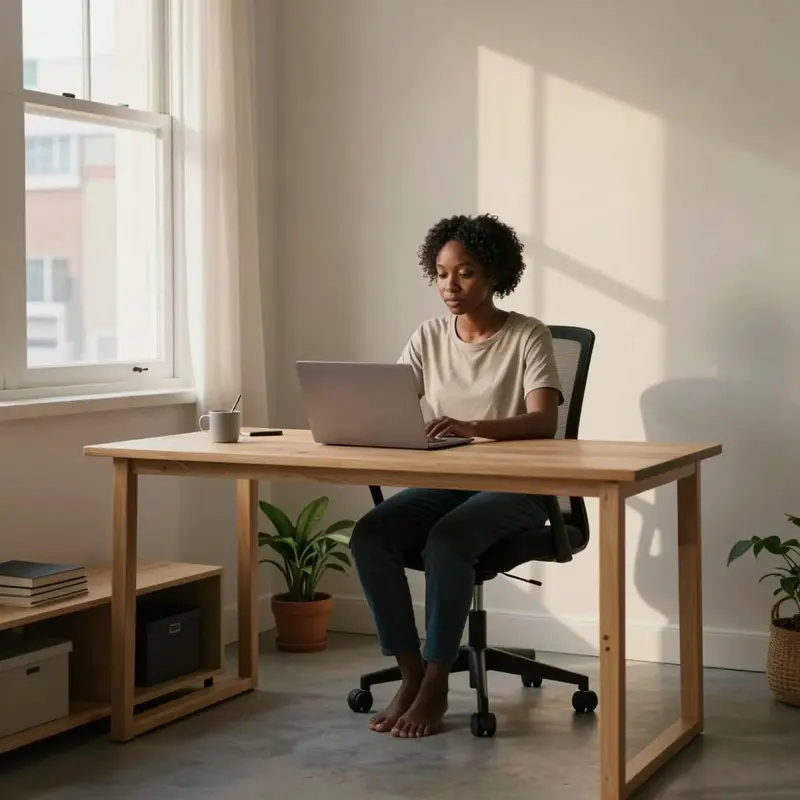
Picture the average remote-work renter’s apartment: a dining table doubling as a desk, a kitchen chair that wasn’t designed for eight-hour shifts, and a corner that’s one cable strip away from looking like a server room. If that image is familiar, you’re not alone, and more importantly, you’re not doing it wrong.
The conversation around home office gear has shifted. For years, the assumption was that a proper remote setup meant more: a standing desk, a monitor arm, a dedicated chair with lumbar adjustors, a second screen. Renters, squeezed by square footage and lease agreements that make permanent modifications impossible, have quietly pushed back on that premise. Compact, dual-purpose furniture is now the dominant design logic for people working from home without the luxury of a dedicated room. Tiny desks that fold against the wall, seating that transitions from work mode to living space, and lap desks that let you reclaim the couch without sacrificing posture have moved from novelty to necessity.
Ergonomics didn’t disappear from this equation. That’s the critical distinction. Steelcase, one of the most recognized names in office furniture, still centers its product philosophy on how the body and mind perform over sustained periods of work, and that priority hasn’t softened as spaces have shrunk. What’s changed is the delivery mechanism. Good ergonomic support no longer requires a dedicated room or a chair that costs as much as a month’s rent. It takes intentionality about the tools you choose within the space you actually have.
This is where a minimalist home office setup stops being an aesthetic preference and starts being a practical strategy. Tight spatial limits force a clarity sprawling setups rarely achieve: every object earns its place, and nothing exists purely for the appearance of productivity.
For remote work renters specifically, this reframe matters. The old model asked you to build a workplace inside your home. The emerging model asks you to build a workspace that fits your home without consuming it. That’s a meaningful distinction, not just in square footage terms, but in how you think about what gear you actually need versus what the industry has long assumed you’d buy.
So the real pressure test isn’t whether a lean setup can be ergonomic and functional. Evidence suggests it can. It’s whether you can make those choices look and feel like your home, not a compromise you have to stare at for eight hours, and that tension is where the trade-offs start showing up.
Functional vs. aesthetic minimalism when your desk is also your home
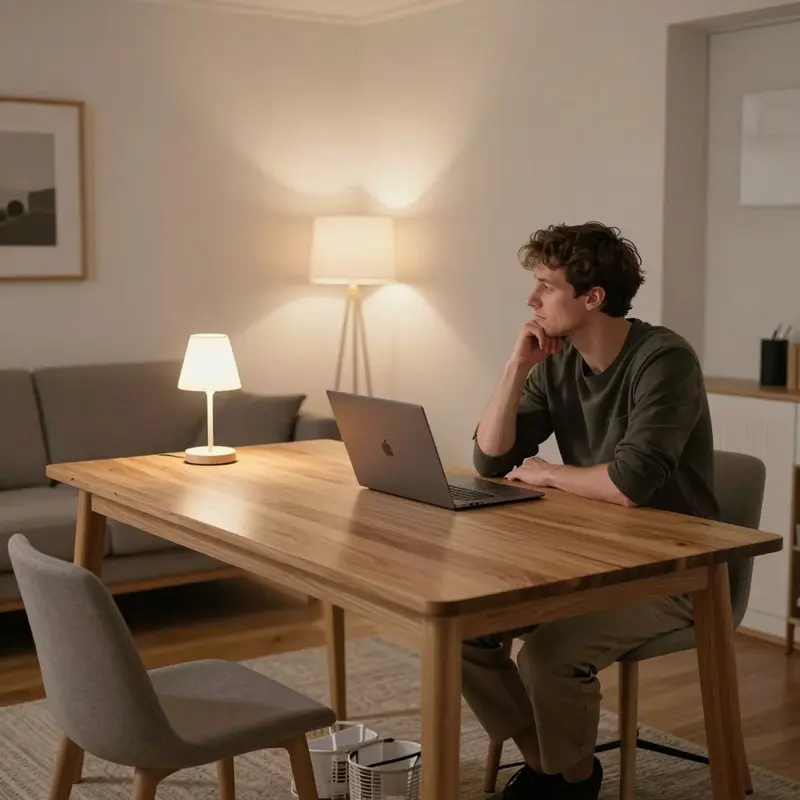
The tension you’re left holding, whether your workspace can actually look like your home instead of a corporate concession, has a cleaner answer than the industry usually admits. Aesthetic minimalism and functional minimalism aren’t competing values. They’ve just been marketed to you as if they were.
For years, the dominant visual language of the remote workspace leaned into severity: white desks, gray walls, surfaces scrubbed clean of anything personal. That aesthetic has aged badly. Designers increasingly describe it as overplayed, a look that signals effort rather than ease. What’s replacing it isn’t maximalism. It’s something more considered: warmth layered into restraint, organic materials alongside clean lines, spaces that feel genuinely inhabited instead of staged for a productivity influencer’s thumbnail.
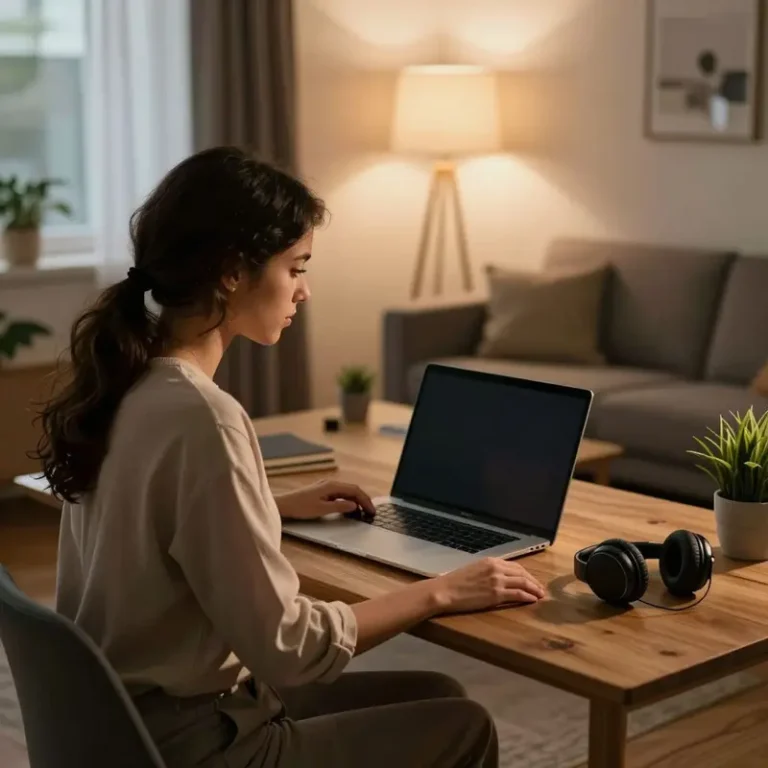
The design philosophies doing this most effectively right now are Japandi and its Scandinavian relatives, which fuse minimalist structure with coziness as a deliberate principle, not an afterthought. A warm-toned wood desk surface, a single textile on the chair, a small plant that earns its square footage: these aren’t decorative indulgences. They’re the difference between a space you tolerate and one that sustains you across a full workday. The functional argument for warmth is that humans work better in environments they actually feel comfortable in, and no amount of ergonomic optimization overrides the dull drain of staring at a cold, impersonal corner for eight hours.
This is where a genuine minimalist home office setup separates from a merely sparse one.
Sparse means removing things. Minimalist, done well, means choosing things that carry more than one kind of value: a lamp that provides task lighting and creates atmosphere, a surface that functions as a desk without announcing itself as office furniture, storage that disappears into the room’s existing logic instead of contradicting it. The trajectory in home office design isn’t toward more purposeful gear piled onto existing gear. It’s toward fewer, better-integrated components that serve both the work and the life happening around it.
You don’t need to settle this as a style question. Settle it as a spatial one. What does the room already say, and what does your work actually require? When those two answers line up, you’re not compromising. You’re designing.
And that’s exactly when it gets real: when the room isn’t really yours to claim.
Renter realities: Designing workspaces that disappear on command
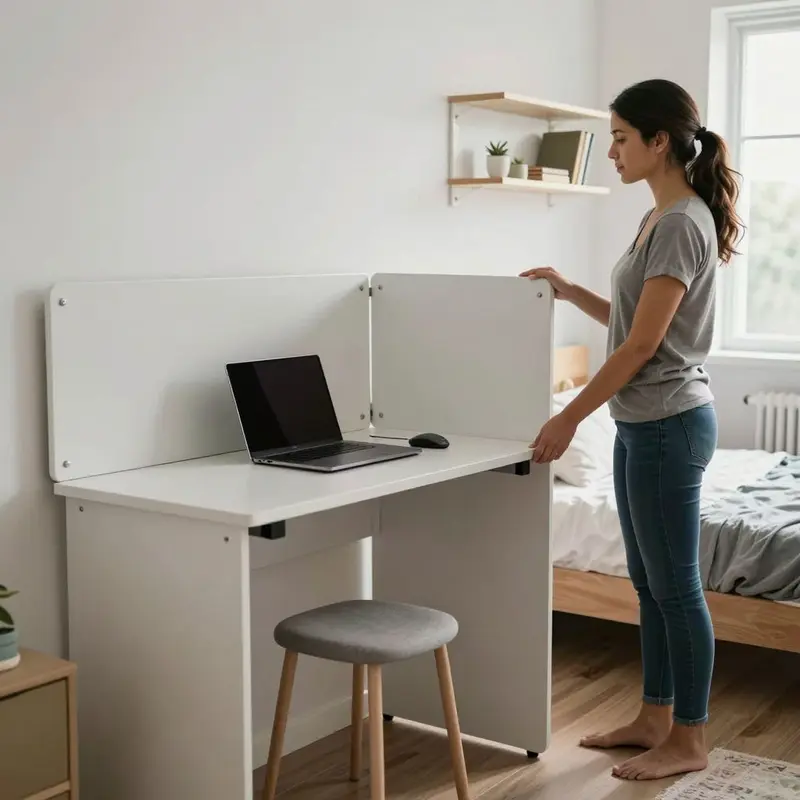
The room isn’t yours to claim, but the way you work inside it absolutely is. That distinction matters more than most renters give it credit for. Permanent fixtures are off the table, yes, but the whole category of workspace design has been moving in a direction that works in your favor: reversible, modular, and built to disappear on command.
This is where a minimalist home office setup stops being an aesthetic preference and becomes a practical strategy. When you can’t drill, renovate, or commit to a layout, the smartest move is to stop trying to copy the permanence of an owned space. Instead, you design around impermanence on purpose. Furniture does more than one job. Storage goes up the wall, not across the floor. The workspace folds away when the workday ends.
Three approaches are earning traction for exactly this kind of constraint:
- Modular wall desks that mount without permanent damage, anchor a work zone visually, and come down cleanly when a lease ends.
- Bookcase room dividers that carve dedicated workspace out of a shared living area, creating psychological separation without touching a single wall.
- Fold-flat and vertical storage solutions that replace the instinct to accumulate gear with the discipline to go upward and then get out of the way.
What connects all three isn’t just portability. It’s the underlying logic that a workspace earns its place by being useful, not by being present. If you can shift a room between work mode and home mode in under five minutes, you don’t have to trade one life for the other.
The reversibility principle also removes a particular anxiety renters know well: the fear of overcommitting to a setup you’ll have to abandon at the next move. Temporary upgrades that leave no trace aren’t a compromise. They’re a feature. You stay agile. The setup serves the lease, not the other way around.
More and more, the design industry is building products with this renter logic baked in from the start, not as an afterthought. Flexibility doesn’t look like a pile of compromises anymore. It looks like choices that assume you’ll move, and still let you work like you mean it.
The future of minimalist design meets renter reality
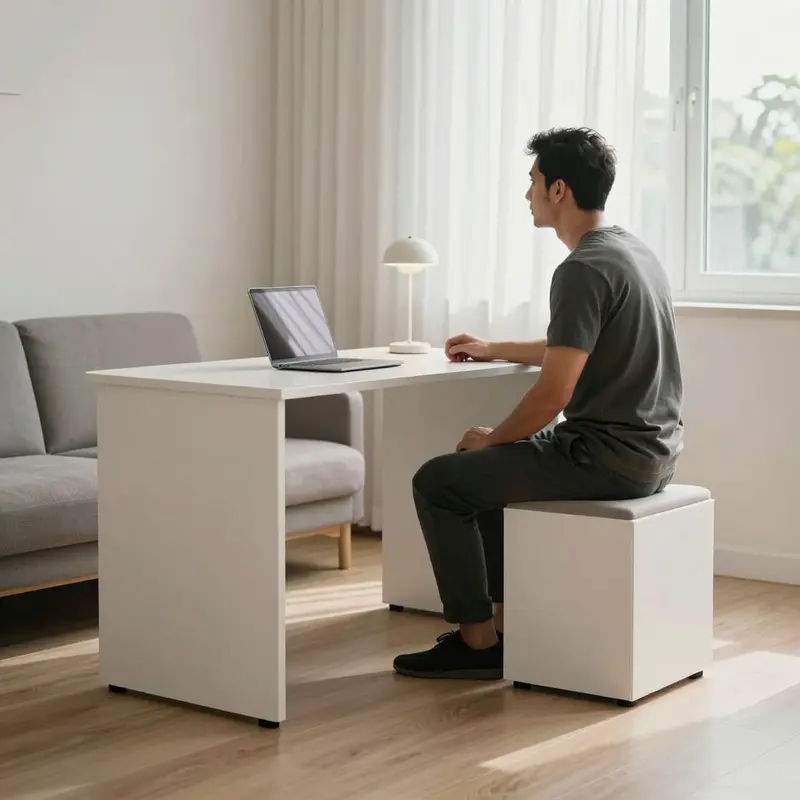
Picture a desk that folds back into a wall panel and disappears before your landlord schedules a walkthrough. That kind of product isn’t a prototype anymore. The furniture industry has moved modular design from a niche category into the mainstream, and the momentum is accelerating in exactly the direction renters need.
What’s driving this isn’t aesthetics. It’s a clear-eyed recognition that more people live in spaces they don’t own, and they need furniture that respects that reality. Renter-friendly design now means non-permanent by default, not by accident. Pieces that anchor without drilling, expand without sprawling, and pack without requiring a storage unit have stopped being specialty items and started filling catalog pages.
The most useful shift is in how designers are thinking about function. Instead of asking, “how many items does a workspace need,” the better question is, “how much can one item do?” That reframe is what powers a genuinely minimalist home office setup in a rental: not fewer compromises, but smarter objects. A surface that expands for a monitor and contracts for a coffee cup. A shelving unit that reconfigures when the lease changes and the new living room wall runs a different direction.
This logic has moved beyond furniture into the built environment itself. The construction industry has begun applying modular principles to prefab housing, creating more standardized, flexible living environments at scale. That matters for renters because it signals where landlords and developers are heading. The spaces you’ll rent in five years may already be designed around reconfigurability, with wall systems and floor plans that assume the tenant will adapt the room, not just occupy it.
That convergence, between what you bring into a space and what the space itself offers, is where the real opportunity sits. The tools are already getting smarter, the rooms are slowly following, and the gap between renting and owning a space that works for you narrows with each product cycle.
Set up your workspace like you’re rehearsing for what’s next: a rental market built for reconfiguration, where your desk, your storage, and the room itself are all meant to move with you.
Final thoughts
Once you see the problem clearly, “more gear” stops looking ambitious and starts looking like a lack of decisions. For renters, the goal isn’t a smaller office. It’s a workspace that behaves, it supports you when you’re working and releases the room when you’re not.
That’s the deeper promise of a minimalist home office setup: it’s not about proving you can do more with less, it’s about building a setup that can change states on command. Your lease will change. Your layout will change. If your work life can flex with that, you’ll feel at home more often, even when the address keeps moving.
Further reading
Leave a comment