















No products in the cart.

Shop this story
Testing cheap smart security: 6 reasons renters lost privacy
by Anabel Figueroa
Renting can make you feel temporary, but your devices don’t get the memo. You buy a camera or smart lock because it’s cheap and simple, then you realize the cheap smart security privacy risks aren’t just about someone picking the lock. They’re about who else gets a copy of the keys.
The hard part is that privacy loss rarely feels like an “incident.” It’s quiet. It shows up as settings you didn’t notice, data you can’t fully erase, and permissions you never meant to grant. And because renters often move, you’re constantly resetting your home while your accounts, backups, and vendor records keep going. Peace of mind shouldn’t come with a long tail of exposure, but with bargain security gear, it often does.
1) Weak or default passwords: The easiest door in
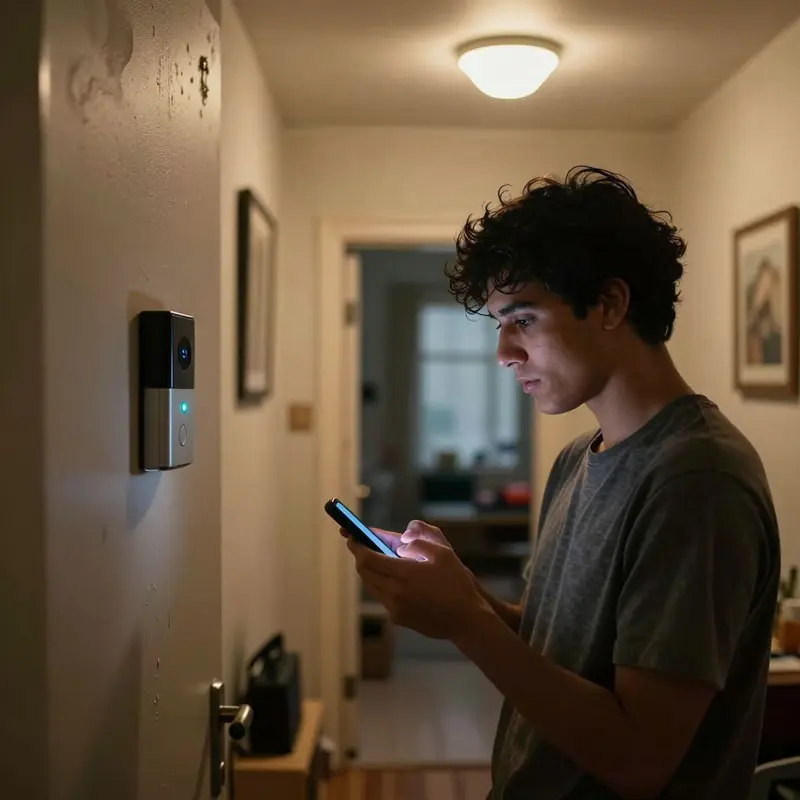
Renters shopping for affordable smart security cameras, smart locks, and video doorbells are making a reasonable bet: spend a little now, gain peace of mind later. The problem is that 86% of data breaches involve stolen credentials, and attacks built on compromised logins have surged 71% year-over-year. Cheap smart security privacy risks don’t usually start with a sophisticated hack. They start at the factory, with a default username and password that thousands of other customers share.
Every manufacturer-assigned credential is a known quantity. Cybercriminals don’t need to guess randomly when device default logins are catalogued in public databases and hacker forums. The moment your camera goes online without a password change, it’s effectively broadcasting an open invitation. This isn’t a remote threat scenario reserved for corporate targets. It’s the everyday exposure renters face when onboarding a new device takes ten minutes and a password reset feels optional.
The good news is that the remediation side of this problem is unusually concrete. You have direct control over it, right now, before anything else in your setup. When configuring any smart security device, treat these steps as non-negotiable:
- Change the default password immediately during setup, using a unique, complex credential you haven’t used on any other account.
- Enable multi-factor authentication on every app or account tied to your security devices, so a stolen password alone can’t grant access.
- Place your smart devices on a separate Wi-Fi network, often called a guest network, so a compromised device can’t become a gateway to your phones or laptops.
- Disable any features you don’t actively use, since every unused capability is an additional surface a bad actor could potentially exploit.
These aren’t advanced IT moves. They’re your first line of defense against factory settings that were never designed for your threat model, even if the box makes it feel like “plug-and-play” is the whole job.
A device configured at setup isn’t just “safer.” It’s a different class of target.
Once your device is locked down at the account level, the next question shifts to what’s happening to your data while it’s actually moving across your home network.
2) Insecure Wi-Fi/network exposure: When your data travels naked
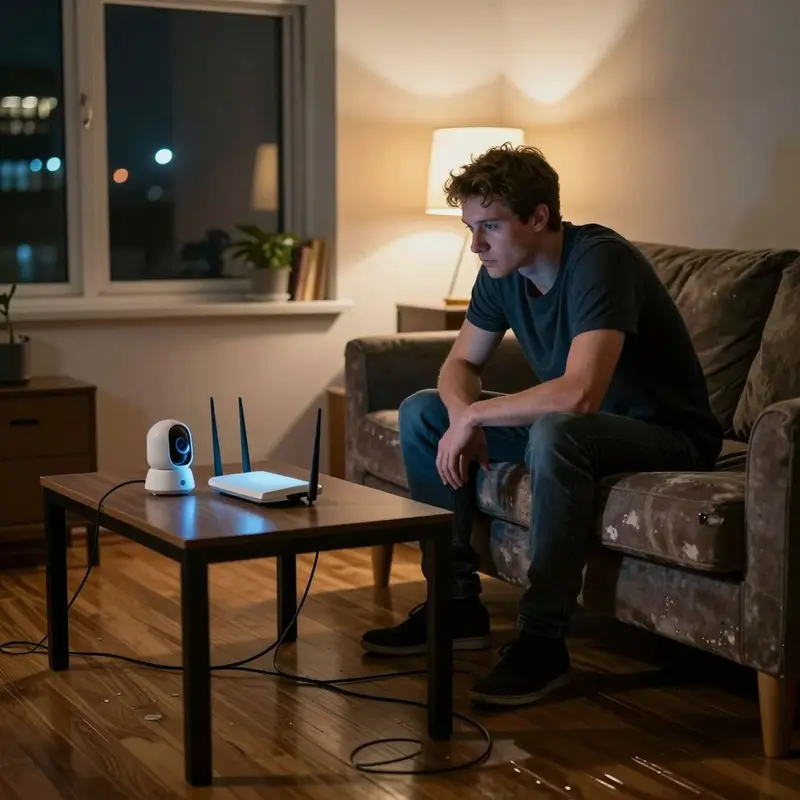
The lock on your account means nothing if the data leaving your device travels unprotected. That’s the gap that network-level exposure opens, and for budget smart security hardware, it’s often a wide one.
Consider what App Transport Security is designed to do: it enforces encrypted connections so data in transit can’t be intercepted. DeepSeek’s iOS app disabled it entirely, meaning device data the app collected moved across networks without that layer of protection. That’s not a theoretical risk. Any network your device touches, whether your home router, shared building Wi-Fi, or a mobile hotspot, becomes a potential intercept point when that safeguard is missing.
Video doorbells show a parallel problem. Unencrypted data streams paired with weak access controls mean footage or metadata isn’t just exposed at rest; it can be read while it’s moving. You might assume a strong password settles it. The password governs who logs in. It doesn’t govern how the data travels once it leaves the device.
The update problem is what locks all of this in place.
Nearly 9 in 10 smart products on the market fail to disclose how long they’ll receive software updates, which means you often can’t know when your device stops getting the security patches that keep transport vulnerabilities closed. A doorbell that shipped with reasonable data handling can quietly lose that protection the moment its firmware stops being maintained and the underlying exploits go unaddressed.
These aren’t isolated bugs in otherwise sound devices. They reflect the architecture of cheap smart security privacy risks: hardware built to a price point, shipped with shortcuts, and left to age on networks that keep evolving around them.
If the data survives the trip, you’re not done. The next question is what happens after it arrives: even traffic that isn’t intercepted can still land somewhere you never agreed to, persist far longer than you intended, and be used in ways that are technically disclosed only in the densest paragraph of a privacy policy.
3) Unclear retention and deletion policies: Where your footage really goes
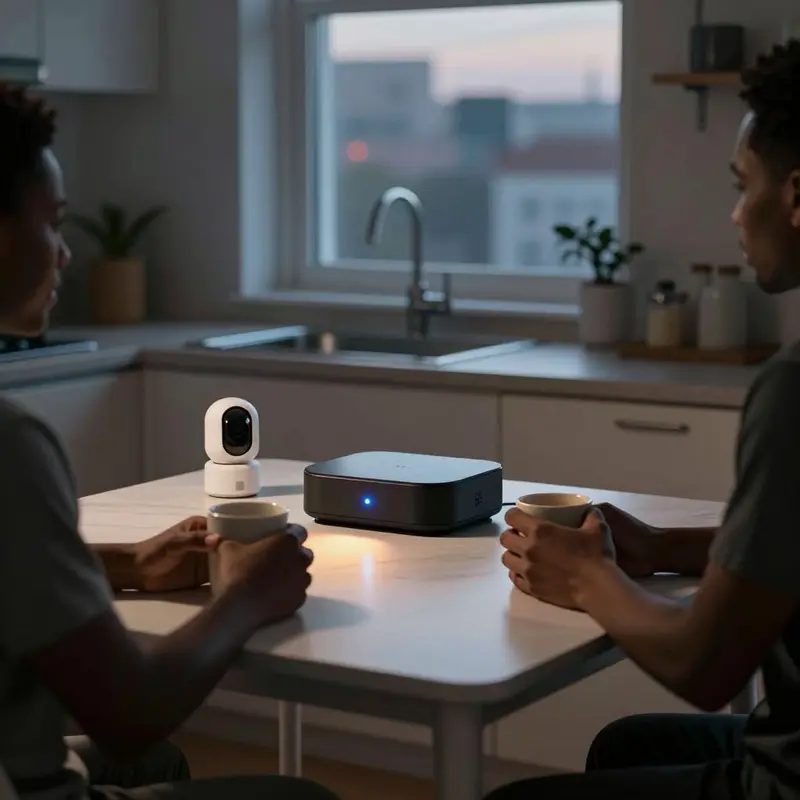
Picture the moment you tap “delete account” on a camera app. The confirmation screen thanks you for your time. But what happens to the footage already uploaded? That’s where cloud data retention governance quietly becomes your problem, not the vendor’s.
Most budget-focused security platforms don’t answer it clearly. Their privacy policies, often buried three scrolls deep and written in heavily qualified legal language, describe data handling with phrases like “we may retain” and “at our discretion.” That language isn’t accidental. It gives the company room to keep your recordings, motion logs, and behavioral patterns long after you’ve walked away from the product. The cheap smart security privacy risks most people focus on are interception and hacking, but persistence is the slower threat: data that sits in cloud storage indefinitely, tied to a name and an address.
Regulations like GDPR and CCPA exist precisely because this ambiguity became untenable at scale. Both frameworks push companies toward clearer disclosure and defined deletion windows. But compliance with either doesn’t guarantee the vendor you chose actually follows through. Smaller platforms and white-label hardware brands often operate at the edge of these requirements, and the burden of checking that still falls on you, the account holder.
The problem compounds when AI tools enter the pipeline. Many budget cameras now route footage through third-party AI vendors for motion detection or facial recognition, and those vendors operate under separate data agreements you likely never reviewed. Misconfigured cloud access between the camera platform and its AI processors has repeatedly been identified as a point where data slips past intended boundaries, landing in environments with weaker controls and less accountability.
So even after you’ve found the policy, you’re left with a sharper test: who stores your data, who inside those systems can reach it, and under what authority.
4) Hidden contractor access: When “normal” logins become silent breaches

The question of “who can reach your data” has a more uncomfortable answer than most platform privacy policies will admit.
Authorization sprawl is the gap that opens when a system carefully controls who logs in but leaves unchecked what authenticated users can actually do once they’re inside. Your camera platform may require a password, two-factor verification, and a secure handshake to enter, then extend broad, largely unsupervised access to contractors, third-party processors, and operations staff working across multiple vendor tiers. The login gate is real. What happens past it often isn’t watched with the same rigor.
What makes this particularly hard to spot is that access misuse doesn’t look like a breach. An attacker, or an insider acting outside their role, can pull footage or account data through a legitimate browser session without triggering any alert. The activity looks exactly like normal work. Without anomaly detection and active monitoring baked into a platform’s internal systems, that kind of access can leave no fingerprint you’d ever see.
This is where cheap smart security privacy risks tend to cluster in ways that aren’t obvious from the product page. Budget platforms rarely invest in the insider-risk programs that enterprise security teams use to flag unusual data access patterns. Those programs exist precisely because role-based access controls alone are insufficient. Knowing who holds a credential tells you almost nothing about what they’re doing with it.
The reach of that access can extend in directions that feel remote but aren’t. Surveillance tools connected to law enforcement integrations can carry especially wide search capabilities, and the controls governing them are often weaker than the public-facing privacy policy implies. Technical infrastructure designed to avoid scrutiny can sidestep the oversight mechanisms that would otherwise catch access violations before they compound.
If your footage can be viewed through “normal” internal workflows, you don’t need a break-in to lose control of it. That’s why the next layer of exposure is worth understanding. Your footage doesn’t need to be stolen to leave your hands.
5) Law-enforcement or third-party disclosure: When your footage becomes legal inventory

Law enforcement doesn’t need to knock on your door to access your footage. Under U.S. law, data shared with an online service can be legally compelled through a government request, and the company receiving that request often can’t tell you it happened. The cheap smart security privacy risks you accepted when you signed up for a budget camera’s cloud storage aren’t just about hackers. They include entirely lawful mechanisms that move your data out of your home without a single intrusion.
What makes this harder to track is that police don’t always need a court order. Agencies can purchase personal data directly from data brokers, a practice that currently operates with few meaningful regulations. That means your device’s metadata, location history, or behavioral patterns could be acquired without any judicial review at all. The footage you believe is private may already be part of a commercial dataset that’s perfectly legal to sell.
The Federal Trade Commission’s enforcement action against GM over unauthorized data collection shows how this disclosure pipeline works in practice. GM collected detailed driver data and sold it to insurers without clear consumer consent. The FTC intervened, but only after the damage was done and the data had already moved. When regulators act after the fact, you bear the cost of the gap between the violation and the remedy.
The opacity doesn’t stop at regulators. Nearly 9 in 10 smart products fail to disclose how long they’ll receive software updates, which means you often can’t know when your device stops being maintained and starts being a liability. An unmaintained device is easier to subpoena, easier to scrape, and easier to fold into third-party data pipelines.
This doesn’t require malice on the part of a single company. Cheap connected devices are built for data collection and, increasingly, for sharing. Once your footage enters a cloud ecosystem, it’s subject to every agreement, partnership, and legal obligation that ecosystem carries, including the ones written in fine print you weren’t shown. The exposure point isn’t a broken lock on your front door. It’s the commercial layer that treats your activity as inventory.
6) Vendor or app tracking: When your behavior becomes the product

Walk into any room where a smart TV sits idle, and something is already running. Location signals are being logged. App usage patterns are being catalogued. In some devices, the microphone isn’t simply waiting for a voice command. It’s feeding behavioral data into systems designed to build a profile of whoever’s in the room.
That profile isn’t a byproduct. It’s the product.
This is the architecture behind commercial secondary use, and it extends well beyond smart TVs into the broader category of cheap smart security devices you might install expecting nothing more than a camera feed. The footage, the motion data, the timestamps of when you leave and return: all of it carries advertising and analytics value that manufacturers recognized long before you did. The cheap smart security privacy risks you’re absorbing aren’t accidental. They’re structural, baked into business models that treat your behavioral data as a revenue stream entirely separate from the device you paid for.
What makes this harder to navigate is the update problem. Nearly 9 in 10 surveyed smart products provide no disclosure about software update timelines, which means you often can’t know when a device stops receiving security patches. An unsupported device doesn’t just become vulnerable to outside intrusion; it also locks you into whatever data-sharing terms were active at purchase, with no recourse if those terms quietly expand.
The profiling system works because it’s invisible and incremental. Your location one week, your app habits the next, your audio environment feeding into inference models you’ll never see. By the time a profile is detailed enough to influence what ads follow you across the internet, the data has already moved through vendor analytics pipelines, third-party partners, and agreements you accepted when you tapped “I Agree” on a setup screen.
You may think you bought a device. More and more, what you actually funded is a business model that follows you long after setup, without ever needing you to notice.
Final thoughts
Once you zoom out, the real risk isn’t a single weak point. It’s a chain of normal choices that quietly shifts control away from you, until “my home security” starts behaving like “someone else’s system.” The cheapest device can end up being the most expensive form of trust.
Think of privacy like a boundary, not a setting. Every time data leaves the device, gets stored elsewhere, or becomes accessible through routine workflows, that boundary gets redrawn. You can still buy affordable gear, but you should treat cheap smart security privacy risks as a design constraint, not a surprise. If a product can’t clearly tell you who gets access, how long data lives, and what happens when you leave, it’s not protecting your space. It’s collecting it.
Further reading


Leave a comment