














No products in the cart.

Shop this story
The 2026 built-in furniture trend: Why renters are losing their home office walls
by Anabel Figueroa
Working from a rental can feel like trying to build a real office in a place you’re not allowed to change. That’s why work from home zone ideas for renters have gotten so specific lately: you need focus, privacy, and a clean mental switch at 6 p.m., without a single hole in the wall.
Here’s the tension. The more “built-in” your setup looks, the more it can behave like a renovation in someone else’s eyes. Style trends are pushing bolder choices, but leases are still written for blank walls and fast move-outs. So the real problem isn’t picking a desk. It’s designing a workspace that holds up under daily use and holds up at inspection.
Space-efficient solutions that create work–life boundaries
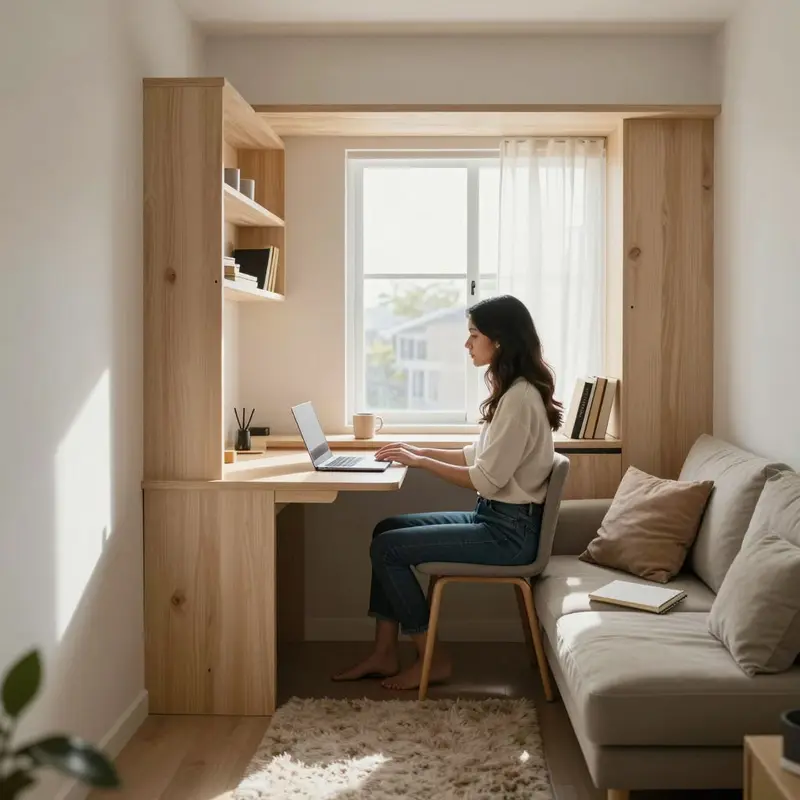
Picture a Tuesday morning in a one-bedroom apartment: a laptop balanced on the kitchen counter, a video call competing with street noise, and a lease agreement that explicitly forbids drilling into the walls. This is the daily reality for millions of remote work renters in 2026, people who need a dedicated workspace but live under the quiet tyranny of “return to original condition” clauses. The challenge isn’t motivation or equipment. It’s architecture.
The good news is that the design industry has caught up to this constraint in a meaningful way. Where previous years rewarded renters who could afford custom built-ins or were willing to sacrifice their deposit, 2026’s dominant thinking runs in the opposite direction. Removable, renter-friendly solutions have become the functional standard, not a compromise. Visual zoning and non-permanent personalization are now understood as legitimate design tools, capable of transforming an open-plan studio into a space that actually feels like it contains a workplace.
If you’re searching for practical work from home zone ideas for renters, the most effective approaches share one defining quality: they create psychological separation without physical permanence. Consider the three methods gaining the most traction this year:
- Peel-and-stick wall treatments can redefine an entire wall in an afternoon, establishing a visual boundary between work and rest without leaving any trace on the plaster beneath.
- Layered color strategies, borrowed from maximalist interiors, use rugs, textile panels, and removable wallpaper to carve distinct zones from a single open room, making a small space read as larger and more intentional.
- Freestanding furniture arrangements, positioned deliberately rather than pushed to walls, create spatial flow that guides behavior, signaling to your brain where focus begins and where it ends.
What unites these approaches is something more interesting than their removability. They treat the rental apartment not as a limitation to work around but as a canvas with specific rules, and those rules have quietly produced a more creative and adaptable design vocabulary than fixed construction ever required.
This momentum isn’t just aesthetic, and it isn’t a niche habit anymore. Renters are personalizing their spaces at a rate that landlords and designers alike are beginning to track carefully, and that growing adoption is already attracting serious attention from manufacturers, investors, and interior design forecasters. A permanent behavioral change in how people work from home creates durable commercial demand, and that demand is just beginning to register in the data.
Market dynamics: Why renters are dodging built-in desks

The data is telling a story that doesn’t match the headline. Demand for permanent, built-in work-from-home setups among renters isn’t surging in 2026, at least not in the way designers and manufacturers might’ve anticipated when remote work first reshaped the housing conversation. What the market is actually producing is something more nuanced, and for anyone trying to make a rented apartment feel like a real workspace, that distinction matters.
Renters in 2026 are prioritizing storage and walk-in closet access over dedicated WFH zones. That’s the clearest market signal available: when people choose between permanent work infrastructure and flexible personal space, flexibility wins. Built-in desks and custom millwork carry permanence, and permanence is exactly what renters are structurally incentivized to avoid.
The solutions gaining the most traction right now reflect that incentive directly. Geometric zoning has emerged as the dominant framework for carving out work from home zone ideas for renters who can’t touch walls or floors with anything lasting. Patterned rugs establish visual boundaries. Removable wall art signals function without drilling. Peel-and-stick wallpaper turns a corner into a backdrop that reads as intentional rather than accidental. These aren’t compromises; they’re the leading edge of a design logic that treats impermanence as a feature, not a limitation.
What’s revealing about the Spring 2026 trend picture is what’s absent from it. Maximalist aesthetics and bold geometric designs are dominating the conversation, but built-in WFH furniture doesn’t show up in the same breath. That gap is data. When professional forecasters describe the season’s design priorities and a category simply doesn’t come up, that category isn’t accelerating. It’s waiting for a renter market that isn’t ready to commit.
That shifts the commercial opportunity away from where early attention focused. Manufacturers and investors tracking this space should note that the adoption curve for removable, renter-friendly solutions is the one with real momentum. The aesthetic aspirations are there, and the intent to create functional home offices is there, but the structural constraints of renting keep deciding what gets bought and what sits on showroom floors. Where those constraints ease, through longer leases, greater landlord flexibility, or ownership transitions, the built-in story gets more interesting. Until then, the market keeps choosing peel-and-stick, and the next wave of material and product innovation will have to answer to that choice.
Tech and sustainability: How renters turn temporary layers into lasting leverage
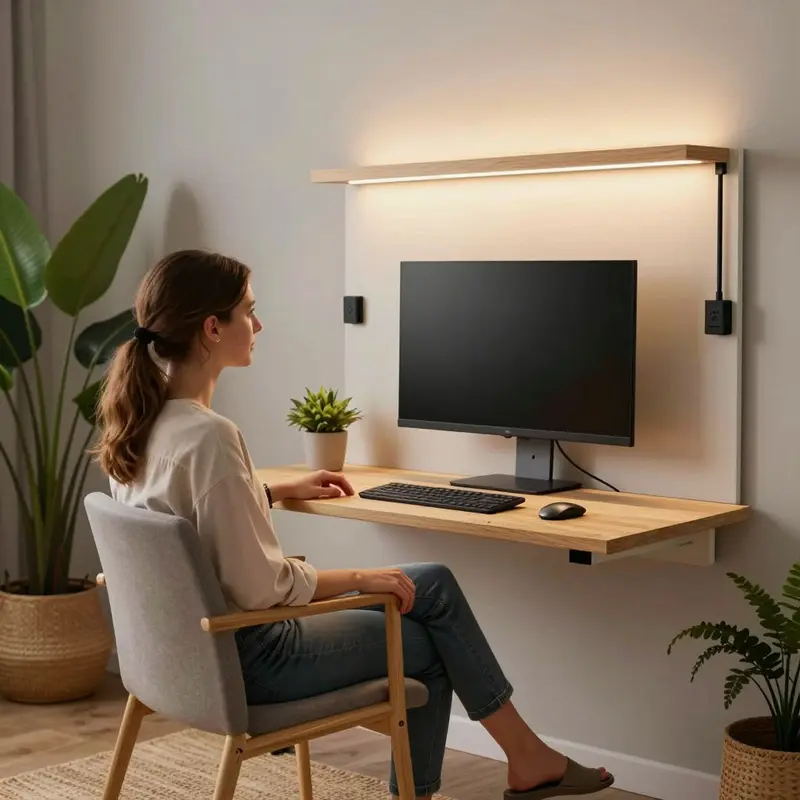
The answer to that constraint isn’t being engineered in a factory. It’s being assembled in living rooms, one removable layer at a time.
What’s actually driving design innovation for renters in 2026 isn’t a breakthrough in smart home technology or a new sustainable material supply chain. It’s a shift in problem-solving logic. The materials leading the charge, peel-and-stick wallpaper, removable floor tiles, repositionable textiles, have been around for years. What changed is that renters stopped treating them as compromise options and started treating them as a design vocabulary in their own right.
This reframing matters. When you’re building out work from home zone ideas for renters, the creative constraint of lease compliance stops being a limitation and starts functioning like a design brief. Geometric arrangements define zones without a single nail or bracket. Color-blocked textiles signal “this is where work happens” without permanently altering a wall. The result is a modularity that, ironically, outperforms the rigidity of a built-in when your needs shift from quarter to quarter.
The 2026 trend toward maximalism and bold personalization is accelerating this. Homeowners are channeling that energy into artisan craftsmanship and vintage accents, expressions that require permanence. Renters are channeling the same impulse through layering and reconfiguration, which produces something worth noting: their spaces can evolve faster. The design isn’t locked in the wall; it lives in the choices that can be undone.
Modular and temporary solutions also carry a practical intelligence that’s easy to undervalue. When your lease ends or your layout changes, the investment travels with you. There’s no sunk cost in a wall you can’t take down. The flexibility built into these approaches isn’t just an aesthetic position; it’s a financially sound one.
What emerges from all of this is a coherent design ecosystem rather than a collection of workarounds. Geometric zoning, removable surface treatments, and reconfigurable textiles aren’t separate tools. They operate together to produce environments that feel intentional and finished, not provisional.
And that intentional look is also where friction tends to show up, because the standard you’re designing to shifts at move-out. A space that feels complete to the person living in it doesn’t always read the same way to a landlord reviewing a lease return. The same removable tile that preserved your deposit in theory can become a point of dispute in practice, and the gap between “temporary” as a design principle and “temporary” as a legal standard is wider than most renters expect when they’re planning the space.
Contentious developments: When “removable” becomes a deposit risk
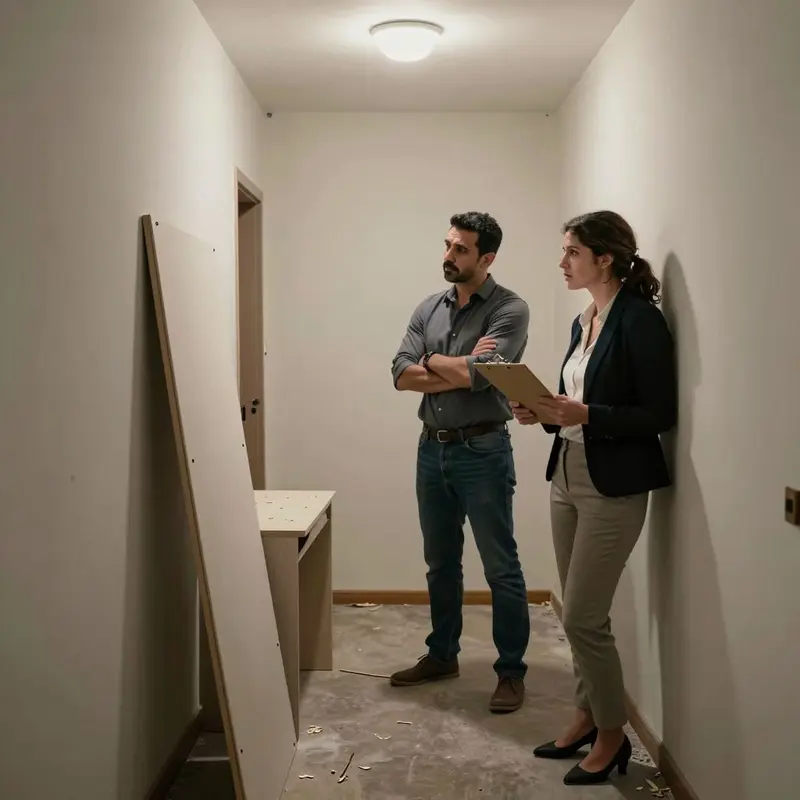
The dispute doesn’t begin when you move out. It starts the moment your landlord’s definition of “altered” collides with yours. A geometric-patterned room divider that visually carves your living room into a dedicated work zone reads, to you, as exactly the kind of non-damaging adaptation the 2026 renter market has made possible. To the person reviewing your lease return, it may read differently.
That tension sits at the center of nearly every creative work from home zone idea for renters circulating right now. The broader design moment is undeniably energizing: the hard shift away from pared-back minimalism toward bold, flexible maximalism has given renters a genuinely richer toolkit. Temporary elements, removable decor, and repositionable visual anchors can now deliver the layered, expressive environments that used to require a contractor. But the friction point isn’t the aesthetic ambition. It’s the definitional gap that follows it.
Homeowner trends and renter realities have always diverged, but the 2026 landscape sharpens that divergence in a specific way. Homeowners pursuing built-in furniture and permanent workspace integration are making irreversible investments that deepen a property’s value. Renters pursuing the same visual effect through reversal-friendly adaptations are operating under a completely different risk calculus. The design outcome can look nearly identical. The legal and financial exposure couldn’t be more different.
What makes this genuinely contentious is that “removable” is doing too much work as a category.
Consider the practical layers involved when you’re building a maximalist home office corner using only temporary elements:
- Geometric decor and bold wall patterns create convincing visual zone separation without adhesives or fasteners, but “no adhesive” doesn’t automatically mean “no damage” in every lease context.
- Removable tile and modular shelving preserve deposit safety in theory, yet condition standards vary enough across landlords that the same installation can pass in one property and generate a dispute in another.
- Flexible, repositionable pieces enable the bold maximalism the 2026 trend demands, yet the cumulative visual impact of a fully maximalist room can trigger scrutiny regardless of how each individual element was installed.
The risk isn’t located in any single decor choice. It lives in the accumulated interpretation of all of them together.
The trend still leaves a basic question unanswered: who defines whether your adaptation counts as “temporary” when money is on the line? The brands building products for this moment will increasingly have to answer that directly, through smarter reversibility standards and clearer guidance, rather than leaving renters to navigate the gap alone.
Leading brands and future predictions: How reversible built-ins win the WFH race
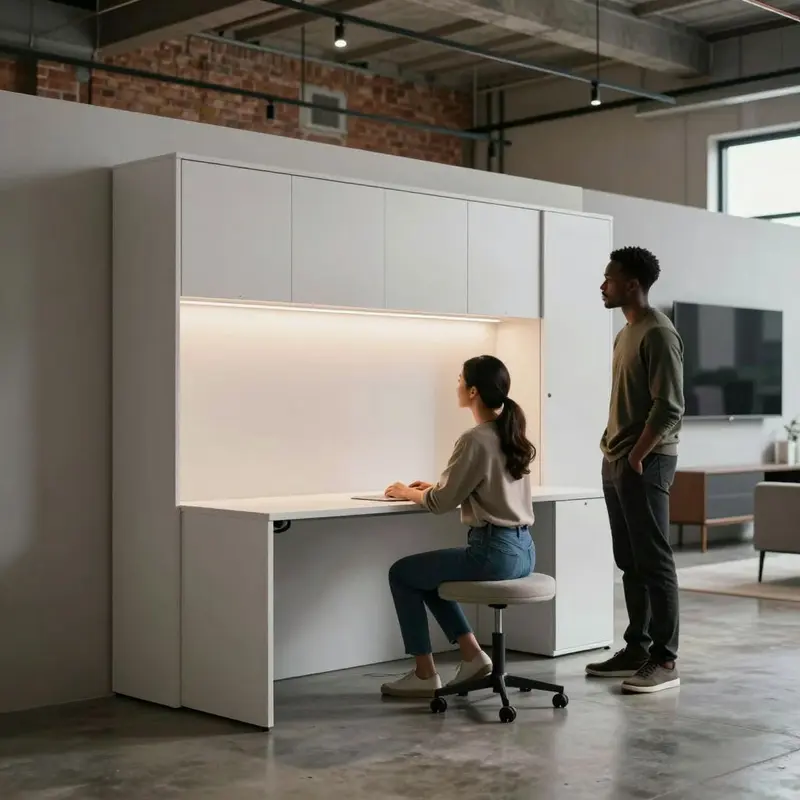
The answer, it turns out, is already being built into product lines. Picture a showroom floor in 2026: flat-pack panels that slide into place without a single screw touching a load-bearing wall, desk surfaces that fold away after hours, and storage columns a tenant can disassemble in an afternoon. This isn’t a design trend saved to a wishlist. It’s a coordinated response by manufacturers who’ve read the same data you’re living through.
IKEA is the most visible player in this shift, developing renter-friendly modular built-ins specifically engineered for multi-use spaces. The logic is straightforward: if nearly two-thirds of renters now need a dedicated work zone and can’t alter their walls, the product has to do the architectural work instead. That pressure is exactly what’s driving projected global market value for home office built-ins toward $12 billion in 2026, with demand sustaining a compound annual growth rate of 8.5% through the end of the decade. Those numbers describe an industry that’s accepted this problem as permanent, not provisional.
Where the market goes next is the more interesting question. AI-integrated smart walls, surfaces that can adjust lighting, connectivity, and acoustic output based on your schedule, are forecast to move from prototype to mainstream adoption by 2028. Right now, only about 15% of renters have adopted any version of these integrated systems, which means the gap between what’s technically possible and what’s actually installed in renter homes is still enormous. That gap isn’t ignorance. It’s mostly cost and uncertainty about what a landlord will permit when the lease ends.
This is precisely why the most competitive work from home zone ideas for renters will increasingly be defined not just by aesthetics or functionality, but by clear reversibility standards baked into the product itself. Brands that solve the deposit question as part of the design brief, rather than leaving it as a footnote, are the ones positioned to capture the bulk of that growth.
The bigger implication is structural: as more manufacturers move in, the defining feature won’t be the smartest wall or the cleverest fold-out desk. It’ll be proof. The brand that can hand a renter a credible, documented case that their setup counts as furniture, not renovation, will set the rules everyone else has to follow.
Final thoughts
The renter home office is turning into a standards problem, not a style problem. What counts now isn’t how permanent something looks, but how provable its reversibility is when it’s time to leave.
That shifts the whole category. “Removable” stops being a vague promise and becomes a requirement you can document, repeat, and trust, like a safety rating. The best work from home zone ideas for renters will keep chasing beauty and comfort, but they’ll also be built around evidence: materials that release cleanly, systems that disassemble predictably, and choices that don’t rely on a landlord’s mood. The future office wall might be modular, but the real upgrade is clarity.
Further reading


Leave a comment