











No products in the cart.

Shop this story
Ventless heat-pump laundry is pulling ahead where apartment renters lack space
by Anabel Figueroa
The ventless heat pump washer dryer is easy to romanticize when you’re staring at a shared laundry room or a lease that rules out any real upgrade. For apartment renters, the appeal is obvious: one machine, no vent, standard power, and a shot at getting your time back without asking a landlord to open a wall. That promise lands hard when your alternative is planning your week around other people’s wash cycles.
But the real decision is heavier than the sales pitch makes it sound. A machine that fits your apartment can still ask for patience, upkeep, and a different rhythm than the laundry habits you already have. The tension here is whether the trade it offers actually fits the way you live. That the technology works goes without saying.
Constraint-driven demand: No vents, no 240V, real momentum
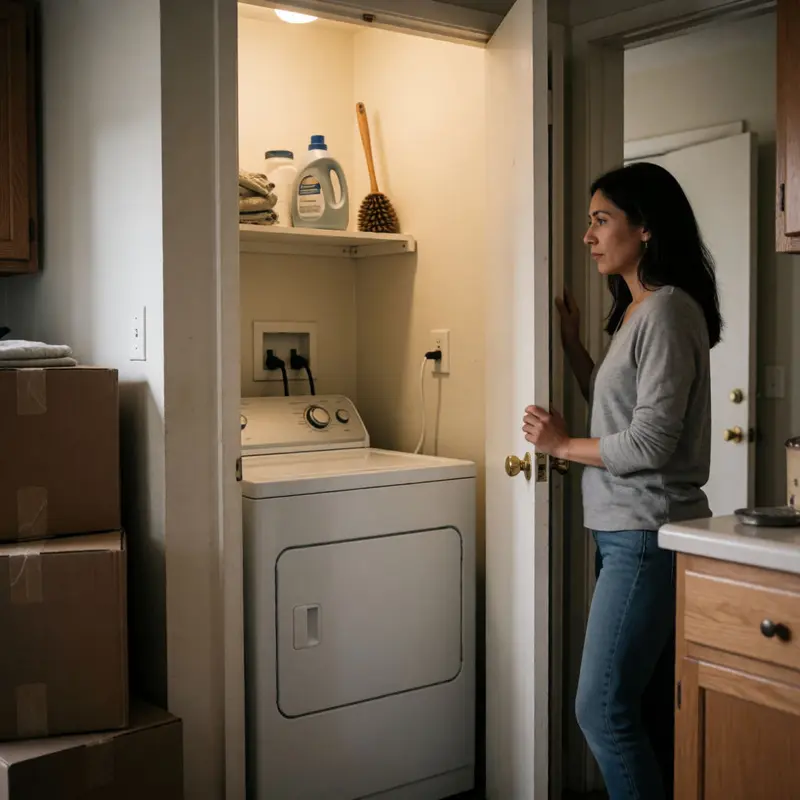
You haul a laundry bag down two flights of stairs, feed quarters into a shared machine on the ground floor, and then wait forty-five minutes in a room that smells like other people’s fabric softener. The dryer leaves things damp. You run it again. By the time you’re back upstairs, half your afternoon is gone, and you’ve spent more than you planned just to wash one load.
For renters in buildings without in-unit laundry hookups, this is just Tuesday. The frustration is real, but the obstacle is also specific: buildings built before modern laundry infrastructure was standard often have no exhaust duct running to individual units, and landlords typically won’t cut holes through walls or floors to add one. Without a vent to the outside, a conventional dryer is a code violation waiting to happen.
That single constraint is what’s driving serious interest in the ventless heat pump washer dryer combo. Unlike a traditional vented dryer, a heat-pump unit recirculates warm air internally to pull moisture from clothes, so it never needs a duct to push humid exhaust outside. Energy Star explicitly identifies apartments without existing vent access as one of the clearest use cases for this technology. And because the whole washing-and-drying cycle happens in one machine, the footprint shrinks to something a closet or a kitchen corner can actually absorb.
The electrical side is just as important for renters. Models like the LG and Samsung all-in-one combos run on a standard 120V/15A household outlet, the kind already behind most kitchen appliances. No electrician, no panel upgrade, no landlord negotiation over dedicated 240-volt wiring. Some buildings also prohibit any structural change that venting would require, so the ability to install wherever a water line and a standard outlet are available isn’t a convenience feature so much as the entire reason the category exists.
None of this makes the machines perfect. Drying a full load can take noticeably longer than a standalone dryer would, and the upfront price sits higher than vented alternatives, though that gap has been narrowing. For renters deciding between communal laundry access and the expense of handling everything at home, longer cycle times are a real consideration, not a footnote.
The performance trade: 3½-hour cycles, half the power

The energy savings from a heat-pump dryer are real, and the slowness is equally real, and consumer testing makes it uncomfortable to talk about one without the other. Consumer Reports found that the GE Profile heat-pump washer-dryer combo took 3½ hours to dry a 12-pound load, while a conventional electric dryer finished the same load in under an hour using roughly twice the electricity. That gap in cycle time is far too large to dismiss as a rounding error. It is the central trade you are agreeing to.
Slower drying is a structural consequence of how these machines work. A heat-pump dryer runs at lower temperatures than a vented dryer, recycling warm air in a closed loop rather than exhausting it and generating fresh heat continuously. The physics that make this efficient are the same physics that make it gradual. Reviewed’s testing of the LG DLHX4072W put the heat-pump cycle at 2 hours 12 minutes against 1 hour 52 minutes on the conventional setting, a gap that’s narrower than the GE Profile’s but still measurable. Whirlpool, in comments submitted to ENERGY STAR, cautioned that even units capable of meeting laboratory drying-time benchmarks may leave consumers feeling a noticeable drop in performance compared with what they were used to from a vented dryer.
Whether that slowness actually disrupts your life depends on how you do laundry. If your habit is to run a load before bed and pull it out in the morning, a three-hour cycle costs you nothing. If you’re trying to get through three loads on a Sunday afternoon, the math changes. The appliance fits some rhythms and fights others.
What the lower temperature genuinely delivers, beyond the energy savings, is a gentler drying environment for clothes. ENERGY STAR flags this directly: fabrics cycle through heat stress hundreds of times over their life, and reduced heat is reduced wear. Good Housekeeping echoes the same point, noting that recycled warm air is less punishing on fibers than the sustained high heat of a conventional drum. The energy efficiency is the headline, but fabric longevity is a quieter, compounding return that accumulates with every cycle.
Field research on real household usage is still catching up to lab results, so the energy savings you’ll see in practice may vary from what a controlled test produces. What the controlled tests do establish clearly is the shape of the deal: you spend more time, you spend less electricity, and your clothes absorb less punishment in the process.
Policy as a sales channel: EU rules sideline vented dryers
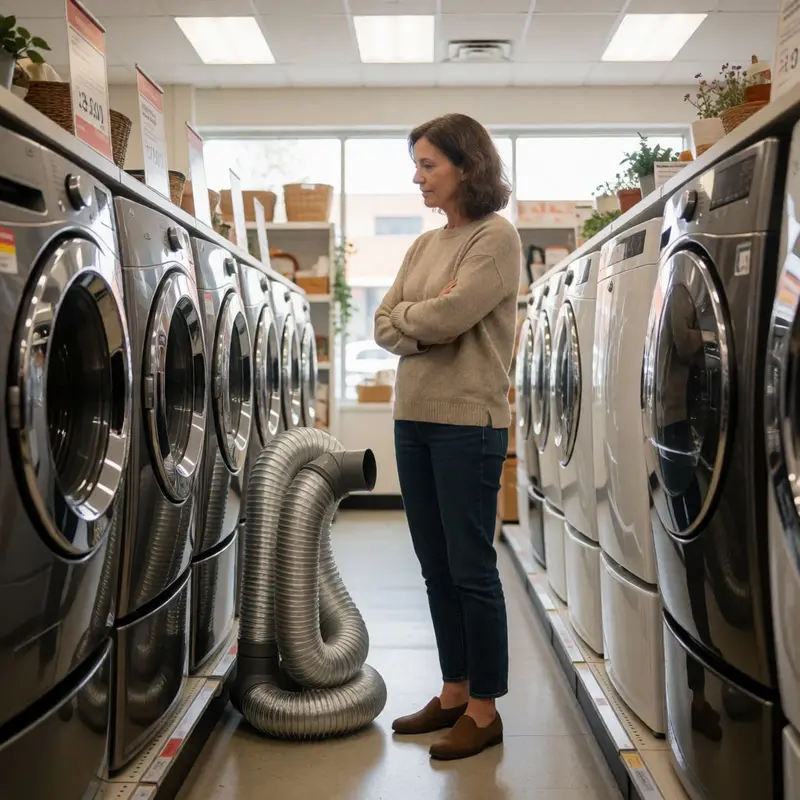
Governments have a quieter way of shaping what ends up on store shelves: they simply make the alternatives illegal. On 1 July 2025, new ecodesign rules took effect in the EU requiring that only tumble dryers using the most efficient heat pump technology can be placed on the EU market. Manufacturers who wanted to keep selling into Europe had one compliant path forward, and vented dryers were not on it.
The energy case behind that rule is straightforward. According to European Commission data, heat pump dryers consumed 1.0 kWh per drying cycle compared with 2.7 kWh for vented electric dryers and condenser dryers with heating elements. Heat pumps cut energy per load to roughly a third of vented and condenser models’, forming the technical foundation the regulation stands on. When the efficiency difference is that wide, a policy nudge becomes a policy shove.
The labelling side of the rule reinforces the purchase-point pressure. The EU rescaled its tumble-dryer energy label to a unified A-to-G scheme, with A as the top class, replacing the old A+/A++/A+++ ratings that had become increasingly difficult to parse. Labels now include a QR code linking to full product data. A customer standing in front of a display wall can scan a code and pull up efficiency figures before they decide. Scannable efficiency data at the point of purchase tends to accelerate the market shift that the ecodesign rule already mandated.
The UK is moving along a parallel track. Proposed regulations there would set a maximum energy efficiency index of 85 for standalone tumble dryers and require every compliant model to include an eco programme. Which? has reported that the practical effect of those thresholds would be to make heat pump models the dominant option available to buyers.
Although that legislative momentum has a real gap: the UK minimum energy performance standards apply only to standalone tumble dryers, not to washer-dryer combos. The combined units that fit a single closet or a bathroom corner fall outside the scope of the rule entirely. For anyone living in a space where a standalone dryer was never realistic, the policy shift changes what’s on the shelf but not necessarily what’s relevant to them.
A repairability index, set to appear on EU energy labels from January 2027, will add another dimension to the comparison. Longevity and serviceability will sit alongside efficiency as visible purchase criteria, which tends to favour machines worth repairing rather than machines worth replacing.
Friction and failure modes: Slower cycles, more upkeep
Repairability scores and energy labels tell you what a machine costs to run; they say nothing about what it costs to live with. That gap is where the real friction with a ventless heat pump washer dryer tends to surface, and it’s worth looking at honestly before the purchase is made.
A full wash-and-dry cycle on the LG WM6998HBA combo averaged 142 minutes in independent testing, and that figure sits toward the better end of the category. Condensing and heat-pump ventless dryers can take roughly twice as long to dry a load as a vented machine, and heat-pump models can add even more time on top of that. The practical consequence is a machine that handles one load at a time, slowly, with no ability to run a second load while the first is still drying. On a heavy laundry day, that arithmetic compounds.
Some units never fully close the loop on drying at all. Testing of the Haier HLC1700AXS found it couldn’t get clothes completely dry, leaving users to finish items on a drying rack. That’s not a fringe outcome in a category where capacity is small and cycle times are long.
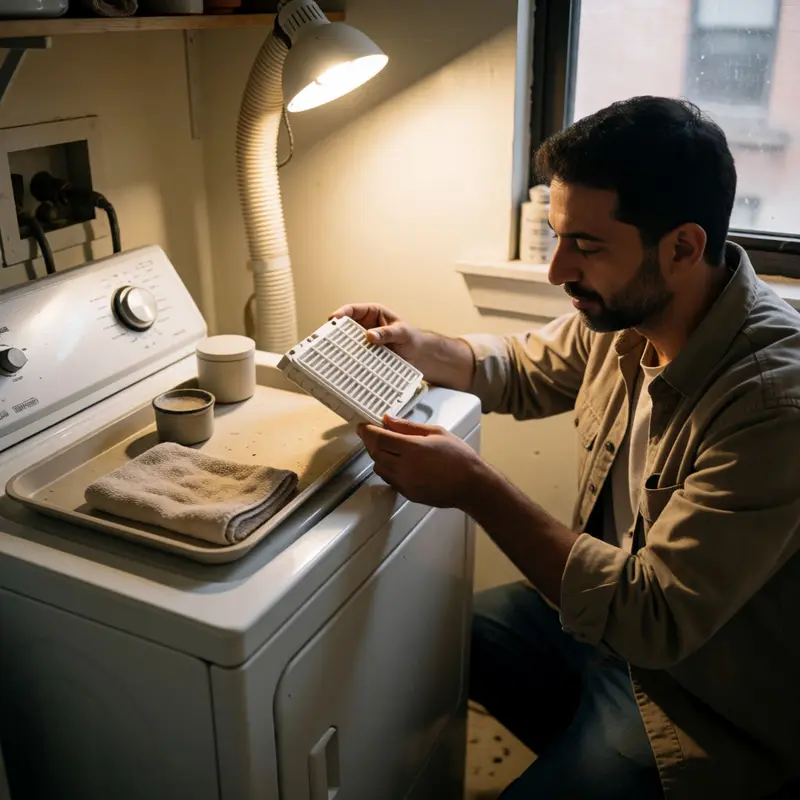
Moisture removal adds its own layer of upkeep. Because there’s no exhaust vent, the water extracted from your clothes has to go somewhere: into a reservoir you empty manually, through a drain hose routed to a nearby sink or pipe, or via a connection that routes it directly to the washer drain. Each path is workable, but none is passive. A drain hose placed at the wrong height can siphon dirty water back into the tub instead of expelling it. A drain pump filter clogged with lint, hair, or a forgotten coin quietly degrades performance: clothes come out wetter, cycles run longer, and the machine may vibrate more before you trace the problem to its source.
Controls on heat-pump models can be genuinely complex, another point of friction that testing has flagged repeatedly. The machines reward attention: regular filter cleaning, correct hose positioning, and realistic expectations about load size.
None of this disqualifies the technology for a space where a vented dryer was never possible. It does mean the trade you’re making isn’t just square footage for convenience; it’s also some speed and some maintenance simplicity for the right to do laundry at home at all.
Final thoughts
A ventless heat pump washer dryer makes the strongest case for itself when space and building rules have already decided the field. In that setting, the real competition is the cost, delay, and low-grade hassle of laundry that lives somewhere else in the building or down the block. A fast vented setup sitting a few feet away would need an exhaust line this setting doesn’t allow.
That shifts the decision from pure appliance shopping to lifestyle math. Cycle time becomes one line item, alongside access, energy use, fabric wear, and the small maintenance tasks that keep the machine doing its job. For renters, that’s the clearest trend line here: ventless heat-pump laundry is pulling ahead because it turns an impossible installation into a workable home routine.
Further reading
Leave a comment