















No products in the cart.

Shop this story
Ditch solid-wood pieces—Why modular furniture cuts renter regret
by Anabel Figueroa
If you rent a small place, your furniture choices can start to feel like a trap. You want pieces that feel grown up, but you also know your next address might have different doors, corners, and rules. That’s why modular furniture for small apartments keeps showing up in smart apartments that don’t have an extra room to hide mistakes.
The real risk isn’t style, it’s regret. A “forever” dresser or heavy wood bed can turn into the most expensive thing you own the moment you need to move, reconfigure, or downsize. Renters don’t just pay in money, they pay in time, hassle, and lost deposits. Flexibility starts looking less like a nice feature and more like basic self-protection.
Cost structures: Why modular beats wood over time

Renters navigating cramped apartments make one financial mistake more reliably than any other: they invest in solid-wood furniture as though their current address is permanent.
The mistake isn’t sentimental. It’s structural. Solid-wood pieces carry hidden costs that inflate your budget before the first screw is turned, including installation adjustments and specialized hardware that rarely show up in initial price quotes. What looks like a one-time purchase quietly compounds into a recurring expense each time you move, replace, or abandon pieces that simply don’t fit a new layout.
Modular furniture for small apartments inverts that logic. Instead of paying a premium for permanence you don’t own, modular systems spread costs across real utility. Factory-built modular units reduce overall expenses by 20 to 30 percent compared to traditional construction methods, largely because they eliminate the labor variability and timeline risks that inflate site-built costs. That’s not marginal savings. For renters cycling through multiple apartments over five or ten years, the cumulative gap is substantial.
Consider the broader construction comparison: modular approaches for a comparable space run between $130,000 and $220,000, while traditional methods climb to $300,000 at the high end. The gap reflects a fundamental difference in how costs are controlled versus absorbed. Solid-wood furniture operates on the same logic as traditional construction: unpredictable, hard to reconfigure, and expensive to undo.
The long-term total cost of ownership tilts decisively toward modular systems. Every time a solid-wood piece becomes a liability (too large for the next apartment, wrong configuration for a different room), you absorb a loss. Modular components don’t strand you the same way. They adapt, which helps you Stop slow money leaks instead of repeatedly paying entry costs into a furniture market that doesn’t reward loyalty.
So if the numbers are already doing the persuading, the next question is simpler: what happens when your floor plan changes?
Mobility and space efficiency: Why modular pieces always fit
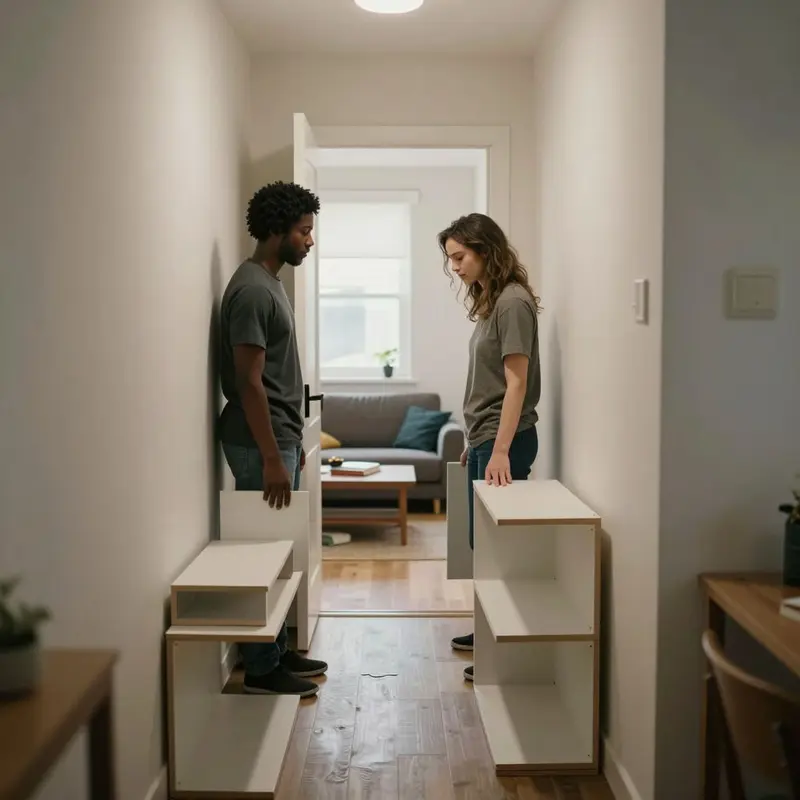
Picture the moment your landlord says you’re being moved to a different unit, or you decide to take in a roommate to split the rent. Suddenly, the furniture that fit your current layout perfectly becomes a problem you have to solve over a weekend. That’s the scenario modular furniture for small apartments is designed to absorb without drama.
The core advantage isn’t just that modular pieces look flexible. They actually are. Lightweight construction means you can rearrange an entire room without recruiting help or risking your back, and that changes how you relate to your space. You stop treating your layout as fixed and start treating it as a setting you can adjust whenever circumstances shift. That mental shift is worth more than it sounds.
Consider what happens to your walls. Wall-mounted modular shelving keeps your floor open and your square footage working for you, and because these systems are designed for clean removal, you get your deposit back instead of a deduction. Customizable storage units follow the same logic: you reconfigure them to fit a new room’s dimensions without touching the structure of the apartment. No drilling into unfamiliar walls. No lease violations buried in the fine print.
There’s also a quieter efficiency at work. When a single piece can serve two or three functions, you need fewer items overall. Fewer items means less to move, less to store during the transition, and less money spent replacing pieces that don’t fit the next place. The reduction compounds over multiple moves in a way that solid, single-purpose furniture simply can’t match.
What you’re building, across every reconfiguration, is a kind of spatial fluency. You learn what works for you, carry that knowledge into the next space, and arrive already knowing how to set it up. The furniture follows your logic rather than dictating it to you.
Adaptability only earns its keep if the pieces still hold together after repeated moves and reconfigurations, and if they still look like something you’d choose to live with years down the line.
Durability and perception: Why replaceable beats ‘built to last’
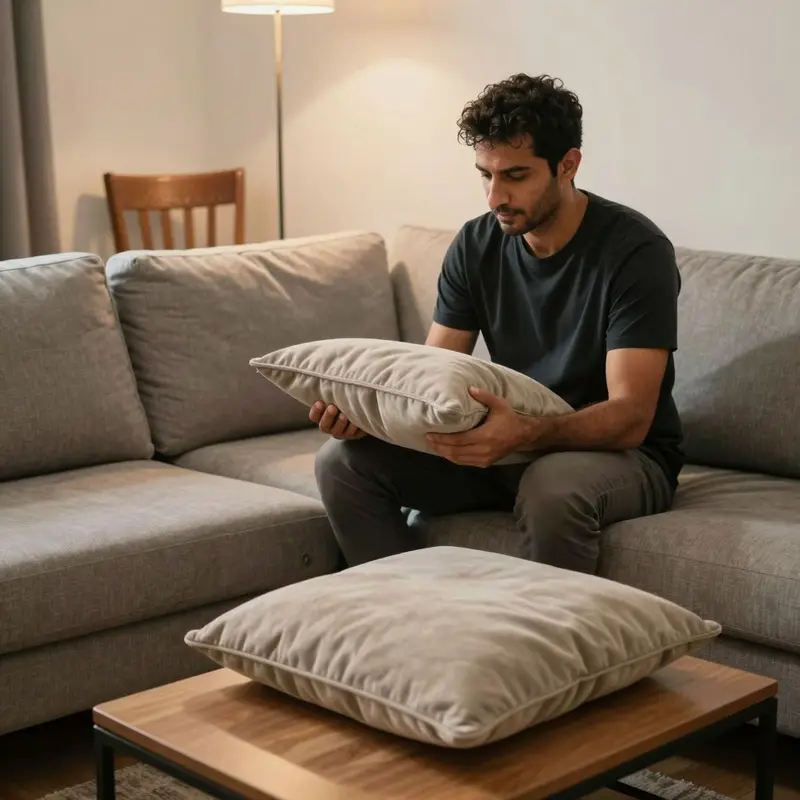
What structural simulations confirm about modular furniture is worth knowing before you commit to any piece: under repeated load and reconfiguration, well-engineered modular systems hold. That durability isn’t incidental. It’s designed in.
That distinction matters more than it might first appear. Solid-wood furniture is often sold on the premise that it lasts, and it can, but a single cracked joint or worn surface typically means replacing the whole piece. Modular systems are built around a different assumption: individual components will wear at different rates, and the smart response is to replace only what needs replacing. One worn seat cushion, one scratched panel, one outdated frame section swapped for a current color. The piece continues. Your investment compounds rather than resets.
This is where modular furniture for small apartments earns a reputation that goes beyond spatial efficiency. In a modular system, longevity isn’t about a piece surviving untouched in the same corner for decades. It’s about a system that can absorb the changes in your life without becoming obsolete. The sofa you configured for a studio can be extended when you gain a larger living room. The section you removed during a tight move can be added back later. Nothing is lost; it’s just waiting.
Aesthetics follow the same logic. Because modular sofas and shelving let you rearrange, recolor, or swap components without buying new, you aren’t locked into the visual decision you made at twenty-six. The piece evolves. That flexibility carries real psychological value: you’re less likely to grow tired of something you can change, which means you’re less likely to replace it prematurely. Perceived obsolescence, the quiet reason most furniture gets discarded, loses its grip.
The honest case for durability here isn’t purely structural; it’s financial. Repair and upgrade costs on modular systems run measurably lower than full replacement costs on conventional pieces, which forces a sharper definition of what “long-lasting” means in a renter’s budget. The math gets more complex once you start weighing upfront investment against long-term return, and that tension is worth examining directly.
Decision matrix: Why flexibility beats sunk-cost furniture

This tension resolves faster than you’d expect once you put real numbers to it. Modular furniture for small apartments starts at £600-£1,000, a range that lets you stage your investment instead of committing everything upfront to a configuration you haven’t tested. Built-in systems may squeeze out every centimeter of available footprint and look more space-efficient on paper, but that efficiency is locked in. You can’t reconfigure it when your circumstances change, and they will.
What modular systems give up in raw spatial yield, they get back as decision insurance. The 5 to 8 percent efficiency gap sounds meaningful until you price what the alternative costs when the layout no longer works: disposal fees, replacement sourcing, the furniture that can’t leave through the same door it entered. Modular loses a little space at the edges but wins considerably in the middle of a lease you didn’t plan to extend.
Load capacity deserves a moment here, because it quietly dismantles one of the more persistent objections. Systems built with aerospace-grade connectors routinely handle over 500 lbs, which means structural integrity isn’t the concession you’re making when you choose adaptability. The concession is a percentage of corner efficiency, and that’s a trade most people accept willingly once they see it stated plainly.
The real decision isn’t flexibility versus investment. It’s about which kind of regret you’re willing to risk.
Spending more upfront on something immovable is a bet that your future self will want exactly what your present self chose today. Modular furniture assumes the opposite, and given how rarely that bet pays off in a space you don’t own, it ends up reading less like a compromise and more like the only honest answer the room allows.
Final thoughts
Once you look at small-space renting as a repeating cycle, the best furniture isn’t the most impressive piece. It’s the piece that keeps its value in your life. The winning move is choosing systems that stay useful when your floor plan, budget, and priorities change, because change is the only stable part of renting.
Think of every purchase as a bet on your future self. Solid, immovable furniture asks you to get that future exactly right. Modular furniture for small apartments lowers the stakes. You can adjust instead of restart, repair instead of replace, and carry your setup forward without hauling a mistake behind you. That’s not settling. It’s buying freedom on purpose.
Further reading


Leave a comment