











No products in the cart.

Shop this story
I deleted Felix Gray blue-light glasses: My sleep and eye strain results.
by Elizabeth H
If you’re doomscrolling in bed, you’ve probably tried at least one “fix” that promised better sleep without changing your habits. A Felix Gray blue light glasses review can sound like the cleanest option: put them on, feel your eyes relax, fall asleep faster.
But blue light isn’t a simple villain, and glasses aren’t a single, interchangeable product. Results hinge on details people rarely track at midnight, like how strong the filtering really is and whether you’ll actually wear the frames for hours without irritation. Add premium pricing and bold marketing claims, and the real question shifts from “Do these work?” to “Do they work for the way you’ll use them?”
Pricing structures and consumer expectations: When premium promises don’t fit

Felix Gray’s central marketing claim is precise: its glasses filter up to 23 times more of the most impactful blue light than competing products. That kind of specificity does real work in a crowded eyewear market, where most brands gesture vaguely at “blue light protection” without naming a mechanism or a magnitude. Whether you’re a nighttime scroller trying to wind down before bed or someone logging long hours at a monitor, that figure is meant to feel like a reason to spend real money on a frame.
The brand positions itself squarely in the functional wellness tier of consumer eyewear. Its products serve computer and reading use, and prescription options are available for buyers who need corrective lenses alongside the filtering technology. A 30-day return policy rounds out the pitch, giving buyers a low-stakes entry point that softens the commitment of paying premium prices online without trying the frames first.
That combination of a dramatic efficacy claim, lifestyle positioning, and a safety-net return window is a coherent market strategy. Consumer expectations follow the logic of the pitch: if the glasses filter light at the level advertised, buyers arrive hoping for tangible results, better sleep, reduced eye fatigue, the feeling that the purchase justified itself by morning. A customer review on one Felix Gray product page captures this expectation directly, crediting the glasses with a noticeably better night’s sleep. The brand publishes these testimonials prominently, which reinforces the promise instead of qualifying it.
Where the positioning gets complicated is in the physical product, not the marketing copy. Some customers report frames heavy enough to leave deep indentations after an evening of wear, and at least one review documents a temple piece that dislodges every time the glasses are put on. That’s a fit failure that no return-policy language fully addresses because it can persist beyond the 30-day window for those who decide to keep the glasses anyway. Premium positioning carries an implicit promise about build quality, and when that promise meets an inconsistently manufactured frame, the gap between expectation and experience opens up in a way the efficacy claim can’t close.
Any honest Felix Gray blue light glasses review ends up landing on a simple test: does the product feel as premium on your face at hour three as it sounds on the product page at minute one?
Efficacy audit: When blue-blocking specs actually work
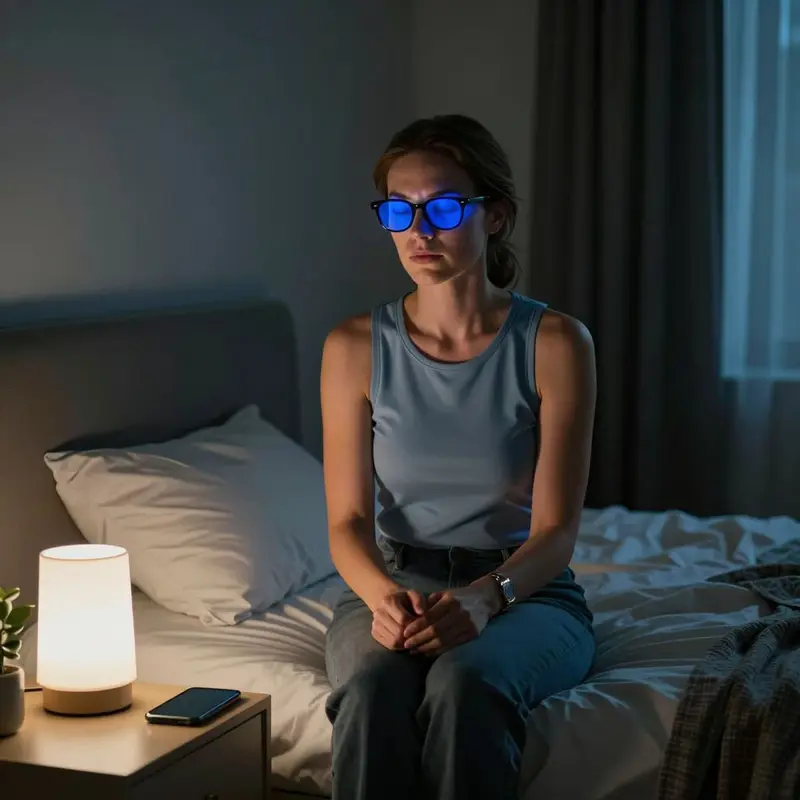
Whether blue-blocking glasses work comes down to which pair you’re wearing and when you put them on. That sounds obvious, but the research behind it is more specific, and more inconvenient, than most product pages let on.
A 2026 review in Chronobiology International found that blue-blocking interventions can genuinely improve sleep and circadian outcomes. It also found something that should give any buyer pause: the products it examined varied enormously in how much melanopically relevant light they actually filtered. Only lenses rated at a melanopic daylight factor of 1 or higher clearly earned the label “blue-blocking” in any meaningful sense. Below that threshold, the glasses may look tinted or coated and carry all the right language, yet they filter too little to shift your circadian response. In practice, the efficacy question and the product quality question collapse into one.
The same review also complicates dosing. Evidence pointed toward a near-linear relationship between consistent nightly use and improvements in sleep quantity, sleep quality, and next-day performance. That dose-response curve only works if you’ll actually keep the glasses on, and that’s harder to guarantee when the frame becomes uncomfortable after a few hours. User reports on Felix Gray’s own site describe one model as heavy enough to leave deep indentations after an evening of TV use, and a separate complaint cites a temple piece that works itself loose and needs constant readjustment. Neither issue is catastrophic on its own, but both eat into the daily adherence the data assumes.
Felix Gray’s marketing frames the product as the only blue-light glasses with a measurable impact on sleep, focus, and productivity, which is a strong claim in a field where the research conditions its endorsement carefully. The science says the effect is real when lens filtering is sufficient and use is timed correctly, meaning evenings only, since morning and afternoon blue light actively helps your internal clock stay calibrated. That last point cuts against all-day wear, which some users default to without realizing it can blunt the very benefit they’re after.
So what does a Felix Gray blue light glasses review really need to answer? Two things the research can’t settle for you: whether the specific pair on your face meets the filter threshold, and whether you’ll keep wearing it long enough, comfortably enough, for the pattern to hold.
Consumer sentiment and feedback loops: Why reviews misjudge blue-light results

Picture the gap between what a product promises and what most people actually do with it. Someone buys clear-lens glasses marketed for sleep, wears them from morning through their afternoon video calls, notices nothing by week two, and leaves a review calling the whole category a placebo. The product may have done exactly what a clear-lens design can do. The review, read in isolation, tells you almost nothing useful, and yet it still lands in the aggregate rating and shapes what the next buyer expects.
That’s the structural problem sitting under the Felix Gray blue light glasses review ecosystem. Felix Gray’s clearest marketing claim is that its lenses filter up to 23x more of the most biologically potent blue light than competing options, and that this produces a measurable impact on sleep and focus. That’s a specific, testable premise. But a 2025 peer-reviewed review found that outcomes across the blue-blocking category look mixed because products vary so widely in filtering strength, and because user behavior, particularly timing, rarely matches the conditions under which controlled studies found benefits. Someone who wears their glasses all day, or who picks up a clear-lens pair expecting the same effect as an amber-lens one, isn’t testing the marketing claim. They’re testing something adjacent to it, and the result gets filed under the same product name.
The amber Franklin line, which Felix Gray positions explicitly for evening use and associates with faster sleep onset, operates on a different physical principle than the clear-lens styles. Conflating reviews across those two product families is like rating a sunscreen based on how it performed in December. The criticism makes sense from the buyer’s perspective, but it still obscures what explains the gap. Haphazard wear timing can, the same research notes, actively increase circadian disruption, so “it didn’t help” and “it made things worse” can both be true for the same user under the same misaligned usage pattern.
Durability complaints add a separate layer. At least one customer review surfaces a temple piece that loosens during wear, requiring constant adjustment. That’s a fit problem, separate from efficacy, but both get processed as dissatisfaction and folded into the same feedback signal Felix Gray receives. The aggregate obscures the cause, which means the next product iteration may solve for the wrong thing.
So when you’re skimming reviews at midnight, the useful question is whether you’re reading about the lens and timing you’ll actually use. The category’s gap between marketing and experience is real, and the fix is often straightforward: match expectations to filtering strength, and match wear habits to the timing that studies assume.
Final thoughts
After you pull the threads together, the biggest takeaway is uncomfortable for shoppers: blue light glasses sit at the crossroads of biology, product quality, and human behavior, so the same pair can feel life changing to one person and pointless to another.
That’s why reviews can mislead even when they’re honest. They often blend together comfort issues, lens strength, and wear timing into one thumbs up or down, and the rating can’t tell you which variable actually drove the result. Read any Felix Gray blue light glasses review as a clue about conditions, not a verdict, and you’ll make a cleaner call about whether the glasses fit your nights and your face.
Further reading


Leave a comment