
















No products in the cart.

Shop this story
What AI ‘chip profit skew’ really means for semiconductor power
by Joseph L
Semiconductor strategists are watching a familiar industry transform into something far more concentrated, volatile, and politically exposed. A tiny fraction of devices now pulls in a disproportionate share of profit, forcing a shift from volume thinking to value density. Boardroom conversations that once centered on process nodes and wafer starts now revolve around system architectures, software ecosystems, and who actually controls the critical AI platforms. The AI chips impact on semiconductor industry profitability is no longer an abstraction, it is the organizing principle for competitive power.
What looks like a boom in accelerator demand is, in practice, a restructuring of the entire value chain, from logic and memory design to manufacturing constraints and national industrial policy. Profit is migrating to architectures that fuse compute, memory, and packaging into tightly coupled systems, while capacity and geopolitical risk turn into strategic choke points. This article traces how economic concentration, architectural innovation, and manufacturing limits interact to create a new hierarchy of winners and followers. It then examines how these profit skews reshape roadmaps, capital allocation, and regional strategies for anyone serious about influencing the next decade of semiconductor power.
Economic concentration: How 20 million AI chips control half the revenue
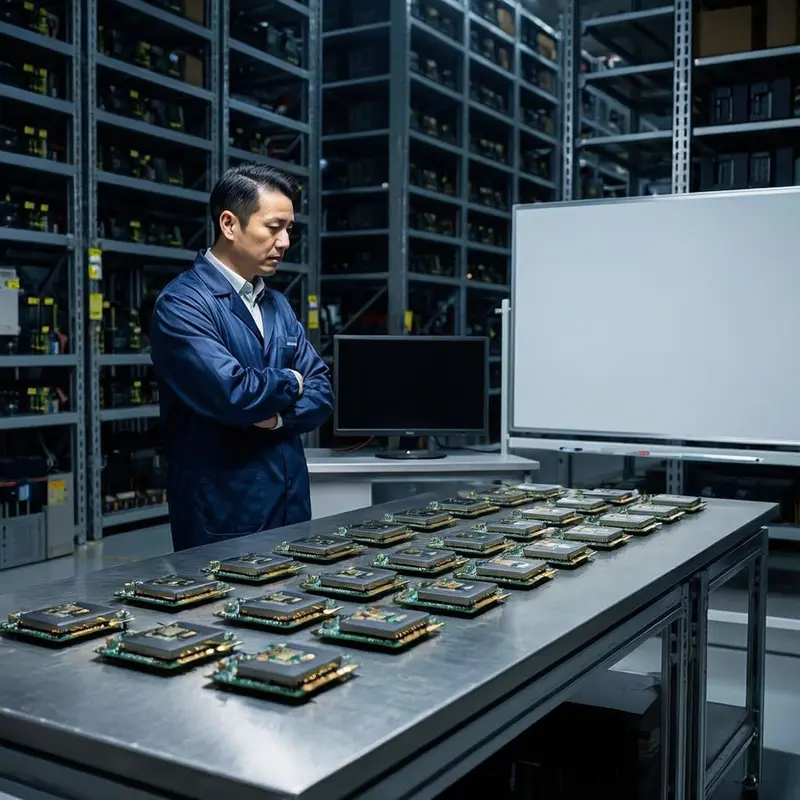
The economic power of generative AI chips is real now, not some future prediction. It’s reshaping who matters in semiconductors. These chips, fewer than 20 million units worldwide, are on track to grab nearly half of all chip revenue by 2026. That’s $500 billion. This isn’t accidental. It’s built into the most profitable parts of the supply chain.
Nvidia shows how extreme this is. It controls about 90% of the AI chip market. Its revenue commitments between 2025 and 2026 are projected to exceed $500 billion. Its Q4 2026 revenue alone is expected to hit $65 billion, a 65% jump year over year. That’s not just growth. That’s control. Others are trying to catch up, but they’re still behind. AMD posted 39% year-over-year growth in data center revenue for Q4 2025, reaching $5.4 billion. That’s pressure, not parity. TSMC expects nearly 30% overall revenue growth in 2026, fueled mostly by AI chip demand growing at 50% per year, as enterprises race to deploy AI co-pilots and chips into every workflow.
Here’s what this means for the wider semiconductor industry:
- The top three chip stocks now make up 80% of the market cap. That’s consolidation.
- Global AI spending will hit $2.5 trillion by 2026. That’ll push semiconductor revenue growth to 26% that year, up from 22% in 2025.
- The path to a $2 trillion annual semiconductor market by 2036 isn’t just a guess anymore. It’s driven by AI’s hunger.
This is the new economics: high value, low volume, concentrated control. AI chips aren’t just adding revenue. They’re changing who wins, where money flows, and what skills matter in the boardroom and the factory. Your next move isn’t about chasing AI demand. It’s about matching the new rules of semiconductor economics.
The impact on logic and memory innovation is already here. The performance demands of these dominant chips are pushing the next wave of architectural breakthroughs. The concentration we’ve laid out isn’t the end. It’s the engine driving what comes next.
Technological advancements: Logic–memory fusion reshaping profit engines
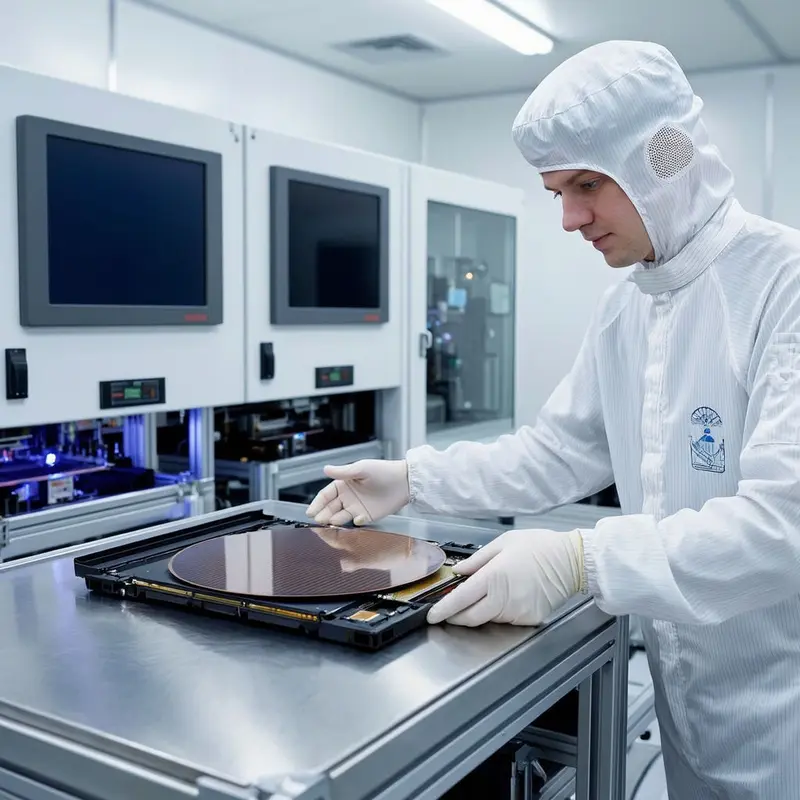
Profit isn’t just shrinking margins anymore. It’s driving a complete redesign of silicon. Logic and memory are no longer separate. They’re fused architectures built to feed AI.
Look at the numbers. By 2026, generative AI chips will make up half of global chip sales. Yet they’ll account for less than 0.2% of total units shipped. That’s not about volume. It’s about velocity. And with an average selling price far above the market’s $0.74 per chip, every square millimeter now matters strategically, underscoring an AI-driven chip market surge.
This isn’t a trend. It’s a seismic shift in semiconductor economics. The generative AI chip segment alone is expected to drive $500 billion in revenue by 2026. Global chip growth is accelerating to 26% in 2026, mostly because of this segment.
Hyperscalers are betting big. Their capital spending on AI infrastructure will jump from $394 billion in 2025 to $700 billion in 2026. That’s a 78% leap. At the center is Nvidia. Its data center revenue surged, its profit margins hit 53%, and its market cap hovered near $4.5 trillion. Why? Because its chips power the large language models driving this demand.
The impact of AI chips on the semiconductor industry is no longer speculative. It’s structural. Logic isn’t just about faster transistors. It’s about specialized matrix units. Memory isn’t about capacity. It’s about bandwidth and proximity to compute. This fusion is driving innovations like HBM3E, CXL, and 3D stacking. Not as incremental upgrades, but as nonnegotiable enablers of scale.
As a strategist, you’re not just watching this. You’re allocating R&D, partnerships, and fab capacity against it. The winners won’t be those with the most chips. They’ll be those with the most architecturally coherent ones.
This redefinition of logic and memory is the engine for the next phase. As we move to manufacturing bottlenecks and custom silicon adoption, the real question is: Who can scale these innovations without being crushed by their complexity?
Strategic challenges: High-margin AI ASICs, constrained manufacturing capacity

Scaling these innovations without drowning in complexity means facing the hard math of specialization. Generative AI chips are expected to drive half of the industry’s $500 billion revenue in 2026, yet they’ll make up less than 0.2% of total unit volume. Fewer than 20 million chips versus 1.05 trillion units isn’t a production issue. It’s a precision issue.
The economic power of AI chips doesn’t come from volume. It comes from architectural exclusivity. ASICs captured 37.45% of edge AI chip revenue in 2025 because their custom designs deliver unmatched performance per watt. But that specialization carries a cost. Each ASIC variant needs its own fabrication process, which stretches lead times. The manufacturing bottleneck isn’t a lack of wafers. It’s a lack of engineering bandwidth to handle multiple process flows, even as leaders place strategic bets on the future of AI technology.
As you map your supply chain, consider this:
- Nvidia’s GPUs remain essential for training large language models, and the company’s market value hit three trillion dollars, cementing its dominance in the stack.
- The top three chip stocks control 80% of market capitalization, concentrating both risk and opportunity.
- International trade shifts are driving up component costs as tariff regimes change, forcing cost reevaluation at every node.
This vendor concentration isn’t random. It’s structural. To offset it, governments across North America, Europe, and Asia-Pacific are pushing for local AI chip production. Domestic innovation isn’t just a slogan. It’s an operational must to reduce geopolitical risk.
You’re not building a factory. You’re building an adaptive node in a high-stakes, low-volume, high-margin system. Complexity isn’t optional. It’s the entry fee. The winner isn’t the one with the most fabs, but the one whose design and manufacturing teams are fully aligned.
That alignment becomes even more critical as advanced packaging emerges as a key driver of future performance.
Future roadmap: How low-volume AI chips redefine power

Political risk is pushing the industry toward resilience, not just scale. You’re no longer optimizing for volume. You’re chasing value density. Fewer than 20 million generative AI chips now drive nearly half the industry’s revenue. That’s not a fluke. It’s the new operating system for semiconductor power.
The numbers are clear. In 2025, the industry shipped 1.05 trillion chips. But less than 0.2 percent of that volume powered the generative AI boom. That tiny slice is nearing $500 billion in revenue. By 2026, the entire semiconductor market is projected to hit $975 billion. The math is simple. AI chips aren’t a niche trend. They’re the core engine of growth.
This profit concentration demands a complete rethink of your value chain. Winning isn’t about having the most fabs. It’s about aligning your architecture, software stack, and packaging. Complexity is now the entry fee. Advanced packaging? It’s not a luxury anymore. It’s the performance boost that makes high-margin chips possible.
Here’s what this means for your roadmap:
- A single generative AI chip segment can generate $500 billion in revenue, comparable to the revenue from roughly 675 billion standard chips at $0.74 each. That changes what “high volume” even means.
- Your R&D spending must shift from broad proliferation to hyper-specialized design. Every transistor must justify its cost.
- Supply chain agility matters more than ever. Geopolitical risk is squeezing margins and making disruptions far more expensive.
You’re building an adaptive node in a high-stakes, low-volume, high-margin system. Focus your resources where value lives. And move fast. Your competitors already are.
As a strategist, you’re not just shifting from data centers to edge dominance. You’re designing a future where performance, packaging, and precision define who wins. That future isn’t coming. It’s here.
Final thoughts
The emerging picture is one of a semiconductor landscape where value clusters around a narrow set of high-margin AI platforms, specialized architectures, and advanced packaging capabilities. Economic concentration amplifies the AI chips impact on semiconductor industry structure, as a small number of vendors and technologies set the tempo for everyone else. Logic and memory innovation now follows the needs of generative models, while manufacturing and supply chain strategies are rebuilt around low-volume, high-value product lines. Political pressures and subsidies add another layer, making location, partnerships, and ecosystem alignment as decisive as process technology.
For strategists, the real risk is not missing the next node, but misreading where profit and power will actually settle as AI workloads scale. The organizations that thrive will treat architectural coherence, packaging sophistication, and supply chain agility as core strategic assets, not supporting functions. Profit skew in AI accelerators is less a temporary distortion and more a preview of how future compute markets will behave. The question is whether you position your portfolio to shape that trajectory, or allow someone else to write the rules you will be forced to follow.
Ready to stay ahead with cutting-edge tech insights and innovations? Contact OnInitiative.com ([email protected]) today and let our experts guide you through the future of technology, today!
About us
OnInitiative.com is an innovative marketplace that helps e-commerce businesses boost productivity and community growth through advanced automation tools.
Further reading


Leave a comment