
















No products in the cart.

Shop this story
The modern burnout crisis: Why ‘quiet quitting’ is just the beginning for devs
by Elizabeth H
You used to finish a sprint tired, but satisfied. Now you finish it wired, behind, and a little numb. If that feels familiar, you’re not alone, and it has a name: the developer burnout crisis. It’s showing up in quieter ways than a dramatic resignation, like doing the minimum, skipping the extra polish, and logging off the second you can.
What’s changed isn’t just you. Teams are running lean for longer, the work keeps expanding, and “time saved” by new tools often turns into “more work assigned” without anyone saying it out loud. We’ll look at the pressure points underneath all of this, including hiring gaps that never close, AI that speeds up output but raises cognitive load, and the structural habits that push stress into nights and weekends. Most importantly, we’ll talk about what it takes to get your boundaries and your focus back without pretending the problem is purely personal.
Talent shortages: When empty seats fuel burnout

Let’s be honest. If you’re feeling the strain right now, you’re not imagining it. Developer burnout isn’t some abstract HR talking point. It shows up in your daily workflow, your Slack notifications, and that quiet dread you feel every time another open role goes unfilled.
Here’s the reality. 87.5% of tech leaders say hiring engineers is brutally hard. Senior roles are taking three to six months to fill, double what it took before the pandemic. That gap doesn’t disappear on its own. It lands on your plate.
No wonder 66% of tech workers report burnout symptoms. And here’s what’s frustrating: even with better pay, 42% still feel burned out. Because burnout isn’t really about salary. It’s about being stretched too thin, living in an always-on culture, and carrying a low-level fear of job insecurity that never fully goes away, sometimes even making you quietly question whether is technology right for you in the first place.
Think about what your day actually looks like. You’re coding, mentoring, and covering for open positions, all while your own backlog keeps growing. Deadlines don’t get softer. Expectations don’t shrink. It’s not sustainable, and you already know that.
This is the real cost of talent shortages. It doesn’t just slow down projects. It chips away at your energy, your creativity, and your motivation to keep showing up. You’re not lazy or weak. You’re being asked to do the impossible with less.
The real question isn’t whether you can keep up. It’s whether the system can keep you from burning out entirely. As AI coding tools enter the picture with promises of efficiency, it’s worth asking whether that’s genuine relief, or just a new kind of pressure wearing a different face.
AI coding tools: When time savings become burnout fuel

AI promised to take things off your plate. But for a lot of developers, it’s just added more to it.
The numbers sound good on the surface:
- You save 3.6 hours a week.
- You merge 60% more pull requests with daily use.
- 78% of devs say their productivity improved.
Here’s the thing, though. Those saved hours aren’t going back to your life. They’re getting filled with bigger scopes, new tasks, and expectations that nobody officially announced but everyone quietly agreed to.
You start picking up work you’d normally hand off. Your list grows longer, not shorter. Boundaries get fuzzy. And here’s a stat that should make experienced engineers stop and think: the more senior you are, the more AI actually slows you down, about 19% slower on average, even though you feel like you’re working 20% faster according to most published AI coding productivity stats. AI smooths things out for junior devs more than it streamlines the workflow of seasoned engineers. That gap matters.
So what’s actually happening? Organizations report a 3% gain in time savings. That’s a rounding error for your team, but it shows up as a KPI on a leadership slide deck. Meanwhile, you’re logging the same hours, pulling the same salary, and carrying a heavier cognitive load than before.
This isn’t a story about AI being broken. It’s about how the system around it is working exactly as designed, just not for you. When the relief you’re handed quietly becomes another demand, the real question isn’t whether you can keep up. It’s whether anyone building these systems is thinking about keeping you human.
Tools don’t fix broken systems. They amplify them. That’s worth sitting with as organizational expectations in tech keep climbing.
Organizational challenges: When structural gaps lock in burnout

Here’s the brutal irony: the tools that were supposed to give you breathing room are actually stretching your hours thinner.
When AI saves you 3.6 hours a week, it doesn’t reset your boundaries. It just makes you available for more work. Then more after that. The system doesn’t hand that time back to you. It fills it.
You’re not imagining the pressure. The system isn’t broken. It’s working exactly as it was designed. Hiring takes 3 to 6 months, and half the people brought in aren’t qualified. That’s not a hiccup. That’s structural. Projects slip by quarters. Costs balloon. Morale drops. And yet, 66% of developers are still reporting burnout symptoms.
The expectations gap isn’t accidental. It’s compounded by three realities that keep feeding each other:
- Talent demand outpaces supply. 74% of employers are scrambling.
- AI boosts individual output but multiplies defects when left unchecked. 1.7 times more, in fact.
- Workers absorb the pressure into off-hours, tripling stress. Not because they’re weak, but because the work never stops.
This isn’t just a personal problem, either. It’s baked into the entire project lifecycle. Half of all tech projects face delays or cost overruns. And over the next year? Expect maintainer burnout to intensify and rejections to rise. The system isn’t fixing itself. It’s just adding more tools to an already strained machine.
Developer burnout isn’t a personal failure. It’s a system-wide misalignment, and it’s getting worse as the workforce ages and entry-level pipelines dry up. The pressure won’t lift until organizations stop treating productivity as the metric and start treating people as the foundation, rethinking how they deploy AI tools and burnout interventions instead of piling on more work.
Demographic disruptions: Aging teams, vanishing juniors, rising risk
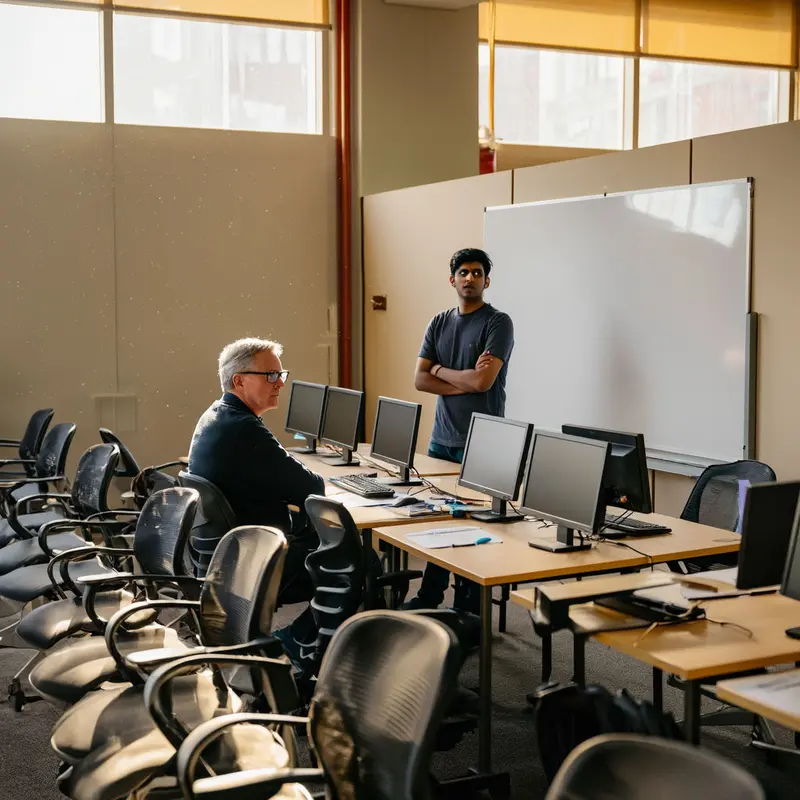
The pressure won’t lift until organizations stop treating productivity as the only metric and start treating people as the foundation. That means rethinking how they roll out AI tools and burnout interventions, instead of just piling on more work. And that’s exactly why the developer burnout crisis is getting worse, amplified by demographic shifts you can’t afford to ignore.
You’re not imagining it. Nearly two-thirds of engineers report burnout. That’s not just a headline. It’s a signal that the workforce is aging, entry-level talent is disappearing, and hiring has become a serious gamble.
- 87.5% of tech leaders report brutal hiring conditions, with 90% calling it “straight-up difficult.”
- Half the candidates you interview? Unqualified. Not lazy. Not unskilled. Just mismatched.
- It’s not a quantity problem. It’s a quality-matching crisis in software engineering.
Your team is stretched thin because you’re competing for fewer people who can actually do the job. The talent pipeline isn’t just broken. It’s dried up at the source.
Think about someone like Morgan, a senior dev lead. He’s mentoring juniors who barely grasp system architecture, while also keeping legacy systems alive that nobody else wants to touch. On top of that, he’s the only one who knows how to onboard new hires, because the junior pipeline collapsed around him. That’s not just burnout. That’s systemic erosion.
This isn’t only about fatigue. Aging teams can’t sustain innovation without new people coming up through the ranks, and when entry-level roles disappear, so does the institutional renewal that keeps a team healthy and sharp, all of which is being compounded by a growing software engineer talent mismatch.
As we get into the emerging role of AI-induced stress and skill atrophy, keep this in mind: tools won’t fix this. Only intentional human systems will.
Controversial outcomes: When AI productivity fuels burnout

The talent pipeline isn’t just collapsing at the hiring stage. It’s also falling apart from the inside, because the people you do hire are getting ground down by the very tools that were supposed to help them. AI promised to free up your time. What it actually delivered was tripled expectations and a slow erosion of the skills that made you good at your job. That’s the quiet reality of developer burnout right now.
And you’re not imagining it. If your tasks feel faster but somehow take longer, there’s data to back that up. Experienced devs report a 19% actual slowdown while perceiving a 20% speedup. That gap is cognitive dissonance in action. Research on AI co-pilots and burnout shows that a 10% productivity boost can also inflate scope and urgency at the same time. The machine doesn’t get tired. You do.
Here’s what that looks like in practice:
- Open-source maintainers are drowning under a flood of AI-generated pull requests.
- DevOps teams, now the fifth most in-demand role, have 56% actively prioritizing burnout prevention because talent is walking out faster than it can be replaced.
- 74% of employers are struggling to hire, and 87.5% of tech leaders say senior roles now take 3 to 6 months to fill. That’s twice as long as before.
Zoom out, and the picture gets harder to ignore:
- Burnout isn’t a personal failing. It’s an industry-wide metric. 66% of tech workers show symptoms, and those who burn out are 2.6 times more likely to quit.
- AI doesn’t fix a broken system. It magnifies its flaws. Faster output isn’t smarter work, especially when skill atrophy quietly sets in on the side.
- You can’t outsource judgment. The human brain still needs to interpret, design, and lead, even with autocomplete running at full speed.
This isn’t about blaming the tools. It’s about recognizing what they’re actually doing to the people using them. Sustainability isn’t a soft concept here. It’s a hard requirement. Because when the machines keep asking for more, and the humans keep saying yes, something eventually has to give.
Future roadmaps: Reclaiming control from AI-driven burnout

Keeping up with AI’s pace isn’t just a personal struggle anymore. It’s become the defining pressure point behind developer burnout. Your brain is still doing the real work: interpreting prompts, debugging logic, and making the calls that matter, even as autocomplete races ahead. The result? Tasks now take 19% longer, stress triples during tool use, and evenings stop feeling like your own.
You’re not in this alone. A brutal hiring market means your team is stretched thin, patching freelance gaps that won’t close for months. Open-source maintainers feel it too, drowning in vulnerability alerts while corporate newcomers disrupt the community’s rhythm. And 66% of tech workers report burnout symptoms made worse by AI pressure and remote isolation.
Here’s where mitigation begins:
- Set hard boundaries on AI task expansion; protect your non-negotiable personal time.
- Push for transparent communication around workload ownership and expectations.
- Advocate for real hiring support, not just job postings but process overhauls that actually fill senior roles faster.
These aren’t niceties. They’re survival tactics. The UC Berkeley AI burnout study didn’t just track early burnout. It caught developers volunteering themselves into exhaustion because no one told them to stop.
You can’t outcode this. But you can redesign how you show up. Sustainability isn’t a buzzword here. It’s the only roadmap worth following. When the tools demand more, the right response is to reclaim control: not just for yourself, but for the whole ecosystem that’s counting on your resilience.
Final thoughts
When you zoom out, the pattern is hard to miss. Chronic understaffing makes every roadmap feel heavier, and the push for more throughput turns small efficiency gains into bigger expectations. Add AI into that mix and you don’t just get faster code, you get more decisions, more reviews, more context switching, and less recovery time. The result is a system that treats human attention like an infinite resource, even though it’s the first thing to break.
The fix isn’t a single wellness tip or a new plugin. It’s clearer ownership, realistic scope, hiring processes that actually reduce load, and explicit permission to protect off-hours before they disappear. If you’re feeling the pull toward “quiet quitting,” it might not be a motivation problem, it might be your nervous system asking for guardrails. The developer burnout crisis won’t end because developers get tougher, it’ll ease when teams and leaders build work that’s sustainable. What would change for you if sustainability became a real requirement, not a nice-to-have?
Ready to prioritize your well-being with expert-backed wellness strategies? Contact OnInitiative.com ([email protected]) today and let our team help you build a healthier, more balanced lifestyle, inside and out!
About us
OnInitiative.com is an innovative marketplace that helps e-commerce businesses boost productivity and community growth through advanced automation tools. By connecting companies with tailored wellness and productivity solutions, OnInitiative.com empowers organizations to enhance employee health, reduce burnout, and foster a more engaged digital workforce.
Further reading


Leave a comment