
















No products in the cart.

Shop this story
How AI-Powered Innovation Is Reshaping Business Strategy in 2025
by Joseph L
Introduction
In 2025, artificial intelligence is no longer a futuristic concept but a driving force behind business innovation. Entrepreneurs are leveraging AI to refine strategies, automate decision-making, and unlock new market opportunities. This article explores how AI is reshaping business strategy through six key pillars: strategic alignment, data governance, talent development, innovation, agility, and industry transformation. Each chapter offers actionable insights to help entrepreneurs harness AI’s potential and build a competitive edge in a rapidly evolving landscape.
Table of Contents
Chapter 1: Strategic Alignment of AI with Business Goals in 2025
- Strategic Alignment of AI with Business Goals in 2025: Breaking Organizational Silos for Cross-Functional Integration
- Strategic Alignment of AI with Business Goals in 2025: Leadership and Cultural Transformation for AI Adoption
- Strategic Alignment of AI with Business Goals in 2025: Data Infrastructure and Workforce Readiness for Sustainable AI Integration
Chapter 2: Data Strategy and Governance in AI-Powered Business Innovation
- From Data to Decisions: Fueling AI Innovation Through Strategic Utilization
- Building Trust Through Ethical Data Governance in AI Strategy
- Building the Foundation: Infrastructure Meets Culture in AI-Driven Data Strategy
Chapter 3: Talent Development and Organizational Change in AI-Driven Companies
- Strategic Talent Development in AI-Driven Companies
- Leading Transformation: Managing Organizational Shifts in the Age of AI
- AI-Driven Talent Solutions and Their Impact on Organizational Change
Chapter 4: Innovation and Experimentation within AI Business Strategies
- Innovation in AI Business Strategies: Leveraging Agentic and Generative AI
- Beyond Traditional Testing: Swarm Learning and Industry-Specific AI Experimentation
- Strategic Alignment and Talent Development for Innovation and Experimentation in AI Business Strategies
Chapter 5: Agility and Continuous Learning in AI-Integrated Organizations
- Bridging the AI Skills Gap Through Adaptive Learning and Strategic Talent Development
- Agility and Continuous Learning in AI-Integrated Organizations: Learning Agility
- AI as the Engine of Continuous Learning and Organizational Adaptability
Chapter 6: Industry Transformation Through AI-Powered Business Strategies
- Strategic AI Integration: Driving Disruption and Innovation Across Industries
- Industry Transformation Through AI-Powered Business Strategies: Economic Implications and Market Dynamics
- Ethical Challenges and Social Responsibility in AI-Driven Industry Shifts
Chapter 1: Strategic Alignment of AI with Business Goals in 2025

1. Strategic Alignment of AI with Business Goals in 2025: Breaking Organizational Silos for Cross-Functional Integration
In 2025, aligning AI with business strategy demands breaking down entrenched organizational silos to enable seamless cross-functional integration. Companies are shifting from fragmented AI deployments to unified ecosystems where data and insights flow freely across departments. This integration ensures AI initiatives are not isolated tech experiments but strategic assets driving enterprise-wide value. According to recent studies, organizations that prioritize cross-departmental AI collaboration achieve faster decision-making, improved operational efficiency, and stronger alignment between innovation and business outcomes.
By fostering shared governance models and cross-functional teams, businesses can bridge the gap between AI development and real-world application, transforming siloed efforts into cohesive, company-wide intelligence. This shift is not merely technical—it requires cultural and structural changes that empower teams to work collectively toward a unified AI-driven vision. Read more about AI transformation.
2. Strategic Alignment of AI with Business Goals in 2025: Leadership and Cultural Transformation for AI Adoption
In 2025, aligning AI with business strategy demands more than just technology—it requires a transformation in leadership and organizational culture. Companies are redefining leadership roles, with many appointing Chief AI Officers or forming dedicated AI teams to ensure top-down support and strategic clarity. This shift enables AI initiatives to be integrated across departments, fostering cross-functional collaboration and reducing silos. Alongside structural changes, cultivating an AI-ready culture is essential.
Organizations must encourage agility, continuous learning, and data-driven decision-making at all levels. By embedding AI into company values and workflows, businesses can drive innovation, enhance efficiency, and maintain a competitive edge in an evolving landscape.
3. Strategic Alignment of AI with Business Goals in 2025: Data Infrastructure and Workforce Readiness for Sustainable AI Integration
In 2025, aligning AI with business goals goes beyond technology adoption—it requires robust data infrastructure and workforce readiness. Organizations must embed AI into core operations, ensuring data is reliable, accessible, and governed effectively. Simultaneously, workforce transformation is essential, demanding upskilling and a culture that embraces AI-driven innovation.
Companies that invest in both data systems and talent development are better positioned to scale AI initiatives sustainably, driving long-term value and maintaining competitive advantage in an increasingly AI-driven economy. Read more
Chapter 2: Data Strategy and Governance in AI-Powered Business Innovation

1. From Data to Decisions: Fueling AI Innovation Through Strategic Utilization
In 2025, strategic data utilization lies at the heart of AI-powered business transformation. Organizations are no longer just collecting data—they are actively refining, structuring, and leveraging it to fuel intelligent automation, predictive analytics, and hyper-personalized customer experiences. By aligning data strategy with AI objectives, companies are enhancing decision-making precision, optimizing operational workflows, and unlocking new revenue streams.
This shift demands robust data governance frameworks that ensure quality, security, and ethical compliance, enabling AI systems to generate trustworthy insights at scale. For more on leveraging data for AI innovation, visit this resource.
2. Building Trust Through Ethical Data Governance in AI Strategy
In 2025, ethical data governance has become a cornerstone of AI-driven business innovation, ensuring transparency, fairness, and compliance. Organizations are embedding governance frameworks directly into AI workflows to maintain public trust and regulatory adherence. These frameworks emphasize data privacy, bias mitigation, and auditability, ensuring that AI systems operate responsibly across industries like finance, healthcare, and retail.
By integrating governance from data sourcing to model deployment, companies are not only reducing legal risks but also enhancing stakeholder confidence. As AI continues to evolve, governance is no longer optional—it’s a strategic imperative for sustainable innovation. Read more
3. Building the Foundation: Infrastructure Meets Culture in AI-Driven Data Strategy
Successfully embedding AI into data strategy demands more than advanced tools—it requires a transformation in both technical infrastructure and organizational culture. Modern enterprises are investing in scalable cloud platforms, real-time data pipelines, and robust governance frameworks to ensure AI models are fed high-quality, secure data.
Simultaneously, fostering a culture of data literacy, cross-functional collaboration, and adaptive leadership is essential to break down silos and align AI initiatives with business goals. This dual focus enables companies to not only deploy AI effectively but also sustain innovation as technologies evolve.
Chapter 3: Talent Development and Organizational Change in AI-Driven Companies

1. Strategic Talent Development in AI-Driven Companies
Strategic talent development in AI-driven companies is crucial for aligning workforce capabilities with evolving technological demands. Organizations are leveraging AI to enhance recruitment, personalized learning, and internal mobility, ensuring employees acquire skills that match future needs.
By mapping current competencies to emerging roles, companies like Johnson & Johnson are creating tailored learning paths that support career growth and organizational agility. This approach is reinforced by cultivating a growth mindset, where continuous learning and adaptability are prioritized to keep pace with AI advancements.
Strategic alignment between leadership and workforce development ensures that AI integration is not only technical but also cultural. As AI reshapes job functions, proactive talent strategies enable companies to retain top talent, drive innovation, and maintain a competitive edge in an increasingly dynamic business landscape.
2. Leading Transformation: Managing Organizational Shifts in the Age of AI
In 2025, AI-driven transformation demands more than technological upgrades—it requires rethinking organizational structures and leadership approaches. As companies integrate AI into core operations, they face the challenge of aligning workforce dynamics with new strategic goals. This shift involves redefining roles, reskilling employees, and fostering a culture that embraces innovation and adaptability. Effective change management becomes essential, ensuring that AI adoption doesn’t disrupt employee morale or operational efficiency. Organizations must implement structured strategies that support seamless transitions, from communication frameworks to leadership training programs.
By embedding AI into business processes, companies are not only enhancing performance but also reshaping decision-making hierarchies and team dynamics. This transformation necessitates a balance between automation and human oversight, ensuring that employees remain engaged and equipped to thrive in an AI-augmented environment. As AI continues to evolve, so too must the strategies that guide organizational change, positioning companies for long-term success in a rapidly shifting business landscape.
3. AI-Driven Talent Solutions and Their Impact on Organizational Change
AI-driven talent solutions are revolutionizing talent acquisition and development, enhancing recruitment efficiency, decision accuracy, and candidate alignment. By automating repetitive tasks and utilizing predictive analytics, AI improves hiring precision and reduces turnover. Beyond recruitment, AI aids organizational change by enabling personalized training, identifying resistance points, and optimizing workflows. As AI reshapes HR, it shifts focus from cost reduction to strategic value creation, blending human insight with data-driven decision-making.
Chapter 4: Innovation and Experimentation within AI Business Strategies

1. Innovation in AI Business Strategies: Leveraging Agentic and Generative AI
In 2025, businesses are increasingly relying on agentic AI and generative AI to drive innovation and operational efficiency. Agentic AI functions as autonomous decision-makers, handling complex tasks and adapting in real time, freeing employees for higher-value work. Generative AI complements this by enabling creative problem-solving and product development, though its deployment requires careful ethical oversight . Together, these technologies are redefining business strategy, enabling smarter automation, faster insights, and deeper personalization across industries .
2. Beyond Traditional Testing: Swarm Learning and Industry-Specific AI Experimentation
In 2025, AI experimentation has moved beyond basic A/B testing, evolving into sophisticated, industry-specific applications that drive tangible business outcomes. In healthcare, swarm learning enables institutions to collaboratively train diagnostic models without sharing sensitive patient data, accelerating medical breakthroughs while ensuring privacy compliance.
Retailers leverage AI to rapidly iterate on personalized marketing strategies and optimize supply chains using real-time consumer data. Meanwhile, financial institutions are adopting federated learning techniques to enhance fraud detection across global networks without compromising data security.
These advanced experimentation frameworks are not only reshaping how industries innovate but also redefining collaboration, data governance, and decision-making in an increasingly AI-driven business ecosystem.
3. Strategic Alignment and Talent Development for Innovation and Experimentation in AI Business Strategies
Strategic alignment ensures AI initiatives support broader business goals, preventing fragmented efforts and enabling scalable impact. Closely tied to this is the development of internal talent and adaptive organizational structures that foster innovation. By aligning AI with strategic priorities and cultivating cross-functional expertise, companies create an environment where experimentation thrives. This integration is essential for long-term competitive advantage.
Chapter 5: Agility and Continuous Learning in AI-Integrated Organizations

1. Bridging the AI Skills Gap Through Adaptive Learning and Strategic Talent Development
In 2025, agility and continuous learning are central to bridging the AI skills gap within organizations. By embedding AI into talent development strategies, companies are creating personalized learning paths, automating upskilling, and leveraging predictive analytics to anticipate skill needs. This dynamic approach ensures employees remain adaptable and equipped for evolving AI-driven roles, fostering resilience and innovation across industries.
2. Agility and Continuous Learning in AI-Integrated Organizations: Learning Agility
In 2025, learning agility has become a defining trait for leaders and teams operating within AI-integrated organizations. As AI reshapes workflows and decision-making, the ability to quickly adapt, unlearn outdated practices, and acquire new competencies is essential for sustained success.
This shift demands a culture where continuous learning is embedded into daily operations, supported by AI-driven tools that personalize training and simulate real-world scenarios. In this environment, agility isn’t just a skill—it’s a strategic imperative that enables businesses to stay competitive and responsive in a rapidly evolving digital landscape. Read more
3. AI as the Engine of Continuous Learning and Organizational Adaptability
In 2025, AI is not only automating tasks but also fueling continuous learning and organizational agility. By analyzing workforce data in real time, AI identifies skill gaps and delivers personalized learning paths that align with both individual and strategic goals. This enables companies to foster a culture of adaptability, where employees evolve alongside technological advancements.
AI-driven L&D platforms provide actionable insights, allowing leadership to proactively shape talent development strategies. As a result, organizations become more responsive to market shifts, ensuring that innovation and competitiveness are sustained through intelligent, data-backed learning ecosystems.
Chapter 6: Industry Transformation Through AI-Powered Business Strategies
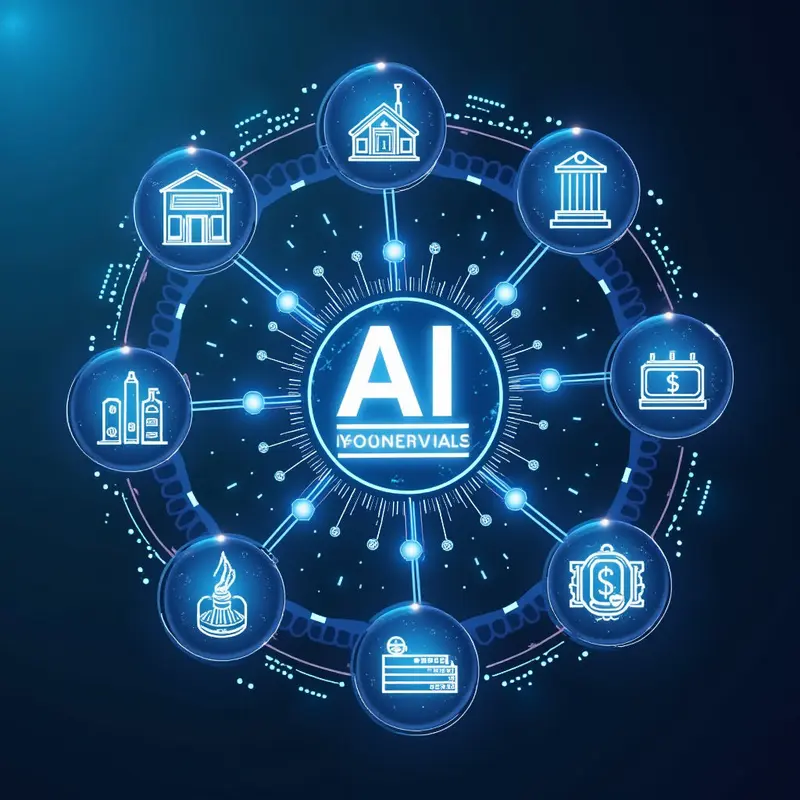
1. Strategic AI Integration: Driving Disruption and Innovation Across Industries
In 2025, AI is no longer a futuristic concept but a core driver of business transformation, disrupting traditional models and enabling innovation at scale. Across sectors like finance, healthcare, and retail, AI is reshaping operations by automating processes, enhancing decision-making, and enabling hyper-personalization.
This technological disruption is not just about efficiency—it’s about unlocking new revenue streams, optimizing pricing strategies, and creating intelligent products. Companies are embracing AI-driven systems such as predictive analytics, autonomous workflows, and multimodal AI to gain competitive advantage. As a result, industry leaders are restructuring their teams, investing in AI talent, and embedding AI into their strategic frameworks to drive long-term innovation and agility. To learn more about how AI is transforming industries, visit: https://www.taazaa.com/ai-for-business-a-complete-guide-from-strategy-to-impact/.
2. Industry Transformation Through AI-Powered Business Strategies: Economic Implications and Market Dynamics
AI is reshaping industries by driving efficiency, reducing costs, and creating new market opportunities. In 2025, companies are leveraging AI to accelerate tech modernization, with some reducing technical debt by up to 40% and cutting modernization timelines by 40–50%. This transformation is redefining talent models and operational structures, as AI assumes routine tasks and enables human workers to focus on strategic roles.
Economically, AI adoption is projected to boost GDP by 10–15% over the next decade, though benefits are unevenly distributed, favoring advanced economies like the U.S. over lower-income regions. Companies that scale AI across functions report faster revenue growth and higher shareholder returns, emphasizing the importance of integrating AI into core business strategies to unlock long-term value.
3. Ethical Challenges and Social Responsibility in AI-Driven Industry Shifts
As AI reshapes industries, ethical concerns like algorithmic bias and data privacy demand attention. Automation boosts efficiency but also risks workforce displacement, requiring proactive reskilling initiatives. Companies must embed transparency and fairness into AI systems, ensuring accountability in decision-making processes. Responsible AI governance becomes essential, balancing innovation with societal well-being. Read more
Final thoughts
As AI becomes deeply embedded in business strategy, entrepreneurs must embrace a holistic approach that aligns vision, data, talent, innovation, agility, and industry-specific applications. By understanding and applying these six pillars, business leaders can not only survive but thrive in the AI-driven economy of 2025 and beyond.
Ready to elevate your business with data-driven strategies and expert insights? Contact OnInitiative.com ([email protected]) today and let our team help you grow smarter, faster, and more efficiently!
About Us
OnInitiative.com is an innovative marketplace that helps e-commerce businesses boost productivity and community growth through advanced automation tools.
Further reading


Leave a comment