














No products in the cart.

Shop this story
Why I deleted decor apps for my foyer: A minimalist review
by Anabel Figueroa
If your foyer has started to feel like a showroom curated by your phone instead of a calm threshold into your home, you are not imagining it. For many minimalists, a quick scroll for “inspiration” quietly turned into an endless stream of almost-right benches, rugs, and mirrors that never quite add up to peace. The more apps promise perfectly styled entries, the less grounded and finished those spaces can feel. At some point, deleting the decor apps begins to sound less dramatic and more like self-defense for your attention.
What sits behind that impulse is bigger than a single entryway. It touches how algorithms shape taste, how retail tools are built to keep you browsing, and how your nervous system reacts to constant micro-decisions about your home. This review walks through why decor tech often clashes with warm, intentional minimalism, how digital clutter feeds visual clutter, and what happens when you design your foyer around constraints instead of feeds. Along the way, you will see how a few clear minimalist foyer decor ideas, chosen on your terms, can do more for your space than any infinite scroll ever could.
Trend analysis: From algorithmic foyers to warm minimalism
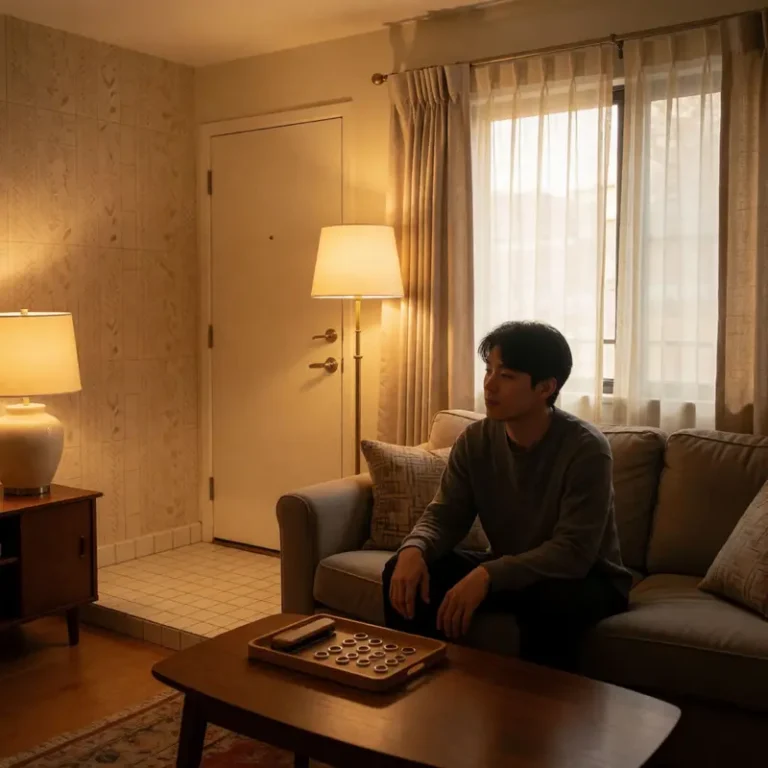
If it feels like your foyer is being designed more by your phone than by you, you are right on time for where 2026 is heading.
Minimalist decorators are quietly stepping away from algorithm-driven suggestions and coming back to slower, intentional choices. In real life, that means fewer nights mindlessly scrolling decor apps and more time asking a much better question: “What do I actually want to feel when I walk through my front door?” Your foyer is starting to matter less as a stage for visitors and more as the first space that either calms your nervous system or spikes it.
There is a growing digital decor fatigue underneath this shift. Constant notifications, “must-have” items, and one-tap mood boards turn what should feel fun into decision overload. When every week brings a new foyer trend, your entryway never really gets to settle into itself. That constant churn is the opposite of what minimalists are actually looking for.
Designers are already reporting a clear move away from those cold, gallery-white entryways that look perfect on a screen but harsh in real life. Instead, 2026 is leaning into warmer, lived-in minimalism. Picture minimalism that still feels edited and calm, but with softer, warmer colors, materials that look like they can survive real-life shoes and grocery bags, and pieces that feel collected over time instead of auto-filled by an algorithm.
In foyer and entry designs, two ideas keep showing up: warm minimalism and quiet luxury.
- Warm minimalism puts comfort and calm at the center, not just empty space or blank walls.
- Quiet luxury focuses on a small number of well-considered elements that look and feel high quality without begging for attention.
This shift changes how you actually use minimalist foyer decor ideas. Instead of chasing the next “hot” bench, rug, or mirror an app throws at you, you can slow down and choose a handful of elements that truly matter in your specific space, even if that means rethinking how AI integrated home decor tools show up in your process.
Most consumer decor apps are built to push frequent updates and fast trend-cycling. That rhythm pulls you away from stable, minimalist goals and drags you back into restless tweaking. In 2026, the real flex is a foyer that hardly needs changing because it already lines up with how you live, how you move through the space, and how you want to feel when you step inside.
The core insight is simple. Minimalist foyers are shifting away from algorithmic churn and toward quieter, warmer, more intentional design. To keep that momentum going, the next step is to look closely at the digital tools you are using. Which ones genuinely support your minimalist goals, help you edit, and give you clarity, and which ones just keep you in a loop of constant options that belong in the uninstall pile?
The toolkit audit: When decor apps quietly undermine minimalism
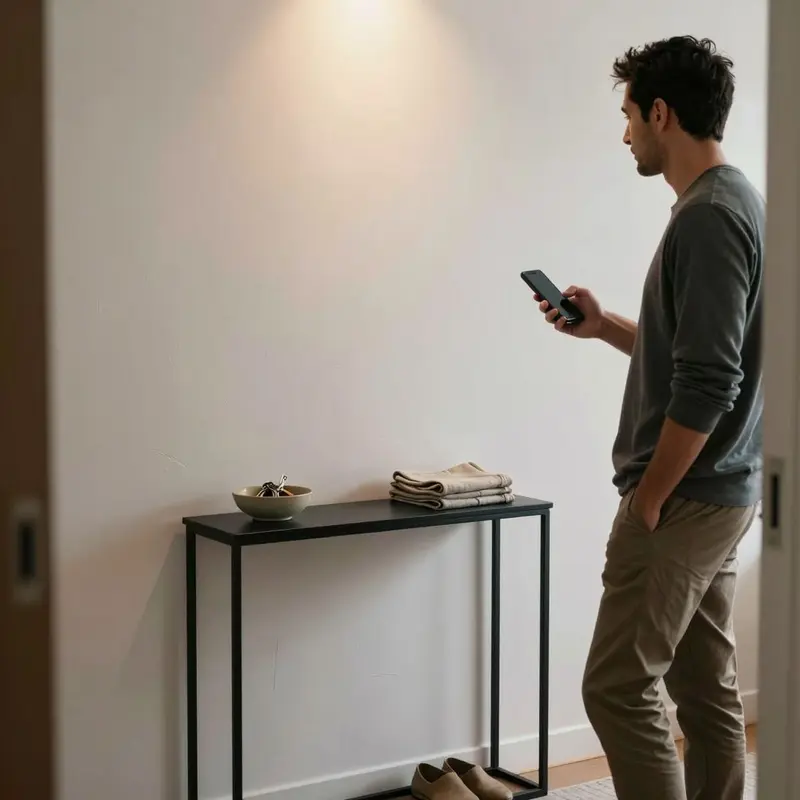
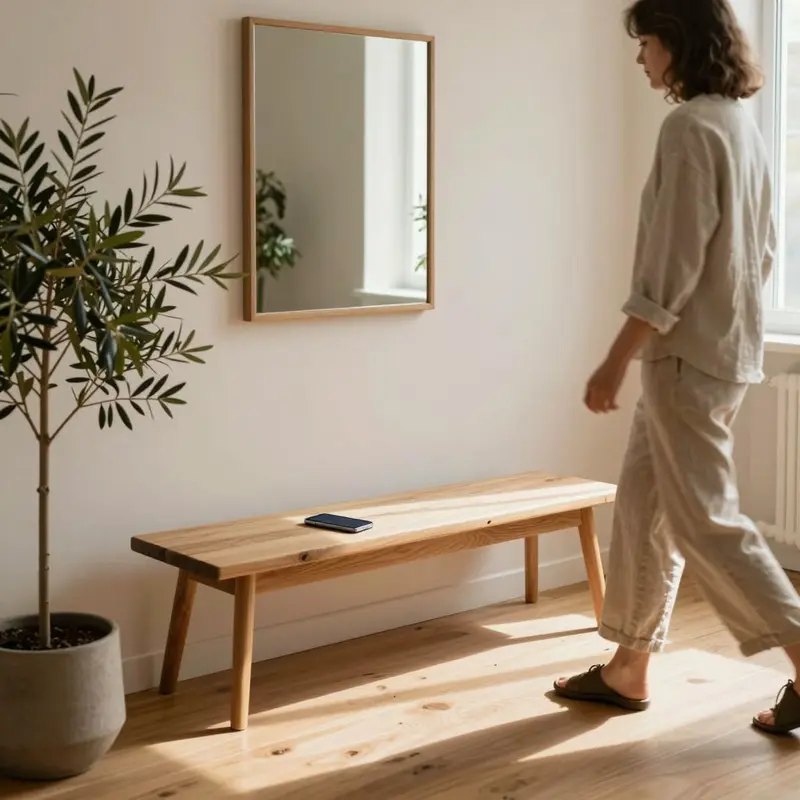
You have already started trading algorithmic churn for something quieter and more intentional. Now it is time to ask a harder question: does your digital decor toolkit actually support that calmer way of living, or does it quietly drag you back into the scroll every time you open it?
Most decor apps did not come from a minimalist mindset at all. They were designed to solve a very specific business problem, not to protect your peace. Augmented reality room planners and similar tools exist to help retailers reduce return rates and increase cart size. In plain terms, they are built for big, complex buying decisions, like furnishing an entire living room or planning a full renovation. They are not really built for simple, once-and-done choices in a small foyer.
That difference matters a lot in a minimalist home. A foyer usually needs just a few clear, grounded decisions. Maybe you are choosing a bench, a rug, a light, and a hook rail. That is it. Meanwhile, decor apps often show up with an entire arsenal of features you will never use for a tiny project. They offer 3D walkthroughs, shareable inspiration boards, and intricate product comparisons. All of that appears when you may only need to confirm one thing: will this warm wood bench and this soft rug actually look and feel good together by the door?
At the same time, e-commerce keeps expanding and now accounts for roughly one-fifth of global retail, a pattern reflected in widely cited global ecommerce share data. That massive investment in online shopping creates a visibility bias. Decor apps, shoppable feeds, and recommendation carousels stay right in front of your eyes. They are loud, polished, and constantly updated. The quieter trend of decluttering and warm minimalism does not shout as loudly, even though it usually lines up much more closely with the calm, low-clutter look you want greeting you at your front door.
You feel that tug every time you open an app “just to get one idea” and end up drowning in options 20 minutes later. Constantly updating feeds expand your choices, but they also expand your cognitive clutter. Do you notice how choice overload and decision fatigue sneak in around the edges? Ironically, the more tools, filters, and boards you use, the less satisfied you may feel with anything you actually pick.
So how do you flip that dynamic? Here is a simple way to audit your digital toolkit so it serves your minimalist foyer decor ideas instead of quietly undermining them:
- Keep tools that clarify a specific decision, such as scale or color, in just a few minutes of use.
- Question tools that expand your options without helping you narrow them again.
- Delete or pause apps that you only open to browse, not to complete a decision or move a project forward.
- Watch for freemium traps where the basic features are free, but your attention becomes the hidden price of “unlocking” more.
Once you look at your apps through this lens, migration friction starts to feel different. It is mostly psychological. It is less about losing data and much more about breaking a habit that keeps you in the scroll. When you uninstall a decor app that does not fit your minimalist needs, you are not rejecting technology at all. You are editing your inputs so your foyer can stay as calm and intentional as you want the rest of your home to feel.
And once you see your tools this way, a bigger, more interesting question opens up. How can warm minimalism and technology coexist in a way that protects your attention instead of scattering it across endless feeds? That is where we are going next.
Cultural shift: When warm minimalism pushes apps aside
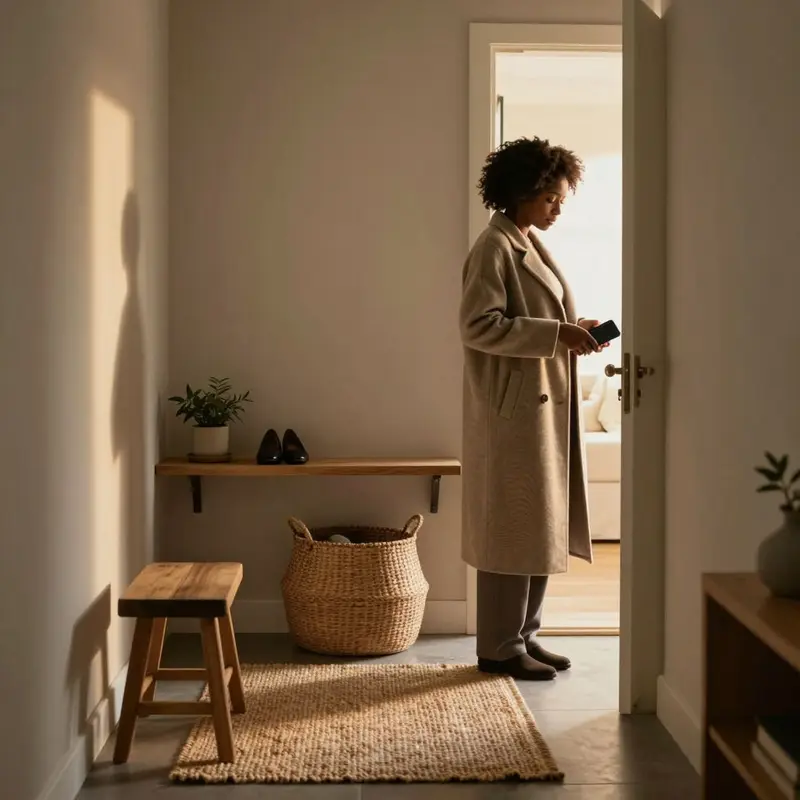
You already started pruning your digital tools so your foyer could feel calmer. Now it really helps to zoom out and look at what’s actually changing in the culture around you.
A lot of people are hitting a wall with screens. They’re uninstalling or limiting non-essential apps simply because of plain digital fatigue. They’re tired. That same instinct sits at the core of warm minimalism. It’s not only about fewer objects on a console table. It’s about fewer, more meaningful inputs on your phone so your attention isn’t constantly yanked back into a feed.
Decor and shopping apps usually pull you in the opposite direction. Their recommendation algorithms are designed to keep you browsing and to nudge you into frequent purchases. That behavior directly clashes with minimalism’s preference for stability and for living with pieces that can stay put for years.
If you’ve ever opened a decor app “just to look,” then closed it 40 minutes later with five new options in your cart, you’ve already felt that tension in your body. Did you really want those things, or did the app talk you into them?
For a warm minimalist, this is often the turning point. Manual curation starts to feel more appealing than being fed an infinite scroll, largely because those recommendation algorithms keep nudging you toward more and newer things instead of helping you commit to what truly fits. Serious planners also run into the limits of these apps. Workflow gaps, clunky interfaces, and hidden pricing or dark patterns all stack on top of your already heavy decision fatigue, which is why the broader digital decluttering trend feels so appealing.
So you pull back from the apps and move closer to your senses. You notice how the light falls in your entry at 4 p.m. You measure the distance from door to bench. You sketch two or three minimalist foyer decor ideas on paper instead of saving 200 screenshots that blur together later.
This is the moment when technology starts to take a quieter, more respectful role. Many households in the United States use AI tools, yet people stay skeptical of smart features that don’t deliver a clear, concrete benefit. Warm minimalism is firmly on their side. It prefers tech that simplifies daily routines and supports value-aligned, sustainable, and durable consumption, not endless trend chasing.
So the cultural shift isn’t anti-tech. It’s pro-intention. You’re learning to ask whether a tool keeps your foyer, and your mind, steady instead of revved up. That question sets the stage for deciding exactly which technologies can coexist with a minimalist home in a practical, strategic way in the next chapter.
Strategic verdict: When apps hijack minimalist focus
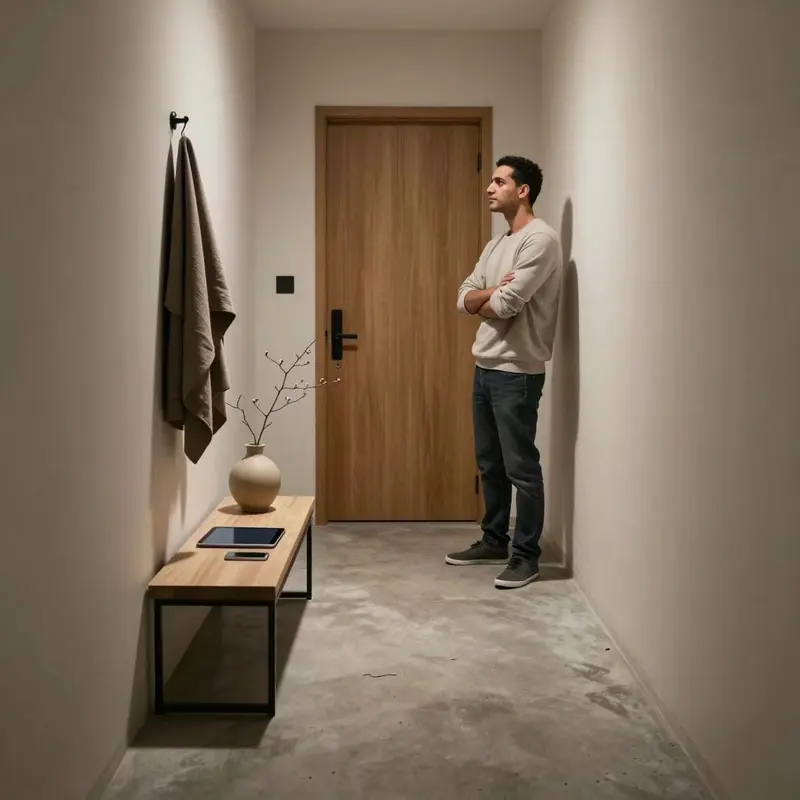
If the last chapter was about pulling your values back from trends, this one’s about pulling your attention back from your phone.
Decor and inspiration apps now live inside what a lot of researchers call the “emotional economy.” You’re not just opening them to pick a mirror. You’re opening them to cool off after a long day, to get tiny hits of pleasure while you scroll, and to say “this is so me” every time you save yet another foyer photo. The catch? Every new saved idea quietly turns into one more unresolved micro-decision sitting in the back of your mind.
That would be fine if those apps actually lightened your mental load. They don’t. In reality, algorithmic suggestion loops usually turn the volume up. The more you tap, like, save, and linger, the more the system feeds you. Your choices start to narrow around what the algorithm has decided you want, and that can leave you with more mental clutter and less sense of control. At some point, it stops feeling like you’re curating. It starts feeling like you’re being steered.
At the same time, rising AI-driven digital fatigue keeps growing as more AI and algorithmic tools spill into everyday life. Over half of US internet households already use generative AI for all kinds of tasks, so your foyer’s definitely not the only place algorithms are whispering in your ear. This is exactly why so many people are craving more transparency and control. They want to know why something’s being recommended and, just as important, how to turn the stream down when it’s too much.
Your foyer decisions might look small, but they sit squarely inside your limited daily cognitive capacity. Each time you wonder whether to try a new runner you saw in an app, you burn a little more attention. One decision might not seem like much, but weeks of this add up.
So a tech-compatible minimalist strategy starts by treating your mind as the primary “room” you’re designing.
When it comes to foyer choices, that means favoring automation that removes noise, not tools that toss more micro-choices at you. You can absolutely use tech, and you probably will, but it should behave like a quiet assistant in the background. If an app or AI tool keeps throwing fifteen “perfect” console tables at you every time you open it, it’s not helping you decide. It’s stretching out the undecided state and keeping your attention stuck.
Minimalists usually get better results with a constraints-first, mostly manual approach. Instead of starting with a feed, you start with function and limits. Then you let tech play a small, clearly defined supporting role.
A simple way to apply this to your own minimalist foyer decor ideas is:
- Define the foyer’s job first, such as landing zone, calm welcome, or gallery for one cherished object. This anchors every later decision and keeps the space from becoming a dumping ground for random inspiration.
- Set hard constraints like maximum number of objects, colors, and surfaces. These limits make future second-guessing a lot less likely, because you’ve already drawn the line for yourself.
- Use low-tech tools such as a quick sketch, tape on the floor, or one printed photo as your reference. This keeps your attention in the actual room with your actual walls and floor, not drifting off in an endless feed.
These steps turn technology into an optional extra, not the engine of your style. You’re no longer asking “What else is out there?” every night as you scroll. You’re asking “Does this serve the job I already defined?” and then you’re done.
When you approach apps and AI this way, you line your foyer up with how your brain naturally works. You protect your need for fewer inputs, clearer choices, and a stronger sense of authorship over your space. In practical terms, tech-compatible minimalism simply means this: keep the tools that genuinely reduce noise and help you act on your constraints, and confidently delete the rest.
Final thoughts
Stepping back from decor apps reveals a pattern that reaches far beyond a single console table or coat hook. Recommendation engines thrive on keeping your options open, your cart active, and your mind half decided, which quietly erodes the calm that minimalism promises. Economic incentives push more choice, cognitive limits push back, and socially we are starting to value slower, warmer, longer lasting decisions that hold up even when trends move on. When you treat your foyer as a small laboratory for this shift, it becomes obvious that fewer inputs and firmer boundaries create more ease every time you walk through the door.
The real power move is not a perfectly styled entry photo, it is a foyer that needs almost no thought because every object in it already earns its place. That happens when you edit your tools as rigorously as you edit your stuff, keep only the technologies that actually reduce noise, and trust your own senses more than any feed. Minimalist foyer decor ideas then become a short, clear list that supports how you live, instead of a hundred saved images waiting for action. From there, the open question is simple and energizing; if one small space can feel this grounded without algorithmic help, what other corners of your home and life are ready for the same kind of quiet reset?
Ready to transform your space with smart, stylish design ideas? Contact OnInitiative.com ([email protected]) today and let our experts help you reimagine home decor with creativity and purpose!
About us
OnInitiative.com is an innovative marketplace that helps e-commerce businesses boost productivity and community growth through advanced automation tools.
Further reading
Leave a comment