















No products in the cart.

Shop this story
Your next lamp wants a subscription: Why simple gadgets keep sprouting monthly fees
by Joseph L
You buy a lamp, camera, or speaker expecting one price. Then smart home subscription fees show up after checkout, and the real cost starts to look fuzzy. For everyday gadget buyers, that changes the whole decision, because a cheap device can turn into a standing bill that lasts longer than the excitement of setting it up.
The tricky part is that some of these fees do pay for real things: cloud storage, AI processing, and the servers that keep connected devices alive. But the charge also does something else. It lets companies decide which features stay basic, which move behind a paywall, and how much of your home life keeps flowing back through their systems. A smart gadget used to be a product. More often now, it’s the first line on an ongoing invoice.
Unit economics shift: Thin margins force monthly fees

Selling a smart speaker for $49 used to be a reasonable business. You sold enough of them, earned your margin, and grew by selling more. That arithmetic is breaking down across the smart home industry, and the consequences land directly on everyday gadget buyers who assumed the price tag on the box ended the conversation.
The pressure underneath this shift is structural. Hardware margins in consumer electronics are notoriously thin, and once companies add cloud storage, AI inference, and round-the-clock server costs, the unit economics of a one-time sale deteriorate quickly. Bloomberg’s data from early 2026 captures the uncomfortable reality even for companies succeeding at AI: depreciation alone consumed more than two thirds of AI revenue, which means the recurring-revenue model is partly a response to genuine capital intensity, not purely a profit-extraction play. That helps explain why the industry is moving so fast.
The migration is already visible in the pricing structures of every major ecosystem. Google’s Home Premium subscription runs $10 per month, positioned around more powerful AI features. Amazon charges $20 per month for Alexa+ unless a buyer already holds a Prime membership. Wink shifted its previously free platform to a $4.99 monthly fee with almost no runway for users to adapt. These aren’t outliers. They show a coordinated industry recalculation of where sustainable revenue actually lives.
Ring shows what that recalculation looks like at scale. The company built hardware as an entry point and then layered a high-margin subscription on top, capturing recurring revenue from a substantial share of its installed base. The hardware became, in effect, a vehicle for enrolling customers into a fee structure, with basic alarm features and voice controls eventually moved behind paid tiers.
For gadget buyers, smart home subscription fees now create a second purchase decision that was invisible at the point of sale. The device on the shelf is no longer the full purchase.
It is the opening bid. The industry has already settled that question for itself. Now it has to prove to buyers that the monthly charges actually earn their place.
Feature paywalls: $9.99–$20/month to access your footage

Arlo’s per-camera subscription now runs $9.99 a month. That price has risen at least once in recent history, and for most buyers it only restores access to their own recorded footage. The camera already captured that cloud-stored video, and it sits on servers you can’t control. Now access is a paid feature. That framing matters because it shows the logic beneath every smart home camera subscription on the market.
The pattern holds across the category. Ring Home Premium, priced at $19.99 per month, gates 24/7 recording and AI-powered video search behind that paywall. Google’s Nest Aware Plus, recently increased to $20 per month, is where Gemini-backed camera search lives, letting you query stored clips by asking plain-language questions inside the app. Wyze keeps its AI search exclusive to Cam Unlimited subscribers at $9.99 per month. The specific prices differ, but the architecture stays the same: the camera ships, captures video, and then requires a recurring payment before you can fully interact with what it recorded.
AI summaries and captions have sharpened the frustration. Google Home, Ring, and Arlo all use AI to generate concise event descriptions, the kind of quick-glance notification that makes a security camera genuinely useful instead of a passive recorder. Every one of those features currently requires a subscription. Buying the hardware gets you a motion alert. Figuring out what the alert means costs extra, month after month.
There is a real tension inside this arrangement, and it runs deeper than sticker shock. Choosing to encrypt your Ring footage end-to-end, the more privacy-protective option, disables person detection, 24/7 recording, and AI video search entirely. Subscribers who want AI search give Ring a different kind of asset: unencrypted footage processed through their servers. The subscription is more than a convenience fee. It’s also the mechanism that keeps your video accessible to the platform that analyzes it.
In practice, smart home subscription fees now determine which features you get and how much visibility the company retains over your home. The monthly charge buys access while giving access at the same time.
Platform power and bundling: One bill, many services
The billing relationship was always the real prize. Camera subscriptions showed that recurring fees could outlast the hardware sale, and the platform companies have now absorbed that lesson at a structural level, building subscription tiers meant to pull your entire smart home into a single monthly charge.
Amazon’s move with Alexa+ is the clearest version of this play. Non-Prime members pay separately for the upgraded assistant, while Prime subscribers get it included, pulling a previously free voice interface into the orbit of Amazon’s flagship bundle. Amazon executives have described the user base in terms of tens of millions already on board, which, if accurate, means the billing relationship already exists at scale before most buyers notice the shift. Consumer Reports characterized the change sharply, pointing out that capabilities once available at no extra cost have moved behind a paywall. That criticism captures the mechanism plainly: the device in your home didn’t change, but access to what it could do now has a price tag.
Google is running a parallel strategy with more explicit bundling logic. Gemini Live and the richer Gemini-for-Home features on Nest speakers sit behind Google Home Premium, which Google now folds into its Google AI Pro subscription at $19.99 per month alongside general AI tools and YouTube Premium. One payment, multiple service categories, one billing relationship. Stratechery’s analysis of platform bundling identifies precisely this outcome as the goal: reduce churn, aggregate demand, and keep the customer inside your payment infrastructure instead of someone else’s. Google has also opened its smart home subscription layer to third-party providers, explicitly positioning it as a platform for additional monetizable services. The architecture reads less like a product decision and more like a land-grab for where your recurring charges live.
The headwind facing both companies is real. Amazon’s own executives have acknowledged that many users are reluctant to absorb another monthly AI fee, and a review of Google’s Gemini-powered speaker described the paywalled experience as frustrating even for subscribers who paid for it. smart home subscription fees can consolidate billing, but that only matters if the value delivered clears the bar that subscription fatigue has raised considerably higher than it was two years ago.
Adoption friction: Subscription fatigue caps smart home uptake
Household budgets were already under pressure from subscription fatigue before manufacturers of connected home devices decided to push further. The average American now spends $111 per month across subscriptions and quietly wastes roughly $21 of that on services they no longer use. Those figures don’t describe a population ready to welcome another recurring charge on their thermostat.
That creates a specific, cumulative kind of friction for smart home adoption. A single camera subscription is a minor annoyance. But the platform-level bundling described in the previous section increasingly asks buyers to commit before they can judge whether the value supports the ongoing cost. Security cameras and video doorbells routinely put their core storage behind paid tiers, professional monitoring runs as a separate monthly service, and hub functionality can disappear entirely if a company’s financial situation shifts, as Futurehome demonstrated by imposing a new annual fee for basic device control after declaring bankruptcy. Wink pulled the same move with even less notice, stripping voice control and automations from users who declined to pay. Informed buyers have started to treat these as part of the price of entry, and that pattern shapes purchase decisions.
The calculation gets harder because smart home subscription fees tend to drift upward without matching improvements. Google’s Nest Aware price increases drew sustained complaints precisely because users could identify no meaningful change in what they were getting. When a subscription rises and the experience stays flat, the perceived value gap widens faster than the dollar amount suggests.
Consumer behavior has started to reflect the accumulated weight of those choices. Cancellations outpaced new sign-ups across multiple subscription categories for two consecutive quarters, a trend analysts attributed to deliberate household audits during inflation. Growth in subscription-based businesses overall, a counterpoint worth taking seriously, tends to concentrate in services people find genuinely indispensable. For most buyers, a cloud-dependent lamp or hub still hasn’t cleared that bar. Dark patterns designed to nudge reluctant users toward sign-up can manufacture short-term conversions, but they also speed up the distrust that makes the next purchase decision harder.
As a result, the market now judges the hardware after a more basic question: what will it cost to keep running next year?
Privacy-by-design vs. data monetization: Subscriptions fuel surveillance
What subscription pricing actually buys a company is a durable reason to keep collecting, not just cloud infrastructure. Every tier upgrade and every AI-enhanced feature unlocked at the next payment level extends both the revenue stream and the data stream at the same time. That alignment is structural.
When you pay for continuous cloud recording on a security camera, the stored footage lives on vendor servers under vendor-controlled retention policies. Consumer Reports has documented that data gathered by connected home devices routinely flows back to manufacturers, who may use it for market research or pass it to third parties. A smart lock’s record of when your household comes and goes, a thermostat’s inference about your daily schedule, and a camera’s archive of interior footage each represent a category of information with commercial value that goes well beyond the monthly fee you paid to generate it. Companies that say they do not sell your data can still monetize it through targeted advertising, behavioral profiling, and partner-sharing arrangements that fall outside the legal definition of a sale.
Privacy by Design addresses that directly. The principle, embedded in both EU research frameworks and the NIST consumer IoT baseline, holds that data collection should be limited to what a device genuinely requires, that privacy-protective defaults should ship with the product rather than require users to opt in, and that features should not be offered as inducements to accept looser data-usage terms. That last point directly conflicts with subscription roadmaps that sequence capabilities behind payment tiers and tie access to useful functionality to a data relationship the buyer may not fully understand.
One practical counterweight sits at the architecture level. Keeping device control inside a local hub instead of routing it through the cloud reduces what leaves your home network while preserving automation functionality. Interoperability standards like Matter can improve convenience and security without meaningfully reducing how much usage data flows to the provider. The standard addresses device compatibility, not data minimization.
The FTC’s framing of surveillance pricing as a consumer protection issue signals a shift in where this fight is headed. Regulators are beginning to examine how household telemetry feeds commercial decisions, but that scrutiny arrives after the data has already been collected, not before the product ships. That means the real privacy decision often happens at checkout for buyers weighing smart home subscription fees, long before any regulator steps in.
Product strategy playbook: Trials build habit, then paywalls
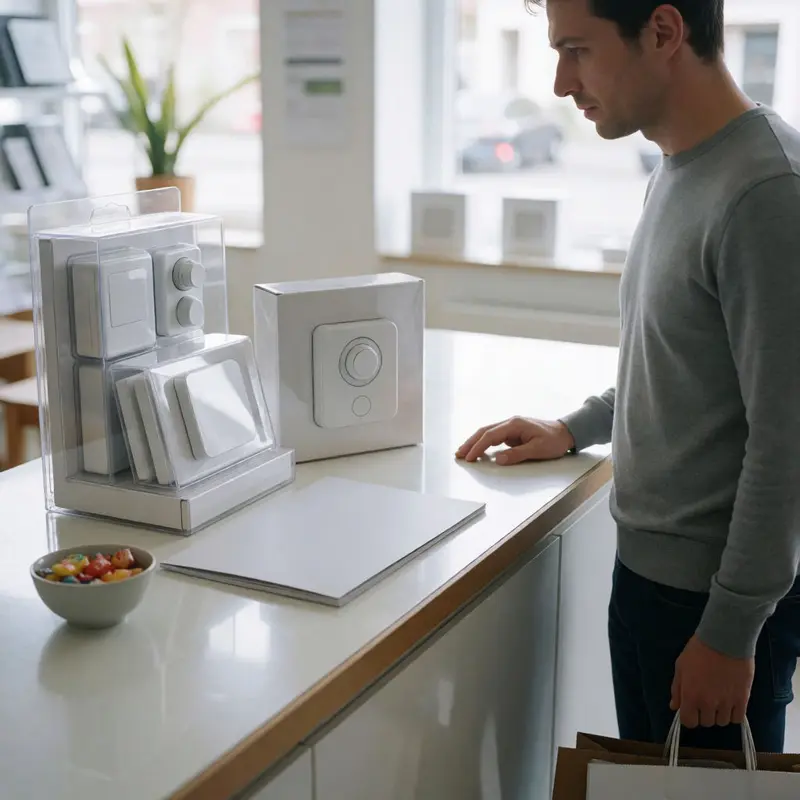
The roadmap is already written, and it follows a recognizable commercial logic: get the device into your home at a low upfront price, extend a free trial long enough to build habit, then introduce a paywall at exactly the moment the feature feels indispensable.
Amazon’s Alexa+ rollout shows the mechanic precisely. Non-Prime subscribers received a 30-day window to evaluate the upgraded assistant before the subscription requirement activated, a trial short enough that genuine assessment of daily value is difficult and long enough to establish reliance. Prime members get access folded into what they already pay, which means Amazon’s subscription architecture also acts as a conversion lever for its broader retail ecosystem. The AI capability and the loyalty program reinforce each other structurally.
The tier logic extends down to the developer layer. Samsung’s decision to charge for SmartThings API access signals that the monetization perimeter is expanding beyond end users. When platform access itself carries a recurring fee, third-party developers face pressure to build subscription costs into whatever services they create on top, compounding what buyers eventually pay. Google’s Home Platform director made the direction explicit: the goal is to let hardware makers and service providers build what the company called monetizable, proactive services, which is a roadmap description, not a product announcement.
Futurehome’s case sits at the far end of this spectrum. When the company ran into financial difficulty, core hub functions, device control, automation shortcuts, energy monitoring, moved behind an annual subscription worth roughly 1,188 NOK. Buyers who thought they owned a standalone hub discovered the ownership was conditional. That outcome is an outlier today, but it shows where tiered dependency leads when a company’s financial position changes.
That is the real signal behind smart home subscription fees. These companies are designing systems with very little room for a stable middle ground. Free tiers create the experience of loss when features migrate upward. Trial windows create urgency without providing the extended use that honest evaluation requires. The API layer ensures that even developers building alternatives still operate inside a fee structure the platform controls. For anyone assembling a smart home now, the subscription terms embedded in today’s purchase are effectively a forecast of tomorrow’s bill.
Final thoughts
A connected lamp with a monthly fee is a pricing signal: the product being sold is ongoing dependence, priced a few dollars at a time. Once that pattern spreads across cameras, speakers, hubs, and the developer tools behind them, ownership starts to mean conditional access shaped by a billing relationship you don’t fully control.
That makes smart home subscription fees more than an annoyance to budget around. They act like a forecast hidden inside the purchase, telling you which features may drift upward, which conveniences may become rent, and which privacy tradeoffs will keep showing up as premium options. The sharper buying question isn’t whether a gadget feels smart on day one. It’s whether the terms attached to it still look fair a year from now.
Further reading


Leave a comment