













No products in the cart.

Shop this story
Neato shows why app-based ease is the first feature to cut from your shortlist
by Joseph L
Shopping for robot vacuums without cloud apps gets a lot more interesting once you stop treating the app as a bonus. For a smart home shopper, the app often decides how much of the product you actually own a year from now. A clean map, easy schedules, and one-tap room picks feel like product features when you’re buying. They can turn out to be rented access.
That’s the uncomfortable part of this category. The nicest software can hide the weakest long-term bet, because convenience sits on infrastructure you don’t control and probably never see. Once that clicks, the shortlist changes shape fast. You’re no longer comparing cleaning specs alone; you’re deciding how much function, privacy, and future usefulness you’re willing to hand to someone else’s server.
Dependency audit: What still works after cloud shutdown
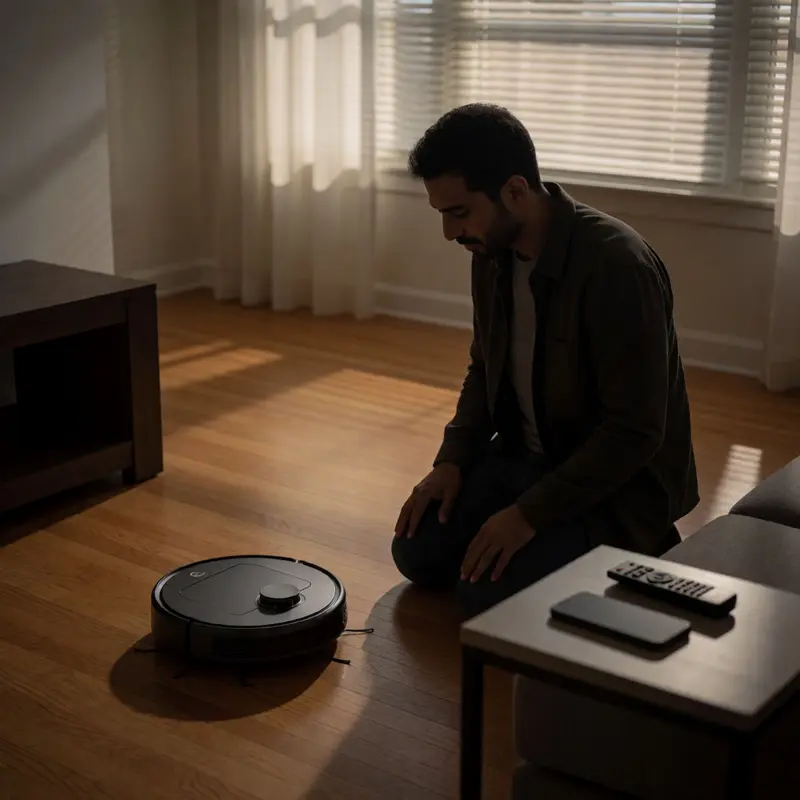
Picture this: it is Tuesday evening, the robot you bought eighteen months ago is sitting in its dock, and an email from the vendor is explaining that cloud services are ending in October. You open the app. The scheduling screen still loads, the map still renders, the room-select tiles still look tappable. Nothing tells you yet which of those features is about to stop working and which will keep running on the robot itself.
That is the audit worth doing before you buy. After the robot is bought, the choice is already fixed and the audit’s work is finished. When vendor cloud access goes away, the software layer peels off in a very specific pattern. What survives is whatever the robot can execute using its onboard hardware: a physical power button, the navigation sensors already embedded in the chassis, and the logic burned into its firmware. Neato’s own shutdown announcement described this clearly, saying the robot “will continue to function manually.” Basic cleaning, started from the button on top, keeps going.
Everything else is a cloud dependency in disguise. App-based scheduling, room selection, virtual no-go zones, cleaning history, remote start, and any mode that lives inside a vendor account: these require a live connection to a server the company controls. When that server is gone, so are they. The Neato D10’s physical power button and its app-linked feature set illustrate the split cleanly: one survives, the other does not.
The starkest alternative is a robot that never had Wi-Fi hardware at all. Certain Eufy RoboVac 11S variants and the ILIFE V3s Pro fall into this category, running entirely from onboard buttons or an IR remote, with scheduling handled by the remote rather than an account-backed server. They cannot lose cloud features they never had.
A middle path exists, and it is worth knowing about. Some connected models expose local HTTP APIs or browser-based control panels that work without a vendor account, keeping mapping and zone edits alive on your LAN rather than on a distant server, though that requires third-party integration and meaningful user effort. The question of which robots offer that kind of local control, and how much of it you can actually reach without writing code, is exactly what separates a marketing spec from a useful floor plan.
Control-plane audit: Which features survive a cloud shutdown
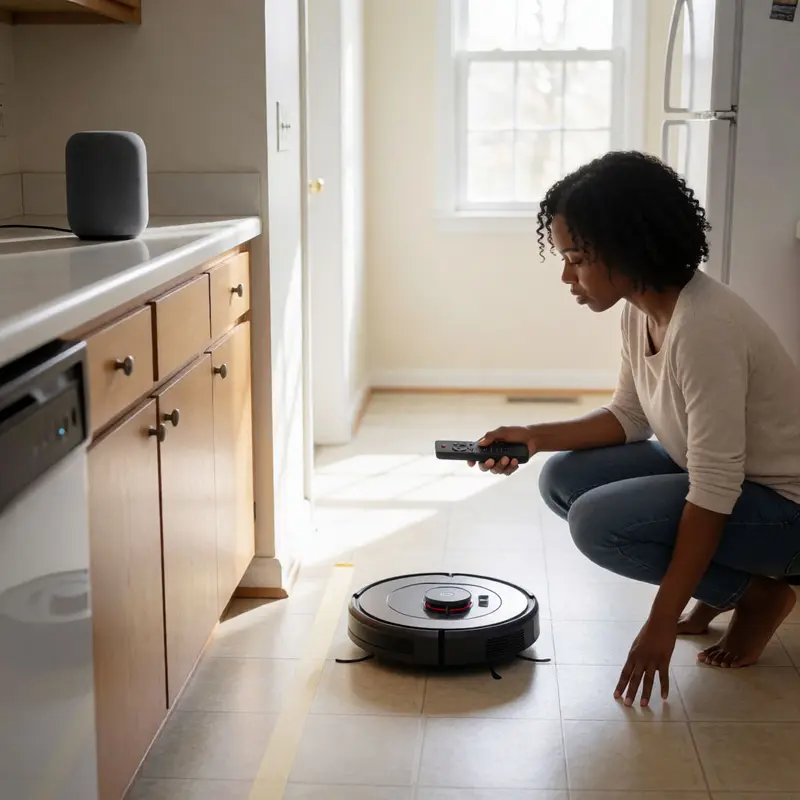
A robot vacuum’s control plane sorts into three tiers, and knowing which tier each feature lives on tells you what survives when a cloud service ends.
The first tier is the physical layer: a single button on top of the chassis that starts a full cleaning run and sends the robot back to dock. That is what Neato’s shutdown announcement kept intact, noting that the robot would still work from its on device controls. No network required, no account, no app. The second tier is local scheduling, which is rarer than you’d expect. The Eufy RoboVac 11S MAX and the ILIFE V3s Pro handle it through built-in controls or a handheld infrared controller, so their schedules survive without any internet connection at all. Scheduling that lives in the app layer, by contrast, runs on the vendor’s servers by default rather than in the robot’s own memory.
The third tier is LAN control, and this is where the real leverage sits for anyone who wants more than a basic start button without surrendering map-based features to a distant server. Matter-certified devices communicate directly over your local network using Wi-Fi, Ethernet, or Thread, so a command like “start cleaning” can execute even if the internet is down entirely. That’s a genuine improvement over pure cloud dependency, though it stops short of full independence: setup still requires the manufacturer’s own app, and room mapping isn’t supported through Matter at all. You get local command execution; you don’t get local configuration.
For configuration that runs entirely on your LAN, including zone edits and cleaning history, the practical options are community projects. Valetudo is the most cited: it replaces the robot’s cloud communication with a self-hosted interface that lives on your local network. The tradeoff is that getting there requires compatible hardware and a willingness to modify firmware, which puts it outside reach for most buyers who aren’t already running a home server.
What this means for your shortlist is concrete. A robot that handles scheduling through an IR remote gives you tier-two resilience at purchase. A Matter-certified model with a known local API gives you tier-three control if you’re willing to set up the infrastructure. A cloud-only model gives you tier one when the vendor decides it’s time.
Privacy & security audit: Pricing the real data exposure
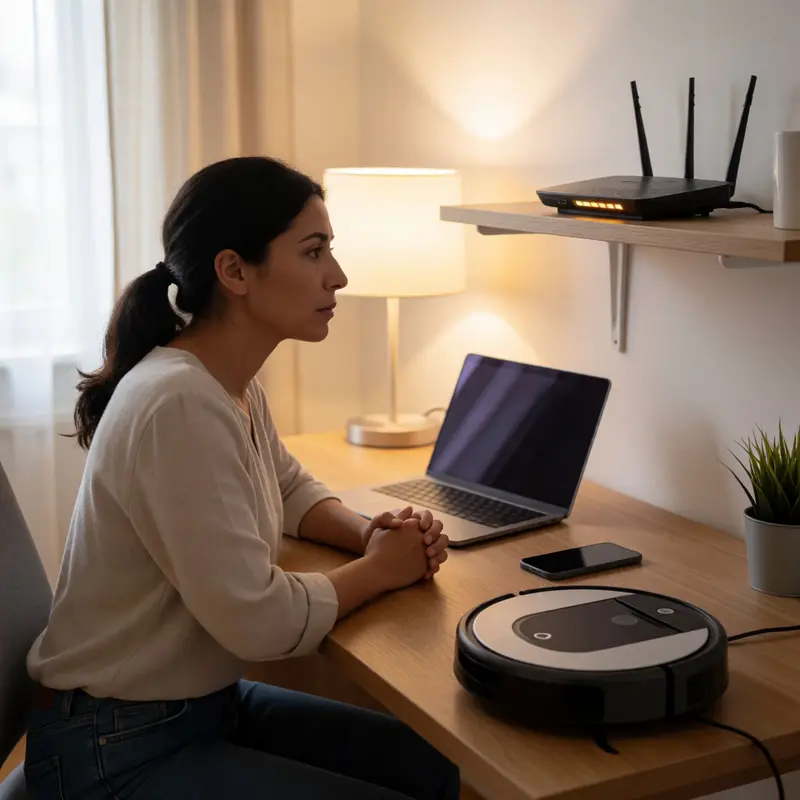
Cloud-dependent features don’t just disappear when a vendor shuts down. Before that happens, they’re actively moving your data somewhere.
Neato’s own app privacy policy catalogs what that movement looks like in practice: your name, address, email, billing details, and birth date on the account side; device identifiers, IP address, OS version, and app usage metrics collected automatically in the background. Location access feeds Wi-Fi list lookups and server routing. Usage statistics travel through Google Firebase. That’s a substantial profile assembled by an app whose primary job is to tell a vacuum when to run. For a device that’s physically inside your home, tracing floor plans, the exposure is worth pricing into your shortlist decision before you buy.
Mapping data sharpens that concern considerably. When you view or save a floor plan in an app, that data typically uploads to the manufacturer’s servers, meaning a detailed layout of your home’s interior is stored on systems outside your control. Camera-equipped models extend the risk further: images routed through a vendor cloud have appeared in documented research incidents involving unauthorized access. None of that is hypothetical exposure; it’s the architecture of how these systems are designed to work.
There are three paths off that architecture, each with a real cost attached. The cleanest is hardware-level, certain models such as the Eufy-branded 11S line and the V3s Pro ship without Wi-Fi hardware entirely, so there is no network interface for data to leave through. You lose scheduling sophistication and any app convenience, but the data flow ends at the device itself. The middle path is network-level isolation: put the vacuum on a guest VLAN, block its internet access, and use Home Assistant as the control layer instead of the vendor app, though doing so typically breaks the manufacturer’s app entirely, so you need to be comfortable with that as a permanent state. The third path is the mitigation layer that stops short of either: strong unique passwords, two-factor authentication, firmware updates kept current, and app permissions trimmed to only what’s necessary.
Which path fits depends entirely on what you’re willing to give up. A no-Wi-Fi robot resolves the privacy question completely but closes off every smart feature permanently. The local-control route preserves scheduling and zone control while keeping data on your LAN, at the cost of real setup complexity. Mitigations reduce risk on a cloud-dependent device without eliminating it. Knowing which tradeoff you can live with is what turns a privacy audit into an actual purchase decision.
Buyer fit audit: Who benefits when the cloud disappears
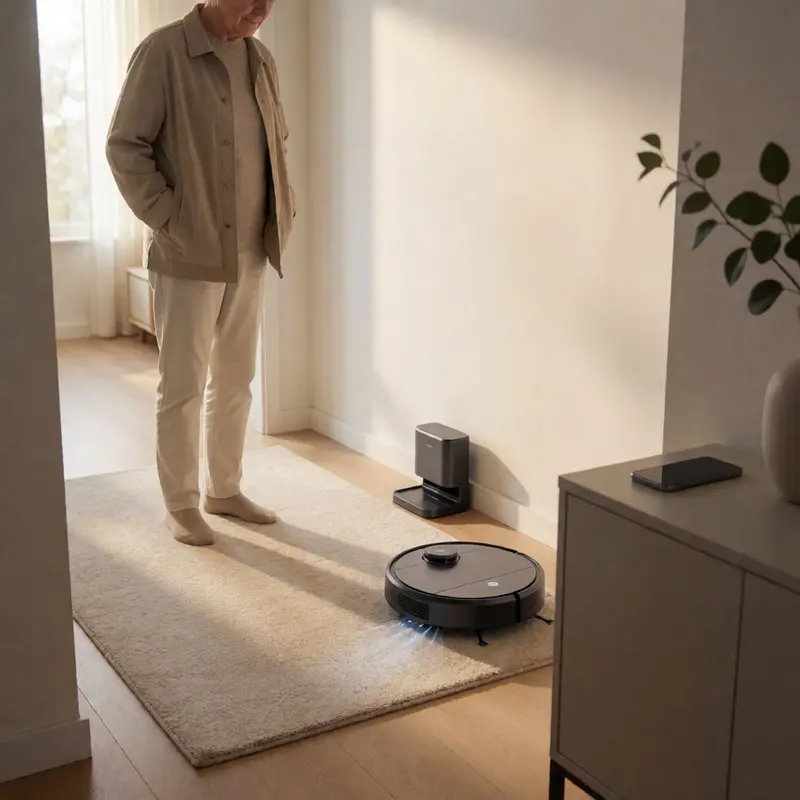
Identifying the compromises you are willing to live with is a starting point, but it only becomes useful when you connect them to the kind of household you are actually running.
If your primary concern is data leaving the device, the fit is clear: you want hardware that physically cannot transmit it. The RoboVac 11S from Eufy and the ILIFE V3s Pro fit this category, robots without Wi-Fi chipsets that run on schedules set via onboard controls or an IR remote. You’ll never see a cleaning history or adjust a schedule from your phone, and that gap is real on a two-floor home with complex traffic patterns. But if your floors are relatively open and your cleaning needs are consistent, the remote does everything a morning routine requires. Robot vacuums without cloud apps aren’t a stripped-down compromise for this profile; they’re the correct product.
If you want zone control and scheduling flexibility but aren’t willing to send floor-plan data to a manufacturer’s server, the local-control path fits, with the caveat that it demands genuine technical comfort. Blocking the vacuum’s internet access and routing commands through a local home automation layer keeps the map on your LAN, but it permanently breaks the vendor app. You commit to that setup as a permanent state.
The third profile is the one Neato’s shutdown history speaks to most directly: the buyer who adopted an app-dependent robot for its convenience and discovered, after the fact, that every premium feature depended on infrastructure they had no control over. Remote scheduling, no-go zones, smart home integrations, firmware updates, all of it vanished when the cloud did, leaving a physical start button. If that sounds like a purchase you’d regret, app quality today tells you only how the robot performs right now. The honest question before you buy is whether the product is still useful the day the app isn’t.
The audit is about honesty. Pick the profile that matches your real household, not the one that assumes the cloud infrastructure will outlast your patience with it.
Final thoughts
A robot vacuum with app-based ease carries a second price tag: dependence on a company keeping servers alive, data flowing, and account features worth supporting. That cost doesn’t show up on the box, yet it can decide whether the machine stays helpful or shrinks to a button on top. Neato’s lesson lands there. The first feature to cut from your shortlist is any convenience that only exists while a vendor keeps the lights on.
The better buying question is simple: which controls live on the robot, which live on your network, and which live somewhere you can’t reach? That audit turns robot vacuums without cloud apps from a niche privacy pick into a durability filter. When a vacuum’s best features can survive outside the vendor’s cloud, you’re buying a tool with a longer useful life.
Further reading
Leave a comment