














No products in the cart.

Shop this story
Why passive wellness is fading: The AI standard shaping 2026
by Elizabeth H
The corporate wellness market is projected to surge from $46.08 billion in 2018 to $74 billion by 2026, driven by employers demanding measurable returns on investment. This explosive growth reveals a fundamental shift where passive wellness perks are rapidly becoming obsolete, replaced by data-driven strategies that deliver tangible business outcomes. The emerging AI wellness standard is now the critical differentiator transforming wellness from an HR cost center into a verified 3x ROI growth engine.
Wellness industry strategists must recognize this economic imperative as non-negotiable. The convergence of edge AI validation, regulatory developments, and generational trust dynamics is reshaping competitive landscapes. This article examines how certified AI systems enable precision stress management, the asymmetric regulatory timelines between FDA frameworks and GDPR gaps, and why overcoming 40% market friction from demographic divides is essential for achieving 2026’s preventable hospital visit reduction milestones.
Economic impact: How AI programs turn wellness into a 3x ROI growth engine

Picture this: your boardroom is buzzing about $74 billion. That’s the corporate wellness market’s projected value by 2026. It grew from $46.08 billion in 2018. This 6.1% CAGR didn’t happen by accident. Employers are fueling this shift. They demand measurable returns: fitness programs tied to productivity, stress management that slashes absenteeism, and preventive screenings that curb long-term costs. For wellness strategists, this move from passive perks to targeted investments is non-negotiable.
North America’s health and wellness market hit $1.33 trillion in 2024. Projected to reach $1.74 trillion by 2033, it’s growing at a steady 3.05% CAGR. But here’s the real story: corporate wellness initiatives are meeting rising workplace stress head-on. The global picture? Even more dynamic. Let’s ground this in reality:
- The global wellness market surges from $6.16 trillion in 2025 to $6.50 trillion in 2026
- Spas explode from $74.3 billion to $83 billion in the same year. Post-COVID demand for stress management, yoga, and holistic therapies is driving this.
- Nutrition and weight loss leads segments with a 6.2% CAGR. Spas boast a staggering 12.7% growth rate
These numbers reveal a strategic inflection point. Medium-sized organizations and Asia-Pacific markets are accelerating adoption fastest. Wellness is now a growth lever, not just an HR cost. Here’s what matters most: fitness no longer dominates. Stress management is the fastest-growing corporate segment. It demands precision.
This is where the AI wellness standard turns potential into profit. Passive yoga classes won’t cut it. Data shows targeted programs backed by a strong AI business strategy deliver 3x ROI. Measurable outcomes are now table stakes. The economic imperative is clear: adapt or stagnate.
Your next move? Understand the tech enabling this shift. Those $6.50 trillion global investments won’t materialize through good intentions alone. What does this mean for you?
The technology stack validating real AI wellness gains
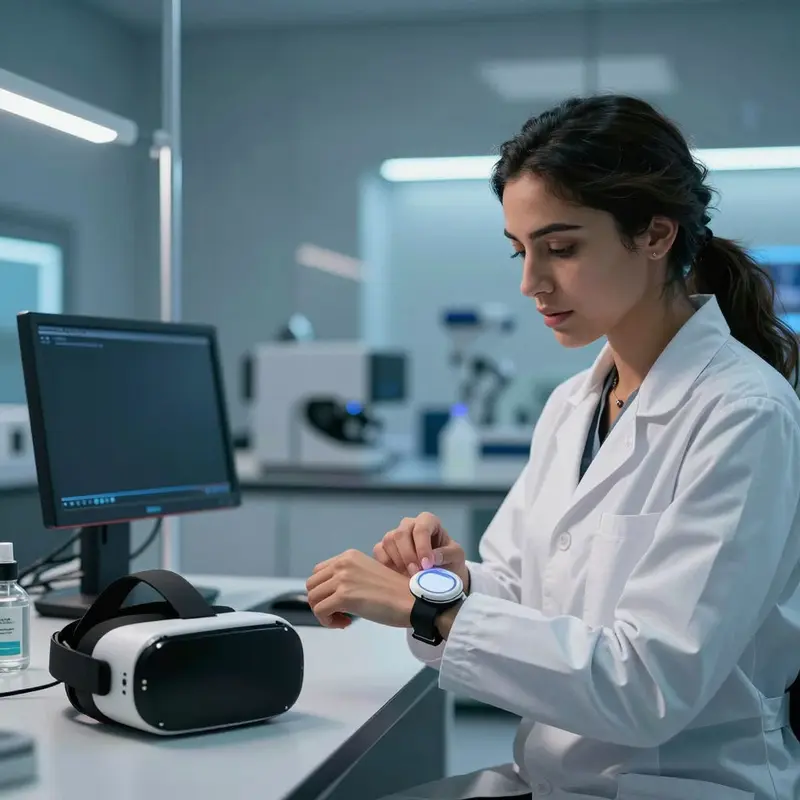
Those $6.50 trillion global AI investments need real technical muscle, not marketing spin. The IEEE P2851 standard cuts through the noise. It certifies genuine edge AI in consumer wellness devices. This isn’t about slapping on smart labels. It’s about verifiable on-device intelligence that adapts to how people actually use products.
Compliance demands hard proof. Devices must show dynamic decision-making via multi-sensor fusion. They process inputs within 15ms intervals. Mandatory sensors include:
- IR thermopile readings
- Capacitive moisture sensors
- Barometric pressure data
- Ambient humidity sensors
- Motor current measurements
- Accelerometer data
This setup enables real behavioral adaptation. Certified devices achieve 8% shorter dry times by the third use. Crucially, reinforcement learning happens locally, with no cloud dependency. Generic ‘smart chips’ fall short here. Genuine implementations require dedicated NPUs like the Cadence Tensilica HiFi 5 DSP or Arm Ethos-U55.
Firmware reveals the truth. Compliant versions use v2.x.x formatting. Release notes must explicitly cite ‘adaptive model update,’ ‘on-device training,’ and ‘sensor fusion optimization.’ Local storage of 10+ sessions and quantized TensorFlow Lite usage are non-negotiable. When Dyson’s engineers certified the Supersonic Gen2, they proved rule-based systems can’t match this fluid responsiveness.
For wellness strategists, this standard separates transformative tech from empty claims. It turns abstract AI promises into measurable performance: energy efficiency, shorter cycles, personalized responses. All validated through sensor-driven proof points.
As regulators scrutinize algorithmic accountability, this technical rigor becomes your compliance foundation. The path to FDA Digital Health Guidelines and GDPR Article 22 compliance starts with the ability to verify genuine edge AI through these certified edge systems.
Regulatory landscape: FDA’s clear timelines clash with GDPR’s absence

Edge AI verification is now your technical compliance foundation. But regulatory frameworks? That’s the critical next frontier for wellness strategists. You must navigate evolving FDA Digital Health Guidelines while anticipating GDPR Article 22 implications. Current timelines remain wildly asymmetric though.
The FDA’s November 6, 2025 Digital Health Advisory Committee meeting signaled real urgency. It focused specifically on generative AI mental health devices. They examined them through benefit-risk analysis and real-world monitoring lenses. This directly shapes your AI wellness standard development pathways.
Take TEMPO’s operational pillars launched December 5, 2025:
- Targets cardio-kidney-metabolic, musculoskeletal and behavioral health conditions
- Uses clinician-supervised real-world data under CMS ACCESS alignment
- Limits participation to 10 manufacturers per clinical area
- Operates within the “Home as a Health Care Hub” strategy
- Prioritizes patient safety through structured oversight
This voluntary pilot program creates immediate strategic opportunities. Home-based chronic care technologies stand to gain significantly. The December 18, 2025 real-world evidence guidance update further clarifies assessment frameworks. It directly supports TEMPO’s execution.
Simultaneously, December 2025 HHS strategy documents position AI as healthcare’s transformational engine. They call it the engine while emphasizing risk management for high-impact systems.
Here’s what’s missing from current regulatory moves. Concrete GDPR Article 22 compliance milestones for digital health remain absent. This regulatory gap, particularly its ethical AI implications, demands your proactive scenario planning. You must act despite the FDA’s accelerating timeline clarity.
As a wellness strategist, you now operate in a bifurcated landscape. U.S. frameworks advance rapidly while transatlantic compliance paths stay undefined. Earning consumer trust will ultimately determine market success.
Adoption barriers: Generational trust gaps driving 40% market friction
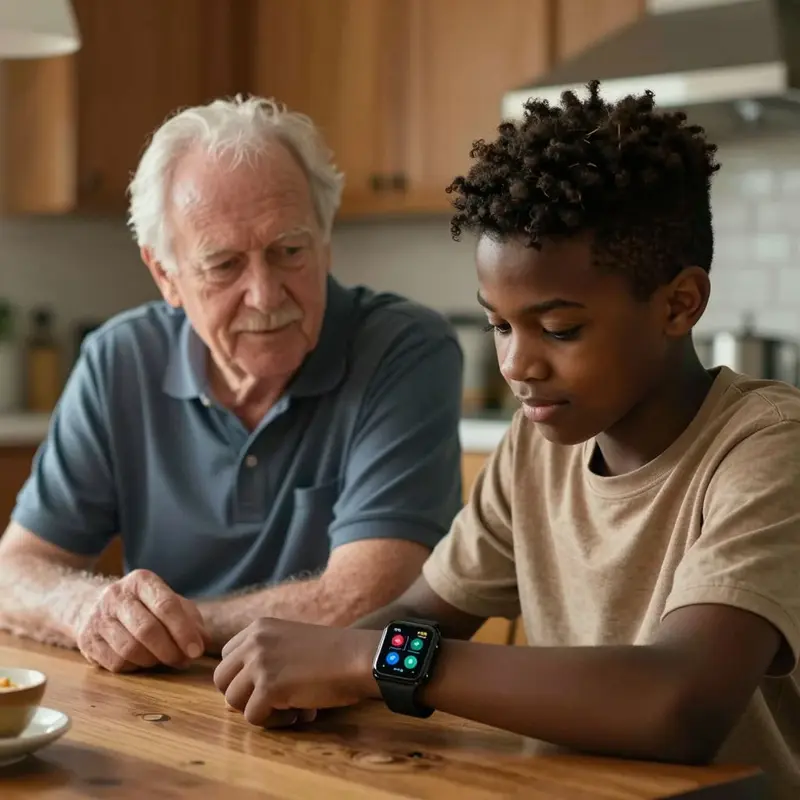
Consumer trust metrics now face their most critical test. Adoption is climbing steadily. But trust? It’s lagging dangerously behind. This gap creates a strategic fault line you can’t ignore.
Let’s look at the hard numbers. Mintel’s Q3 2025 report shows 62% of adults over 55 resist AI wellness technology. Boomers specifically push back at 71% resistance, driven by privacy fears. Now contrast that with Gen Z (18-24). Here, 78% trust AI skin scans and neurofeedback. That figure jumped 15% year over year. These generational trust gaps explain why McKinsey forecasts 40% market friction from demographic divides in H1 2026.
Privacy concerns show up clearly in the data. Carillon’s Q4 2025 AI equipment sees 35% opt-out rates among privacy-conscious users. Urban millennials distrust biometric auto-adjustments at 32%, while overall distrust sits at 48%. Transparency isn’t optional here. Trust metrics drop 28% for tools that aren’t transparent about data use.
Over-personalization fatigue hits hormonal health segments especially hard. Women show 45% resistance in this area. PubMed-linked studies reveal why passive alternatives are gaining traction. App-based tracking suffers 60% dropout rates. Passive rituals? Only 12%. That’s why somatic practices like breathwork and passive social saunas are gaining 70% traction. They offer low-tech trust proxies people actually accept.
Here’s what’s coming down the pipeline. The EU AI Act forecasts trust labeling mandates by Q2 2026. If enforced, these could halve resistance rates. Imagine that: transforming AI wellness from a barrier into a trust catalyst.
Your path forward must acknowledge these resistance patterns head-on. Passive wellness designs are gaining 52% consumer preference amid widespread burnout. Your 2026 success hinges on aligning AI ecosystems with measurable outcomes. Take Gharieni’s multi-modality spa adoption, projected at 65%. That’s the benchmark. These trust metrics will directly shape the 2026 Outlook Preventable Hospital Visit Reduction Milestones.
2026 outlook: Why 30-40% ER reduction milestones are non-negotiable

Forget passive wellness programs. The shift to proactive AI is now measurable in real terms. Your 2026 roadmap hinges on concrete milestones for reducing preventable hospital visits. This directly shapes the emerging AI wellness standard.
Three evidence pillars define this transformation. First: AI risk stratification and remote monitoring slash emergency room visits by 30 to 40 percent. Second: precision medicine minimizes treatment complications through personalization. FDA-approved gene therapies for sickle cell disease prove this works. Third: workflow automation and workforce optimization drive expected cost reductions. Sixty-four percent of healthcare leaders cite the first benefit. Fifty-five percent point to the second by 2026. Together, these form an unavoidable operational blueprint.
Let’s be clear. This isn’t theoretical. Radiology reports now compress from days to 2 to 4 hours. AI diagnostics achieve 95 percent+ cancer detection accuracy. You’ll gain a competitive edge through faster clinical decisions. Seventy-four percent of hospital leaders already see virtual nursing as essential. It cuts readmissions. Meanwhile, 68 percent of physicians trust AI for clinical support. This convergence demands action. Treat AI not as a cost center but as your primary risk mitigation architecture.
The human impact hits just as hard. Fewer preventable hospitalizations preserve patient dignity. They also redirect resources toward high-value care. This clarity eliminates strategic ambiguity.
Global market growth: from $6.16 trillion in 2025 to $504 billion by 2032. This confirms a structural shift, not just a trend. Your immediate imperative? Align AI deployment with specific, measurable visit-reduction milestones. Anything less fails the 2026 AI wellness standard.
Final thoughts
The transformation from passive wellness programs to proactive AI ecosystems represents a structural market shift validated by hard metrics. Certified edge AI systems now deliver 8% shorter dry times through sensor fusion while generating 30-40% reductions in preventable emergency room visits. These outcomes, coupled with the FDA’s accelerating regulatory timelines and persistent GDPR compliance gaps, establish measurable performance as the new industry baseline.
Wellness strategists face a clear imperative: aligning deployment with the AI wellness standard is no longer optional but fundamental to competitive survival. As global market growth accelerates toward $1.74 trillion by 2033, organizations that treat AI as their primary risk mitigation architecture will capture disproportionate value. The question is not whether this standard will define 2026, but how quickly your strategy will adapt to its non-negotiable requirements.
Ready to prioritize your well-being with expert-backed wellness strategies? Contact OnInitiative.com ([email protected]) today and let our team help you build a healthier, more balanced lifestyle, inside and out!
About us
OnInitiative.com is an innovative marketplace that helps e-commerce businesses boost productivity and community growth through advanced automation tools. By connecting companies with tailored wellness and productivity solutions, OnInitiative.com empowers organizations to enhance employee health, reduce burnout, and foster a more engaged digital workforce.
Further reading

Leave a comment