
















No products in the cart.

Shop this story
Break the app-only meditation trap: Regain real stress relief focus
by Elizabeth H
If you’re running on fumes, meditation for burnout recovery can start to feel like another task you have to “do right.” You hit play, follow the voice, finish the session, and still feel wired. It’s confusing, because you did what the experts told you to do.
But burnout isn’t a motivation problem. It’s a recovery problem, and recovery doesn’t happen when your nervous system stays on call. When calm is delivered through the same screen that carries deadlines, alerts, and performance pressure, your brain never fully stands down. You might be practicing. You might also be reinforcing the loop that keeps you tired.
Diagnosis: Spotting when your meditation app is failing you
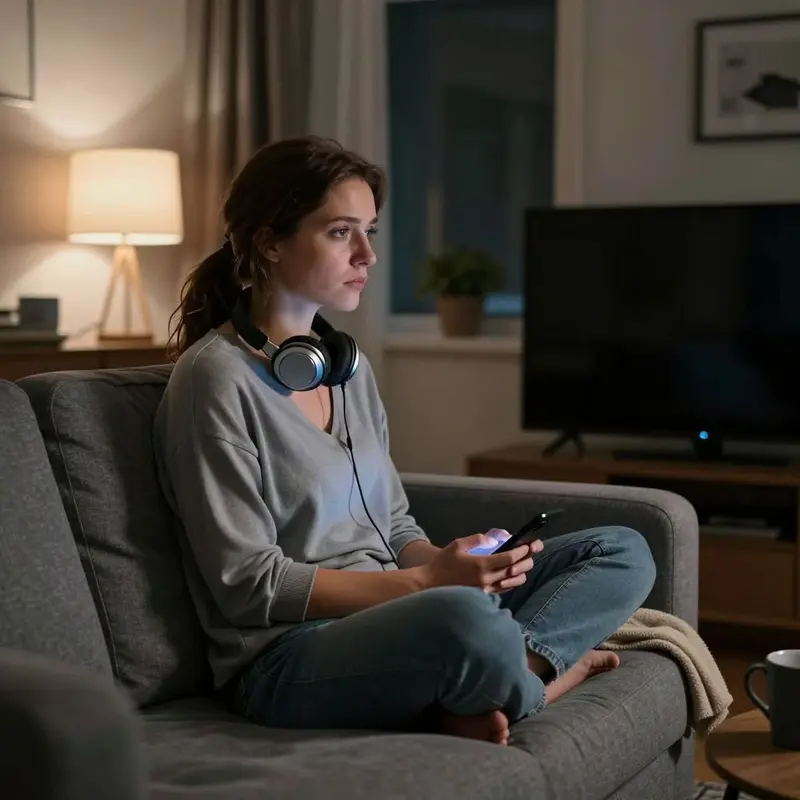
Picture the routine: you open a meditation app at the end of a twelve-hour cognitive marathon, tap through a guided session, and close your phone feeling like you’ve done something restorative. You’ve checked the box. But the box may be the problem.
Burnout among knowledge workers, the professionals who generate value through sustained cognitive effort, isn’t a minor inconvenience. It’s a structural failure of recovery. And the wellness industry has noticed. Meditation apps are projected to reach a $7.5 billion market by 2026, a figure that reflects enormous commercial momentum but says nothing about whether these products actually work for the people who need them most. There is, in fact, limited evidence that screen-based guided sessions produce meaningful long-term relief for burnout specifically. The market is growing. The recovery isn’t keeping pace.
This is the core tension of app dependency: the tool that promises calm arrives through the same screen ecosystem that created the exhaustion in the first place. Every tap, every notification prompt, every subscription reminder keeps you tethered to the device. The practice becomes another managed digital behavior instead of genuine mental restoration. For someone seeking real meditation for burnout recovery, this distinction isn’t semantic. It’s the entire point.
What makes this pattern so hard to spot is that it feels like progress. The app logs your sessions, congratulates your streaks, and offers sleep stories and breathing exercises in a polished, reassuring interface. The experience feels therapeutic, which makes the underlying dependency almost invisible. You aren’t slacking off. You’re doing the work. And yet the relief stays shallow, temporary, and entirely contingent on opening the app again tomorrow.
Meditation isn’t the problem. The delivery mechanism is. When the screen becomes the gateway, the practice gets quietly reshaped around convenience, streaks, and prompts instead of depth and genuine restoration. Recognize that shift, and you’ll see what comes next: silence you actually own.
Remediation: Starting a seven-day unguided silence challenge

Calm alone pulled roughly 880,000 downloads in a single month at the start of 2025, and the revenue flowing through the meditation app market tells you everything about who that system was designed to serve. It wasn’t designed for your recovery. It was designed for its own growth.
That distinction matters when you’re starting to approach meditation for burnout recovery seriously. The app ecosystem has spent years optimizing for engagement metrics: streaks maintained, sessions completed, ratings left. What it hasn’t optimized for is the uncomfortable, quiet work of sitting with your own mind without a voice telling you what to do next.
Unguided meditation is that work. Starting it feels harder than it is, mostly because the industry has convinced you that silence requires scaffolding.
It doesn’t. The scaffolding you actually need is minimal: a simple timer, a defined duration, and a commitment to showing up consistently for a short trial period. GongMeister, a no-frills timer built specifically for silent sessions, handles the start and end signals without pulling you into a feed, a badge system, or a recommendation engine. You set the duration. A gentle tone begins your session. Another ends it. Nothing else happens.
The challenge to set for yourself works like this:
- Start with ten minutes of unguided silence each morning before your first screen interaction of the day.
- Use a standalone timer rather than a meditation platform so the session produces no streak, no score, and no notification afterward.
- Commit to seven consecutive days before evaluating whether the format is working for you.
The common thread isn’t meditation. It’s the decision to remove every mechanism that tracks your performance, and replace it with nothing except the experience itself.
Most people are surprised by what shows up in that space. Not enlightenment, not immediate calm, but a creeping awareness of how much cognitive noise was being managed by the prompts rather than through the practice. Once you have that awareness, it’s the raw material you’ll actually build on.
Remediation: Locking in an offline ritual that actually sticks

That raw material you’ve uncovered won’t turn into anything without structure to hold it.
At this stage, the impulse is to grab a new app to replace the old one: a different interface, a calmer voice, a more personalized algorithm. But that impulse is exactly the habit you’ve been untangling. Swapping one digital scaffold for another keeps the underlying dependency intact; only the branding changes.
Offline ritual isn’t a nostalgic gesture. It’s a deliberate engineering choice, and it works for the same reason your previous prompt-dependent sessions started failing: the nervous system responds to context, not just content. When your practice is physically anchored, tied to a specific time, a specific space, a consistent sensory cue, it stops competing with every other claim on your attention.
Building that anchor is simpler than it sounds. Three structural elements tend to separate durable practice from the kind that quietly evaporates by week three:
- A fixed time that isn’t borrowed from another commitment. Morning works for most people because it precedes the decision fatigue that accumulates by afternoon.
- A dedicated physical location, even if it’s just a chair you don’t use for anything else. The body learns location faster than it learns intention.
- A non-digital signal to begin. A timer, a struck bowl, even a held breath can function as an on-ramp. GongMeister, for example, was built specifically around this principle, replacing app-launch friction with an immediate acoustic cue.
The common thread isn’t discipline. It’s irreversibility.
Once the cue fires, the practice begins. There’s no menu to browse, no streak to check, no notification asking whether you’re still there.
For burned-out knowledge workers, this is what sustainable meditation for burnout recovery looks like in its earliest structural form: not a longer session or a stricter schedule, but a ritual coherent enough that your brain stops treating it as optional. Once consistency is established, the question shifts from whether you’ll practice to what your practice can actually do.
Optimization: Shifting from app dependency to nervous system trust

Picture the moment you actually close the app. Not because the session ended, but because you stopped needing it to begin.
That transition is what this chapter is about, and it’s more structural than it sounds. A meditation approach built for burnout recovery doesn’t stay in one mode forever. It moves through phases, and noticing when to shift is the optimization most app-dependent practitioners never make.
The scale of app adoption tells you something important. With over 345 million people using mobile wellness apps globally, the infrastructure for habit formation is genuinely useful. But infrastructure isn’t the same as recovery. Apps are efficient at getting you to the cushion; they’re far less efficient at what happens to your nervous system once you’re there, especially when the notification badge for your meditation app sits one thumb-swipe from everything else that’s depleting you. The meditation app market has grown at a pace that reflects demand, but demand and efficacy aren’t the same measurement.
GongMeister’s approach is instructive here. Their focus on silent practices is grounded in a real observation: screen-mediated guidance keeps the brain in a low-grade state of responsiveness, waiting for the next cue. Silence removes that layer entirely, and for people running on fumes, that removal isn’t a luxury. It’s the mechanism.
A hybrid methodology closes the gap between the two approaches:
- Use an app for the first few weeks, treating it as a scaffolding tool rather than the practice itself.
- As consistency stabilizes, begin replacing guided sessions with equal-length silent sits, using a simple timer if needed.
- Reserve app-based guidance for genuinely difficult periods, such as acute stress spikes, rather than as the default entry point.
The common thread isn’t less technology. It’s the gradual transfer of authority from the app to you.
Each phase asks your nervous system to do slightly more of the work, which is exactly how recovery builds.
So the real test of meditation for burnout recovery isn’t whether an app feels supportive today. It’s whether the support can step back tomorrow, without your practice collapsing.
Final thoughts
The real divide isn’t between people who meditate and people who don’t. It’s between practices that make you feel managed and practices that make you feel safe. When your mind learns that quiet is something you can enter without being prompted, recovery stops being a product you consume and starts becoming a capacity you rebuild.
Think of it as transferring authority. A tool can help you start, but it can’t be the place you live. The more your practice relies on cues, scores, and screens, the less your nervous system learns to trust its own downshift. Meditation for burnout recovery works best when the supports can fade, and the silence still holds.
Further reading


Leave a comment