















No products in the cart.

Shop this story
The always-connected era is over: Why offline devices are back
by Joseph L
If it feels harder to find a quiet moment away from screens, you are noticing something real. Connectivity has seeped into nearly every corner of life, from the way you wake up to the way you fall asleep, and it often leaves your mind feeling crowded instead of clear. In response, more people are experimenting with smaller pockets of disconnection and seeking tools that help them choose when to be online instead of being pulled in by default.
This shift is part of a broader cultural pivot that is pushing the digital detox movement from a niche experiment into a mainstream conversation about how we want technology to fit into daily life. It matters economically, because companies now shape products and services around your attention, and it matters emotionally, because constant connection has real effects on focus, sleep, and stress. Here, you will see how market trends, device design, privacy concerns, and emerging social norms all intersect to signal that the always connected era is starting to give way to quieter, more intentional tech habits.
Digital detox growth: Why unplugging is suddenly big business

If it feels like everyone is suddenly talking about going offline, you are not imagining it. You are noticing a real shift. There is now serious money flowing into that very human urge to unplug.
Analysts project that the global market for digital detox products and services will be worth approximately $2.7 billion in 2025. By 2033, it is expected to reach $5.4 billion. In other words, the market is on track to roughly double in less than a decade. For a mindful tech consumer, that is a clear signal that unplugging is no longer a quirky side interest or a weekend experiment. It is becoming a mainstream economic force that companies, investors, and policymakers are starting to track closely.
So what is fueling that growth? The simple answer is concern about screen time. As phones, laptops, TVs, and wearables all compete for your attention throughout the day, more people are asking a hard question. What is constant connection actually costing them?
That discomfort is not abstract or theoretical. It feels real and immediate. It shows up as eye strain after one more late night of scrolling. It appears as scattered focus when you cannot stay with a single task for more than a few minutes. It looks like sleep issues that come from blue light and endless content right before bed. It feels like your day is being run by notifications instead of your own priorities and values.
You can see this shift even more clearly when you look at what people are actually buying, not just what they say they care about. Sales of minimalist “dumb phones” in Canada rose 25% from 2022 to 2023. That is not a marketing slogan crafted to get attention. It is a measurable pivot away from feature-packed devices toward simpler tools that intentionally do less.
Here is what sits underneath those numbers:
- Many people are actively seeking offline alternatives after years of increasing screen time. They are testing different ways to protect their attention and create more mental breathing room.
- Gen Z and millennials are driving much of the demand for dumb phones, which directly challenges the stereotype that only older generations resist new tech. Younger users are starting to question whether more features and more apps always mean a better life.
- The digital detox movement is evolving from short-term breaks into longer term lifestyle choices, supported by products built around limits instead of endless engagement. What began as a weekend retreat or a social media fast is turning into a sustained shift in daily habits.
If you are drawn to this shift, you are not alone. You are part of a growing group of mindful tech consumers who want technology to fit into a well-lived life instead of taking it over. The market is now validating your instinct that tech should serve your life, not consume it, and trends like the digital decluttering wellness trend show how deeply this desire to unplug is reshaping what businesses build.
As the industry races to catch up with this demand, the most interesting story is not just the dollar figures. It is the people who are adopting these tools and the motivations behind their choices. How might their decisions shape everything from product design to public policy in the years ahead? That is where we turn next.
Adoption patterns: How Gen Z is quietly rewriting ‘normal’ tech use

Whenever there is a corporate shift or a new device launches, it feels like a fresh feature or upgrade is inevitably announced. While these news are noteworthy, the real impact emerges from the choices people make: what to buy, how to use it, and when to simply disconnect.
Spend any time with Gen Z and the tension becomes obvious. Many of them are completely fluent in AR filters, short video, and always-on social feeds. At the very same time, they are often the ones starting conversations about screen time limits, digital boundaries, and “phone-free Fridays.” The digital detox movement is not really a rejection of technology itself. Instead, it is a search for technology that behaves with a bit more manners. Tech that can sit quietly in the background most of the day, then step forward only when you actually need it.
You might notice the same pattern in your own habits. You want your phone to be powerful, fast, and smart. You also want it to stop nagging you and stop stealing your attention when you never asked for it. That is why one relatively quiet shift matters far more than it might sound at first. AI processing is moving to the device itself. That change can boost speed and strengthen privacy because your data does not always have to travel over the network for every little thing.
For someone who cares about being more mindful with tech, that has a clear upside. You get useful features without needing to stay glued to a constant connection. There are simply fewer excuses for every interaction to depend on the cloud.
Now consider the hardware in your hand. Foldable phones are projected to become more durable and more affordable by 2026. That projected curve is not random. It tells you that big brands are betting that people will want to carry fewer devices that can do more. At the same time, those devices still need to fold away and disappear into a pocket or bag when it is time to look up from the screen and rejoin the room you are actually in.
Not every trend, however, leans toward disconnection or quiet time.
AI is also being built into AR and VR experiences. Those experiences usually depend on a live, stable connection. They are designed to keep you linked into a stream of data in real time. At the same time, the market for mobile data lines is expected to grow from $10.6 billion in 2024 to $15.3 billion by 2027, reflecting significant mobile data line growth closely tied to the rising number of smartphones and the steady spread of connected objects in everyday life.
So how do you make sense of all that? It helps to see how adoption is unfolding at different layers of the system:
- Individuals, like you, are asking a simple but powerful question: Does every task really need a live connection, or are on-device features “good enough” most of the time?
- Manufacturers are placing their bets on robust foldables, fast-charging, and AI features that can work locally. They want to attract buyers who crave both high performance and a sense of restraint.
- Infrastructure providers are riding the continued rise in smartphone and IoT adoption. They see the expanding mobile data line market as concrete proof that connectivity is still a deeply ingrained habit.
Policy is slowly starting to catch up to these shifts as well. The EU push for USB-C is a clear example of regulators nudging the entire ecosystem toward more standardized, flexible, and potentially longer-lived hardware. A device that can use a common cable is easier to share with a friend, borrow in a pinch, and use more intentionally instead of constantly upgrading.
Put simply, from Gen Z experiments with unplugging to global rules about charging ports, adoption patterns are quietly redefining what “normal” tech use looks like. Our shared expectations about when to connect and when to disconnect are changing.
Shifting expectations bring forth a new central question. How do privacy and mental wellness integrate into this evolving norm, and what does a healthier relationship with always-on devices envision for the mindful tech user?
The privacy paradox: Trading convenience for mental quiet
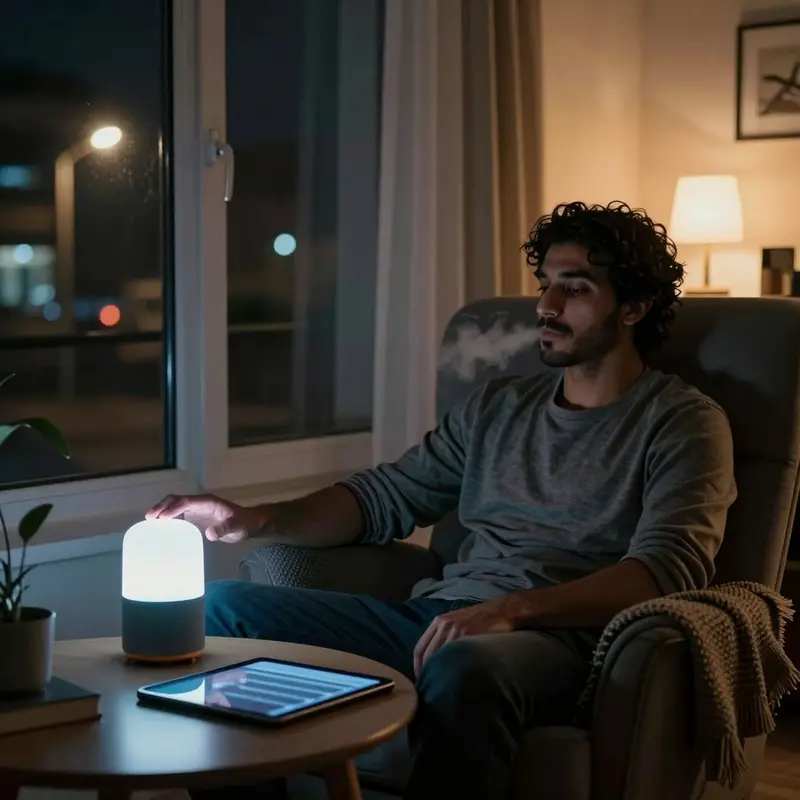
Those shifting expectations about when to plug in and when to unplug are really pointing to something deeper: how much of your privacy and mental space you are willing to trade for convenience.
On paper, the world is moving in the opposite direction of calm. The consumer electronics market is valued at about USD 856.24 billion in 2025 and is projected to climb to USD 905.90 billion in 2026. From there it is expected to reach roughly USD 1,474.14 billion by 2035, at a 5.58% CAGR. Industry 4.0 and the Internet of Things are growing from USD 149.2 billion in 2025 to USD 172.5 billion in 2026, with expectations of about USD 1.2 trillion by 2035. IoT alone leads that growth with a 28% share and a 24.1% CAGR.
In plain language, more and more of your devices are getting “brains.” And more of those brains are getting hooked up to the internet. Connected devices are expected to reach 21.1 billion by 2025, so the baseline assumption is that almost everything around you will be quietly collecting, sending, and processing data.
At the same time, the global mobile apps market is surging from USD 298.40 billion in 2025 to a projected USD 1,017.18 billion by 2034. The Apple App Store is expected to lead with about a 53.2% share in 2026, driven in part by higher income users and fast growing productivity apps at 21.4% CAGR.
So you are living with a very real tension. The tools that promise to make you more productive, more entertained, and more “optimized” are also the same tools that can quietly track you, ping you, and pull at your attention all day long.
This is where the privacy paradox shows up in your daily life. You want personalized experiences, real time navigation, smarter health metrics, and seamless syncing across devices. You also want fewer nudges, less tracking, and a mind that does not feel like a browser with 40 tabs open.
The digital detox movement is, in many ways, an attempt to resolve that contradiction. It is not just about escaping screens. It is about setting boundaries on what your devices can know about you and how often they get to talk to you.
In practice, that means asking very simple questions before you adopt a new gadget or app:
- What data does this actually need to function well, and what is just “nice to have” for the company?
- How often does this device or app need to be connected to the internet for me to get the benefit I care about?
- Is this constant connectivity improving my mental clarity, or is it training me to be always on too?
When you start with questions like these, privacy and mental wellness stop being abstract ideas. They turn into settings you can adjust and habits you can practice in your actual daily routine.
You might decide that some devices should never connect. Or that certain apps only deserve your attention in short, scheduled windows. You might choose tools that store more data locally instead of in the cloud, or that are intentionally stripped down so your brain does not have to fight a dozen addictive features at once.
The point is not to renounce technology. It is to make the connected parts of your life feel chosen, not automatic, so that your attention and your inner life feel like they belong to you again.
Once you see the paradox clearly, you are ready to look at the market in a new way. The next step is to explore how companies are responding with fresh offerings, from minimalist apps to so called dumb phones and other experiments that try to give you modern function without the constant pull of an always online world: and to keep asking yourself whether Is Technology Right for You in its current form.
Commercial innovations: How intentional tech is quietly rewiring devices

The wave of gadgets offering modern convenience sans constant connectivity is becoming increasingly noticeable. This emerging trend marks a significant development in commercial innovation.
On the surface, the numbers look like business as usual. The consumer electronics market is projected to be worth about USD 856.24 billion in 2025 and around USD 905.90 billion in 2026. It is on its way to roughly USD 1,474.14 billion by 2035, with a 5.58% compound annual growth rate from 2026 to 2035. In other words, the world is not buying fewer devices. Instead, people are starting to ask a different question: what should those devices actually do to our attention?
That is where the digital detox movement starts to step out of niche lifestyle territory and walk straight into product strategy. Manufacturers and app makers are no longer just chasing more screen time. They are trying to serve people who want connection when it is useful and quiet when it is not.
Look at the app side. The market is booming. The global mobile app market is expected to grow from about USD 330.02 billion in 2026 to around USD 1,017.18 billion by 2034, with a 15.1% growth rate. The Apple App Store alone is projected to hold 53.2% of that market by 2026. That means a single gatekeeper will shape a large share of what “healthier” digital habits can realistically look like for everyday users.
Inside that huge wave, productivity apps stand out in a big way. They have a 21.4% growth rate, which signals something important. Many people are not uninstalling technology. They are trying to use it more intentionally. You can see it in tools that batch notifications, limit access during focus sessions, or make your phone feel almost like a single purpose device for certain hours of the day.
Still, the response is not only happening in software.
The hardware world is experimenting too. Offline distribution of consumer electronics is still dominant, even as online channels grow. That means you can walk into a store and physically try devices that promise “less internet, more life.” At the same time, the wireless router market is expected to climb from USD 14.1 billion in 2025 to USD 33.1 billion by 2035, with an 8.9% growth rate. Residential use already accounts for 43.8% of that market and online sales of routers hold 56.9% share. So most households are quietly upgrading the infrastructure that decides how, when, and where devices connect.
For you as a mindful tech consumer, this mix of trends genuinely matters. You are being offered phones that strip out social feeds, apps that enforce downtime, and home networks that can prioritize or block entire categories of distraction. That raises a deeper question. The core issue is no longer whether the market will keep growing. Growth is clearly built in. The real question is how cultures around the world will choose to shape and govern that growth. That is where we turn next when we look at broader cultural responses to connectivity overload.
Cultural resets: How quiet tech rituals rewrite connectivity

How we choose to grow our digital lives is really a question about culture. Different societies are responding in very different ways to feeling overloaded by constant connectivity.
On paper, the connected future looks almost inevitable. Consumer electronics are projected to rise from about USD 856.24 billion in 2025 to roughly USD 1,474.14 billion by 2035. Connected devices are expected to reach 21.1 billion by 2025. That is a staggering number of touchpoints in daily life.
The mobile app ecosystem is climbing even faster. It is forecast to grow from about USD 330.02 billion in 2026 to an estimated USD 1,017.18 billion by 2034. Industry 4.0, powered by the internet of things, is also ramping up, from about USD 172.5 billion in 2026 to around USD 1.2 trillion by 2035. The direction is clear. The infrastructure that keeps us “always on” will only keep getting thicker and more present.
Yet mindful consumers already feel more saturated than ever. You can feel the tension building. Productivity apps, for example, are growing at a fast 21.4% compound annual rate. That kind of growth is a signal. It tells us that people are trying to control and simplify the very complexity that technology introduces into their days by focusing on strategies for managing digital overload.
At the same time, there is a quieter, more emotional shift in how people want to meet technology in their everyday routines. In 2025, offline distribution channels still dominated consumer electronics. Many buyers preferred that sense of immediate gratification and in person help from a real human standing across the counter. They wanted to walk out of the store with something tangible in hand.
Yet online channels are the ones growing the fastest. In the wireless router market, they already account for about 56.9% of sales. That is not a small edge. This pattern hints at a cultural split. We want the ease of frictionless connectivity, one click orders, and next day delivery. At the same time, we still reach for grounded, tactile touchpoints when the decision feels important or the stakes feel high.
You can probably feel this push and pull inside your own habits. Maybe you research routers online, compare specs, watch review videos, and read comment threads. Then you still walk into a store to ask a real person a few final questions before you buy. You may download another focus app to tame your distractions. Later you might find yourself longing for a device that simply cannot ping you at all.
The digital detox movement grows directly out of this ambivalence. People are not walking away from technology altogether. They are too embedded in digital life for that. Instead, they are trying to reclaim the right to decide when they are reachable, when they receive notifications, and when they are simply off limits.
Global economic signals are starting to mirror this mood in subtle ways. Even with all of those bullish long term forecasts, overall consumer tech is estimated to see a slight decline of about 0.4% year over year in 2026. That is not a crash. It is more like a pause for breath.
Regional smartphone trends still emphasize more connectivity and more sustainability. Manufacturers push better cameras, greener materials, and smarter features. Yet those trends do not point to a sudden swing back to fully offline devices. Instead, cultures are experimenting with quieter resets.
Some people lean into hyper connection and try to manage it with better tools, stricter time blocking, or smarter notification settings. Others normalize small, intentional disconnections, such as screen free dinners, phone free bedrooms, or designated no phone zones in the home.
If you think of yourself as a mindful tech user, there is a clear takeaway. The future will not be shaped by hardware specifications alone. It will be shaped by the norms, rituals, and boundaries that people in each region choose together.
Connectivity is almost certain to keep expanding in sheer volume. The real power sits with cultural choices. When do you want to plug in, and when do you want to step away? Those decisions will determine whether that growth feels like freedom and alignment with your values, or like one more form of overload.
Final thoughts
Taken together, these trends reveal a world that is not rejecting technology, but renegotiating its terms. Economic forecasts show more devices and more data on the horizon, while mindful users push for tools that protect attention, respect privacy, and blend into the background when they are not needed. Cultural habits and quiet rituals of disconnection are starting to shape how products are built, how networks are used, and how people decide what a healthy level of connectivity feels like.
For anyone who cares about their inner life as much as their online life, the digital detox movement is really an invitation to design a more deliberate relationship with technology. You have more leverage than it may seem, through the devices you buy, the settings you choose, and the boundaries you normalize with people around you. The question is no longer whether offline devices will come back, but how boldly you will use them to reclaim your time, attention, and sense of calm in the years ahead.
Ready to stay ahead with cutting-edge tech insights and innovations? Contact OnInitiative.com ([email protected]) today and let our experts guide you through the future of technology today!
About us
OnInitiative.com is an innovative marketplace that helps e-commerce businesses boost productivity and community growth through advanced automation tools.
Further reading


Leave a comment