















No products in the cart.

Shop this story
The low-stimulation bedside stack—why I ditched Hatch Restore 3
by Anabel Figueroa
If you’re a burnt-out light sleeper, the last thing you need at 10 p.m. is another reason to touch your phone. Yet a lot of modern sleep gear quietly pulls you back into the same loop you’re trying to escape. That’s why people start searching for Hatch Restore 3 alternatives, not because they hate tech, but because they want less of it where it matters most.
The tricky part is that “better” can mean two totally different things. It can mean more options, more content, and more control. Or it can mean fewer points of failure, fewer decisions, and a bedside setup that doesn’t turn sleep into a nightly project. When you’re already running on fumes, that difference isn’t cosmetic. It’s the whole outcome.
Performance audit: When “smart” bedside tech keeps you wired
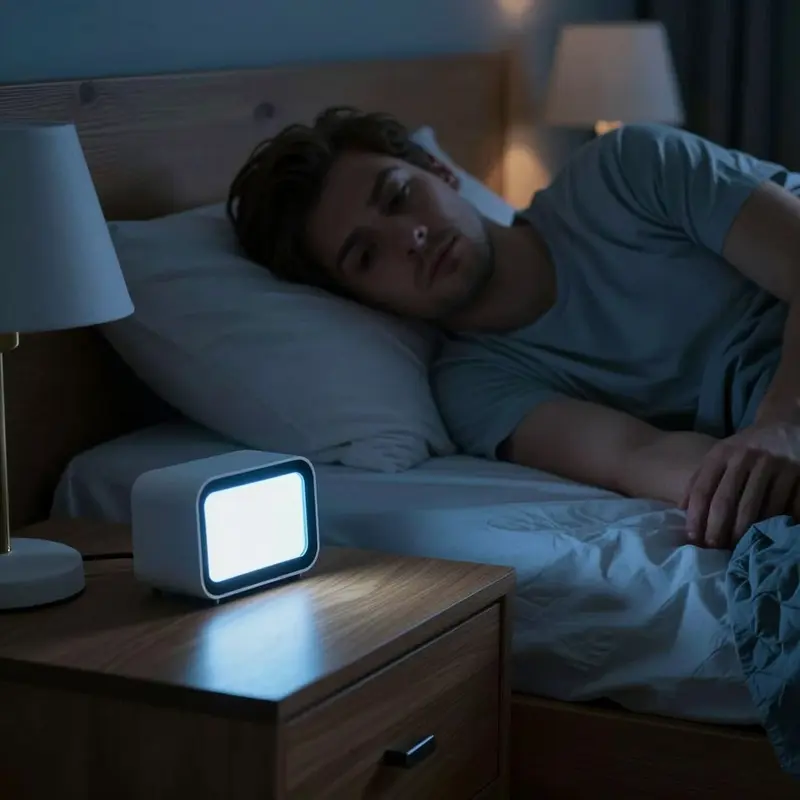
Picture your bedside table at 11 p.m. You are a burnt-out light sleeper, maybe a shift worker, a new parent, or simply someone whose nervous system’s been run ragged by too many screens and not enough stillness. The device sitting next to your lamp was supposed to be the answer. Instead, it’s asking you to pick up your phone again.
That’s the defining frustration with the Hatch Restore 3. The device is elegant in concept: a sunrise alarm, layered sleep sounds, and guided wind-down content housed in one bedside unit. But its architecture is built around a companion app, which means adjusting your nightly routine requires the one thing you were trying to set down. Brightness, soundscapes, and alarm timing all demand a phone first.
For anyone already overstimulated by evening, that friction undermines the device’s entire premise. App-dependent hardware carries a compounding risk: when the app misbehaves, your routine does too.
The contrast with competing options is pointed. When light sleepers investigate Hatch Restore 3 alternatives built around phone-free reliability, three devices define the spectrum:
- Loftie is designed for near-total phone-free operation, letting you cycle sounds and set alarms directly on the unit without ever opening an app.
- Philips SmartSleep scores equally high for minimal app reliance, with core functionality accessible through physical controls even when its companion software is never launched.
- Hatch Restore 3 sits at the opposite end, requiring app interaction to access or modify most routine features, which user complaints have repeatedly flagged as the core issue.
All three devices compete in the same category, but only two of them behave like they understand what low-stimulation actually means at the hardware level.
The subscription layer adds a separate dimension to the stability concern. After an initial trial period, accessing Hatch’s premium content costs $49.99 per year. That fee ties the device’s most valuable features to an account, a server, and a billing cycle all functioning in sync. The Restore 3 ends up behaving less like an autonomous bedside tool and more like a front-end for a cloud service.
So what happens on the nights your phone is dead, your Wi-Fi is unstable, or the account layer hiccups? When connectivity is the structural backbone of a device meant to reduce overstimulation, the design logic works against itself. The sharper question is what that subscription dependency does once access itself is on the table.
User experience: When subscriptions hijack your sleep device
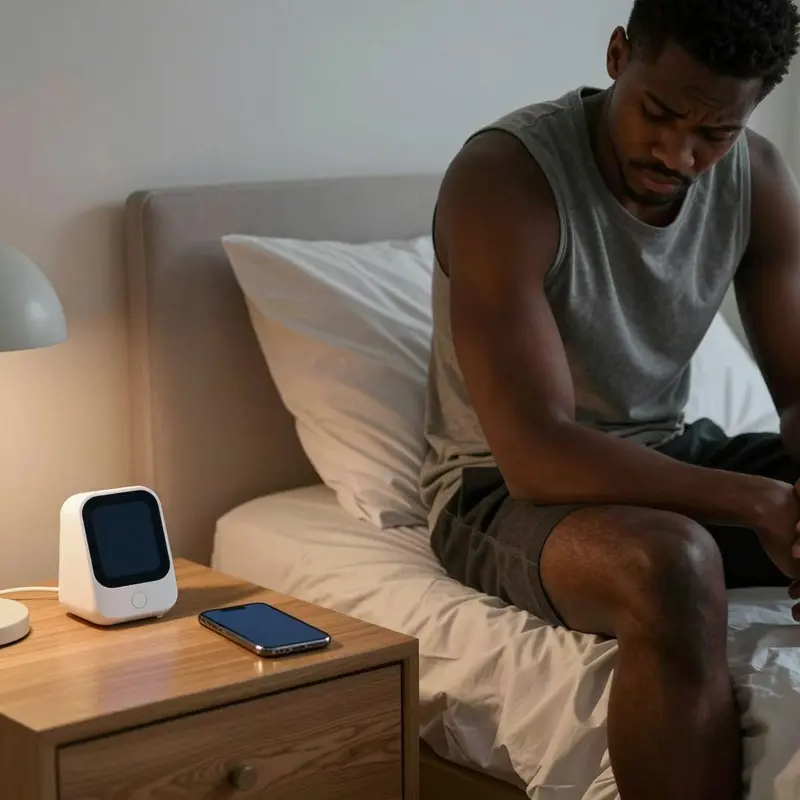
The access problem shows up during setup, not at checkout.
Hatch sells you a device. What it actually requires is an ongoing financial relationship, at $4.99 a month, to get the features that make the device worth buying in the first place. Hatch+, the subscription tier sitting behind that paywall, gates the content libraries, the wind-down routines, the guided sleep sessions. Without it, you’re left with a clock and a lamp. That gap between what the hardware implies and what the subscription delivers is where most users first feel the sting of something that wasn’t clearly disclosed when they bought it.
The frustration isn’t purely financial. It’s structural. When you’re trying to build a bedside routine that keeps your phone out of the equation, a device that demands app interaction for its core setup works against the entire premise. You’re reaching for your phone to configure a product designed to help you put your phone down. That contradiction is baked in, not incidental.
It also reframes what you thought you owned.
Users who reported feeling misled weren’t confused about the price point itself. What caught them off guard was realizing that the version of the product they’d imagined, the one that justified the purchase, existed only inside a subscription. The hardware was essentially a front door to a recurring billing cycle, and nobody had told them that before they swiped their card.
That experience is driving real decisions. The growing interest in Hatch Restore 3 alternatives like Loftie and Philips SmartSleep isn’t purely about comparison shopping. It reflects something more specific: both of those options deliver their full feature sets without an ongoing subscription, which means the device you receive is the device you keep. The value proposition is stable, not contingent on an account remaining active.
When access to your sleep environment depends on a billing relationship, the product’s promise gets renegotiated every month. And for a category built around reducing friction at the end of the day, adding an account layer is a design choice that cuts directly against the grain of what a low-stimulation bedside setup is supposed to accomplish.
Alternatives exploration: Why “less tech” wins your bedside

Two serious Hatch Restore 3 alternatives exist right now, and the difference between them tells you almost everything you need to know about what you’re actually optimizing for.
The three products on the table each make a distinct structural bet:
- Hatch Restore 3 locks its premium feature set behind an annual subscription, which means your bedside routine depends on a billing relationship staying active.
- Loftie Clock is built around the phone-free experience first, offering core functionality without a subscription, though extended content requires one. It doesn’t include a built-in sunrise light.
- Philips SmartSleep delivers sunrise simulation as a core, out-of-the-box feature with no smartphone connectivity required and no subscription attached to any of its functionality.
What that list doesn’t capture is the philosophical gap between Loftie and Philips. Loftie is still a connected product at heart, built for people who want curated audio and a screen-free phone replacement. Philips runs on different logic: it does one thing well, and it does it without asking for an account.
For you, the decision hinges on a single honest question about your own failure modes. If your issue is phone dependency, Loftie’s phone-free design targets that directly. But if your issue is stimulation overload in general, any product that still requires interface management, content libraries, or account maintenance is solving the wrong problem.
Philips’s lack of smartphone connectivity isn’t a missing feature. It’s the feature.
There’s no app to check, no settings to adjust from bed, no notification that the firmware needs updating at 11 p.m. The sunrise simulation runs on a timer you set once.
Switching from Hatch involves a real adjustment period, regardless of which direction you go. New interfaces take time to become invisible, and invisible is exactly what a low-stimulation bedside setup needs to be. Instead of asking which product has more to offer, pick the one that asks the least of you at 11 p.m., when you’re running on fumes.
Strategic verdict: Who actually needs a low-tech clock

Picture the version of you who’s already asleep before midnight, phone face-down across the room. Not because you forced yourself, but because nothing on your nightstand pulled you back in. That’s not a fantasy. It’s what the right hardware can make possible.
The distinction that matters most when weighing Hatch Restore 3 alternatives isn’t price or design. It’s whether the device demands an ongoing relationship with your phone. Hatch requires app access any time you want to change a routine, which means your phone stays part of the ritual whether you intend it or not. That’s real friction if the whole reason you’re rebuilding your bedtime stack is to cut digital exposure after dark.
The Loftie Clock and the Philips SmartSleep Wake-Up Light solve this differently, but both solve it completely. Here’s how each fits a different kind of sleeper:
- The Loftie Clock suits you if the ritual matters as much as the result. It runs without an app or subscription, and its interface is designed for low light with minimal cognitive load.
- The Philips SmartSleep Wake-Up Light suits you if you want the fewest possible moving parts. Sunrise simulation, no app, no subscription. You set it once and stop thinking about it.
- Hatch suits you if customization frequency is genuinely important and you’ve accepted that the app is part of your routine rather than a disruption to it.
What separates the right choice from the merely adequate one is self-knowledge: specifically, how much you trust yourself to put the phone back down once you’ve picked it up at 10:45 p.m. to adjust a sound.
Experts who study digital fatigue consistently favor on-device, subscription-free solutions not because the technology is objectively superior in every dimension, but because tools that require no maintenance don’t get abandoned. The device that asks nothing of you after setup quietly does its job for years, while app-dependent alternatives get uninstalled during the next round of digital decluttering.
So the profile question was never “which product has better reviews.” It’s whether you want a sleep tool or a sleep platform, and what you’re willing to invite into the last ten minutes of your day. One lives on your nightstand. The other lives on your phone, and so, eventually, does your attention.
Final thoughts
Once you step back, the real divide isn’t between brands. It’s between tools that end your day and platforms that extend it. A sleep device shouldn’t be another login, another update, or another tiny decision that keeps your brain online.
Think of your nightstand like a boundary, not a dashboard. The best setup is the one that keeps working when your willpower is gone, your Wi Fi is flaky, or you just can’t deal with one more setting. That’s the test Hatch Restore 3 alternatives should pass. Pick the option that asks the least of you at night, then let consistency do what motivation never could.
Further reading


Leave a comment