
















No products in the cart.

Shop this story
Revolutionizing Business Data: How HighByte’s Latest Update Empowers Industrial AI Applications
by Joseph L
The latest release from HighByte is set to redefine how businesses interact with industrial data, ushering in a new era of intelligent manufacturing processes. By embedding cutting-edge technologies directly on the production floor, companies can unlock unprecedented levels of efficiency and insight. From the enhanced capabilities of the Industrial Model Context Protocol Server to the integration of large language models, this update is designed to optimize every layer of the manufacturing data landscape. Entrepreneurs aiming for digital transformation will find this an invaluable tool in their arsenal.
HighByte’s Industrial MCP Server: Transforming Data Access in Manufacturing
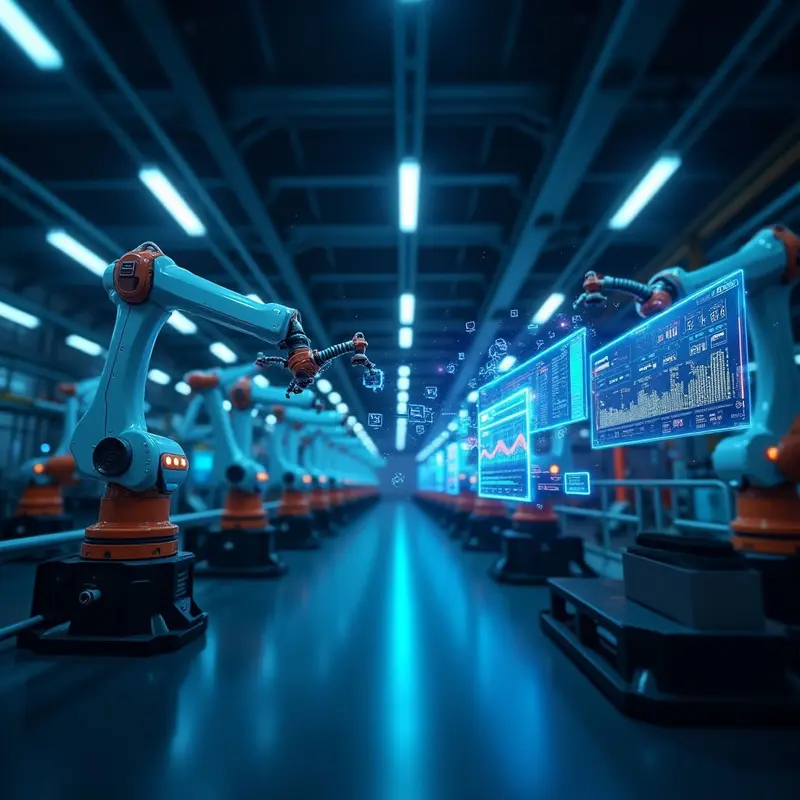
HighByte’s introduction of the Industrial Model Context Protocol (MCP) Server within its Intelligence Hub 4.2 marks a pivotal advancement in industrial data management, setting a new standard for how AI integrates with manufacturing operations. At the heart of this innovation lies the ability to harness Agentic AI at the edge, facilitating real-time and historical data interactions with unprecedented security and efficiency. This capability is transformative for industrial settings, where efficiency and precision are paramount.
A notable feature of this update is its seamless integration with leading AI platforms, including Amazon Bedrock and Azure OpenAI, allowing users to enrich their data through advanced language models. These integrations enable a richer contextualization of data, paving the way for more nuanced AI decision-making processes. Companies like Idahoan Foods exemplify the practical applications of this technology, using HighByte’s platform to amalgamate disparate datasets for enhanced quality control processes. The result is a more intuitive interaction between AI systems and industrial data, fostering improvements in operational efficiency and decision-making accuracy.
Moreover, the inclusion of new connectors such as Databricks and TimescaleDB within the platform amplifies its data handling capabilities, ensuring robust and scalable DataOps. This evolution of the HighByte Intelligence Hub substantially enhances the potential of IoT in manufacturing, signaling a significant leap forward in leveraging business-critical data effectively.
Agentic AI at the Cutting Edge: HighByte’s Industrial Revolution

HighByte’s Intelligence Hub version 4.2 is transforming industrial applications through the marriage of Agentic AI and edge data management. A pivotal feature of this revolution is the embedded Industrial Model Context Protocol (MCP) Server. This protocol acts as a robust liaison that empowers AI agents to access, interpret, and interact with industrial systems both in real time and through historical data. This capability allows Agentic AI to function autonomously on the factory floor, using contextualized and standardized data from diverse sources to make informed decisions.
The hub’s ability to present data pipelines as ‘tools’ to these AI agents, complete with rich descriptions and parameters, enhances their effectiveness in data manipulation. Furthermore, integration with major cloud-based large language models (LLMs) like Amazon Bedrock, Azure OpenAI, and Google Gemini extends advanced AI capabilities to the edge, where timely insights are crucial.
Other enhancements in version 4.2 include Git integration and OpenTelemetry support for enhanced observability with DevOps tools. Additional connectors for Databricks and TimescaleDB boost connectivity, optimizing bi-directional communication across cloud and edge environments. This setup facilitates the dynamic management of complex industrial workflows, significantly enhancing operational efficiency without constant human oversight, positioning HighByte as a leader in Agentic AI-driven automation in industries requiring swift, data-driven decision-making.
Transforming Industrial Data with AI: The Power of Large Language Models

HighByte is ushering in a new era for industrial AI by integrating Large Language Models (LLMs) in its latest release, HighByte Intelligence Hub version 4.2. Central to this advancement is the embedded Industrial Model Context Protocol (MCP) Server, which supports Agentic AI and enhances data interaction through LLMs. By establishing native connections to major cloud LLM providers like Amazon Bedrock, Azure OpenAI, and Google Gemini, as well as supporting local LLMs, HighByte enables AI agents to access connected industrial systems with security and efficiency.
This integration transforms traditional data interactions by allowing plant operators to use natural, conversational interfaces for data engagement, rather than relying on conventional methods. This shift significantly aids in improving quality process control. For instance, companies like Idahoan Foods are capitalizing on this technology to refine their operational processes. They develop AI agents capable of interacting effortlessly with data, enabling rapid prototyping of AI-driven applications that yield smarter manufacturing operations.
By bridging the gap between raw industrial data streams and advanced AI models, the MCP Server unlocks unprecedented decision-making capabilities directly at the edge. The seamless blend of broad connectivity and agentic capabilities empowers businesses to transform complex datasets into actionable insights, showcasing how artificial intelligence is revolutionizing small business marketing. This strategic integration positions HighByte prominently in the realm of industrial AI, setting a new standard for operational intelligence.
Harnessing the Power of Manufacturing Data: From Curation to Contextualization for AI

Optimizing manufacturing data for AI requires a meticulous journey from data curation to contextualization, ensuring that raw data is transformed into a valuable asset for AI-driven insights. The process begins with data curation. This foundational stage involves cleansing and organizing untamed manufacturing data. From wafer metrology to circuit probe tests in semiconductor production, the torrent of diverse datasets can overwhelm traditional processing methods. Here, domain experts join forces with automated tools, employing AI to streamline segmentation and annotation. Metadata standards like W3C PROV track provenance, ensuring transparency and reproducibility.
Progressing from clean, structured datasets, the path leads to contextualization, where domain insights bring depth to the data. This stage goes beyond mere organization by incorporating domain-specific knowledge into feature engineering. NVIDIA, for instance, integrates signals across semiconductor production phases to derive features that truly reflect the physical phenomena affecting yield. Embedding metrics like Cost of Quality (CoQ) curves during model evaluation aligns AI predictions with manufacturing goals, like defect reduction.
Automation and tools form the backbone of this transformation, leveraging NVIDIA CUDA-X libraries for handling massive datasets. Generative AI supports glossary mapping and semantic tagging to ease the curation and contextualization process further. Through these innovations, manufacturers unlock actionable insights, leading to substantial quality improvements and cost efficiencies, driving productivity in complex workflows. For more detailed insights on AI’s impact in manufacturing, explore NVIDIA’s perspective.
Transforming Quality Control with Conversational AI: HighByte’s Game-Changing Solutions
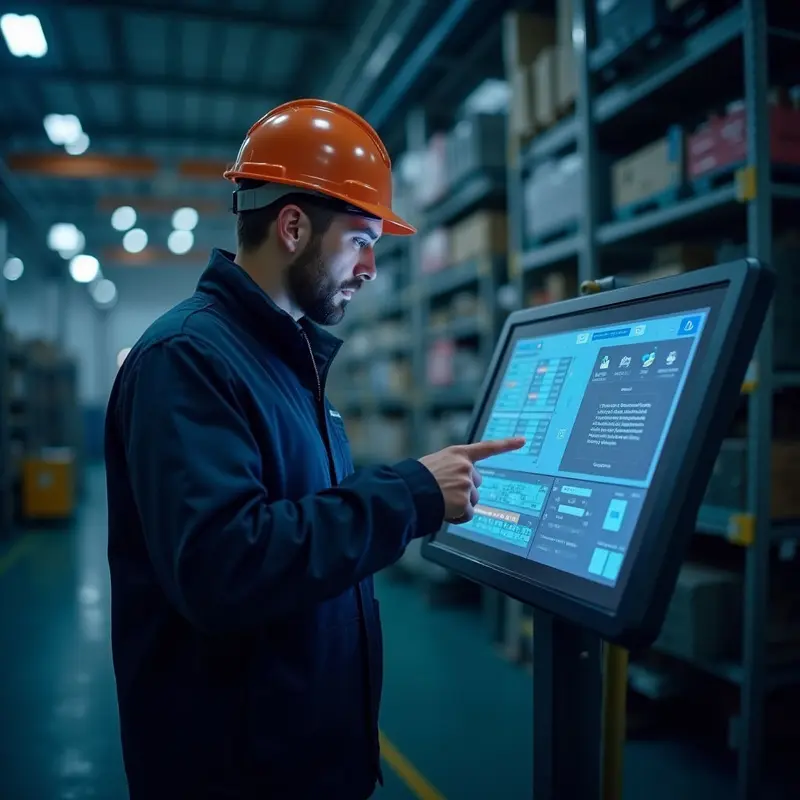
HighByte Intelligence Hub version 4.2 is reshaping industrial AI by enhancing quality process control and enabling conversational interfaces. At its core, the platform introduces an embedded Industrial Model Context Protocol (MCP) Server. This innovation empowers Agentic AI agents to interface seamlessly with industrial data pipelines, transforming real-time and historical data into actionable insights.
For manufacturers, particularly, the challenge of integrating and contextualizing fragmented data is significant. HighByte provides a solution by standardizing diverse datasets, making them accessible for AI-driven decision-making. Idahoan Foods, a case in point, utilizes these capabilities to optimize plant operations. By deploying AI agents, they allow operators to engage with complex datasets naturally, boosting operational efficiency and refining quality controls.
The incorporation of conversational interfaces takes this transformation further by allowing operators to interact with systems through natural language. This removes technical barriers and democratizes access to sophisticated data insights without specialized skills. Enhanced by major large language models like Amazon Bedrock and Azure OpenAI, these interfaces are seamlessly integrated into workflows, driving smarter decision-making.
HighByte’s approach fosters a synergy between Industrial DataOps and AI technologies, supporting broader digital transformation initiatives. By facilitating scalable data management and offering robust integration tools like Git and OpenTelemetry, HighByte bolsters enterprise-grade deployments, significantly advancing manufacturing efficiencies. For more detailed insights into these innovations, the HighByte Press Release on Industrial MCP Server for Agentic AI provides comprehensive information.
Final thoughts
HighByte’s Intelligence Hub 4.2 is not merely an update; it’s a pivotal advancement in the field of industrial AI. By offering secure, real-time interaction with manufacturing data, and leveraging the power of large language models, businesses can dynamically adjust to and thrive in complex environments. This release is a testament to how strategic technology integration can lead to smarter, more efficient industrial processes, laying the groundwork for future innovations.
Ready to elevate your business with data-driven strategies and expert insights? Contact OnInitiative.com ([email protected]) today and let our team help you grow smarter, faster, and more efficiently!
About Us
OnInitiative.com is an innovative marketplace that helps e-commerce businesses boost productivity and community growth through advanced automation tools.
Further reading


Leave a comment