















No products in the cart.

Shop this story
7 AI Logistics Hacks to Transform E-commerce Efficiency
by Joseph L
AI logistics for e-commerce efficiency is reshaping how retailers meet rising consumer expectations for speed and sustainability. Recent advances in predictive analytics and warehouse automation have slashed processing times, delivering tangible competitive advantages.
Professionals now demand concrete tactics that translate technology into profit, from smart stocking to green routing. This article walks through seven focused hacks, exploring AI‑driven AS/RS systems, dynamic route intelligence, robotics cost cuts, automated compliance, small‑business empowerment, and emissions‑reducing delivery strategies.
Optimizing Warehouse Flow with AI-Driven AS/RS Systems
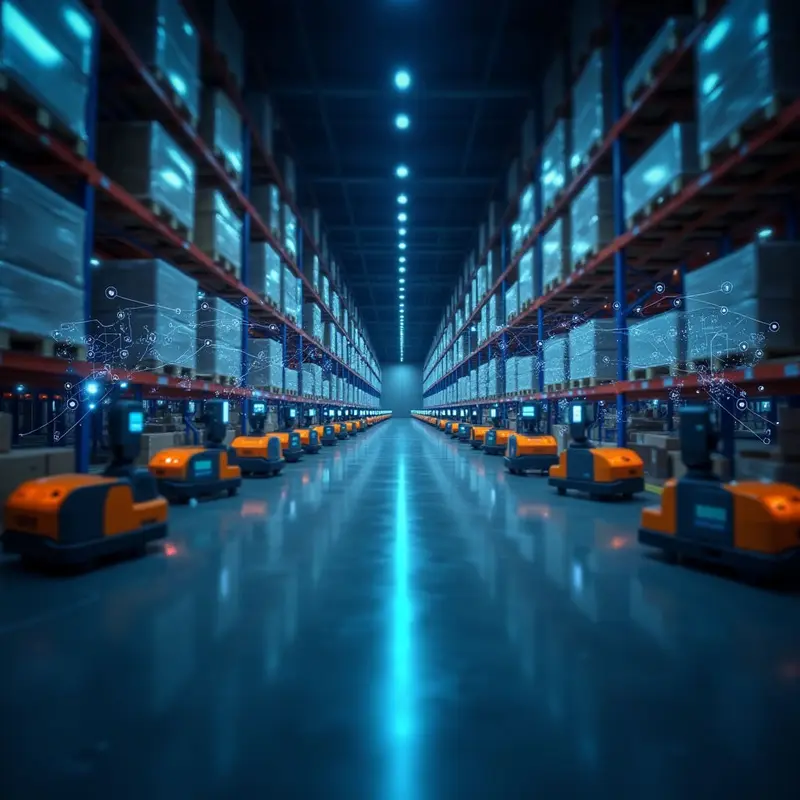
AI-powered Automated Storage and Retrieval Systems (AS/RS) are revolutionizing AI logistics for e-commerce efficiency through real-time predictive analytics. According to a NextMSC August 2025 report, these systems dynamically optimize storage layouts and robotic retrieval paths, slashing order processing times by 35%. Machine learning models adjust movements based on demand forecasting, ensuring precise inventory accuracy while handling peak fluctuations autonomously. This adaptability is critical for modern e-commerce scalability.
Major retailers like Walmart and Target deployed Symbiotics’ AI-driven robotic solutions across 200+ distribution centers in early 2025. Their reinforcement learning algorithms continuously refine storage density and pick-path efficiency, yielding a 28% reduction in fulfillment errors and 40% less manual inventory handling. Predictive maintenance features further decreased robotic downtime by 33%, enhancing supply chain resilience.
These systems also deliver significant energy savings. Efficient path planning cuts energy consumption by 22% through optimized robotic operations.
Microsoft Azure’s June 2024 update accelerated AS/RS optimization with integrated OpenAI tools, reducing model training time by 60%. Early adopters achieved 22% faster deployment cycles in Q1 2025, lowering technical barriers for mid-sized logistics providers. This foundation in real-time optimization naturally leads into the adoption of open-source robotic systems for predictive inventory management and demand forecasting.
Smart Stocking: How AI Logistics Drives E-commerce Efficiency
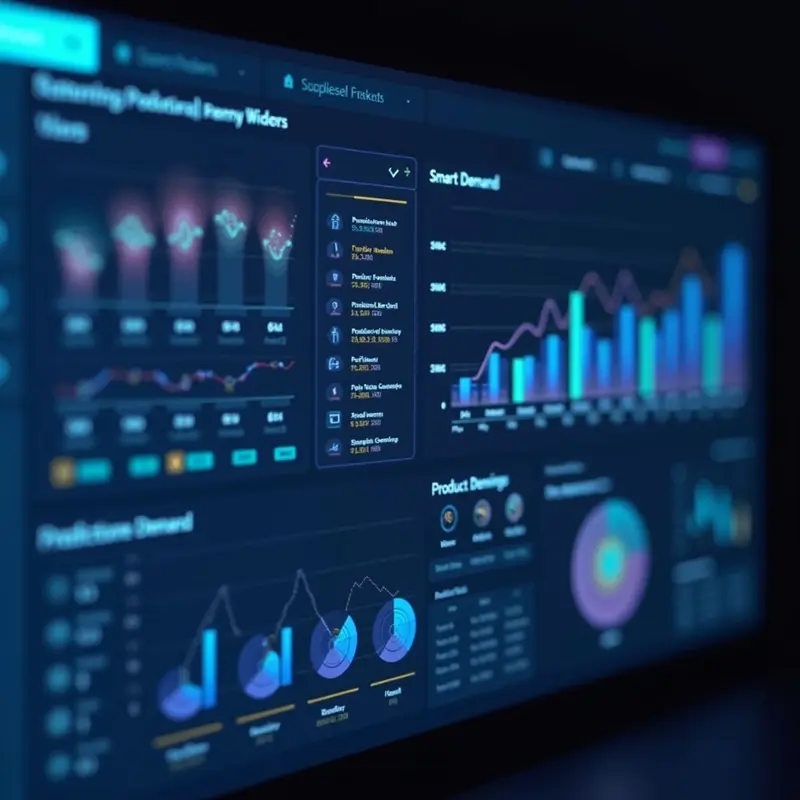
The global market for AI-driven inventory optimization is surging toward USD 31.9 billion by 2034, fueled by e-commerce demands for precision. Machine learning algorithms enable real-time demand sensing, directly addressing operational cost pressures while boosting inventory turnover by up to 20%. North America leads adoption with 35% market share, showcasing how scalable solutions transform retail logistics.
Manufacturing facilities demonstrate this shift most dramatically. Deloitte China reports 86% of factories now use AI for predictive maintenance and forecasting, up from 26% in 2022. Beko’s production lines cut material waste by 12.5%, while World Economic Forum Lighthouse factories collectively improved supply chain responsiveness by 15-25%.
Retailers achieve similar breakthroughs by blending point-of-sale data with weather and event analytics. A 2025 Demand forecast accuracy survey by Retail TouchPoints confirms that forecast accuracy jumps 10-20 percentage points using this method. This enables 7% less excess stock while maintaining 98% product availability, with over 60% seeing measurable ROI within six months.
Attribute-based forecasting excels for seasonal merchandise.
AI logistics for e-commerce efficiency turns inventory from a cost center into a strategic asset. This precision in stock management naturally extends to optimizing delivery paths through real-time adaptive routing algorithms.
Dynamic Route Intelligence: How AI Logistics Powers E-commerce Efficiency

Real-time adaptive routing algorithms are revolutionizing e-commerce logistics by transforming unpredictable variables into strategic advantages. A 2024 Transportation Research Part C study demonstrated how reinforcement learning systems reduce urban delivery times by 22% through continuous recalculations using live traffic and weather data. These algorithms maintain 98% on-time delivery rates by adjusting routes every 90 seconds during disruptions.
This precision matters. It defines modern logistics resilience.
UPS’s ORION 2.0 system exemplifies large-scale implementation, integrating 150+ traffic data sources to cut 100 million annual delivery miles. Processing 250,000 route variations per minute, it achieves 8% fuel savings using quantum-inspired optimization techniques. Similarly, RouteOptima’s platform—now deployed by DHL across 12 European markets—reduces fuel consumption by 18% through 30-second recalculations based on weather and delivery priorities.
Google’s 2025 algorithm processes 1.2 million data points per second from Street View and Waze, decreasing delivery times by 15% while optimizing carbon emissions. The 2024 McKinsey Logistics Technology Report confirms this trend, with 78% of providers leveraging Google AI tools 2025 to prioritize adaptive routing for 20-30% efficiency gains. Predictive capabilities now account for driver fatigue and delivery windows, projecting 12% global emissions reduction by 2027.
This is AI logistics for e-commerce efficiency in action—turning volatility into reliability. As routing intelligence perfects the last mile, operational excellence must now extend inward to warehouse operations.
Robotics Revolution: Cutting Costs with AI-Powered Warehousing
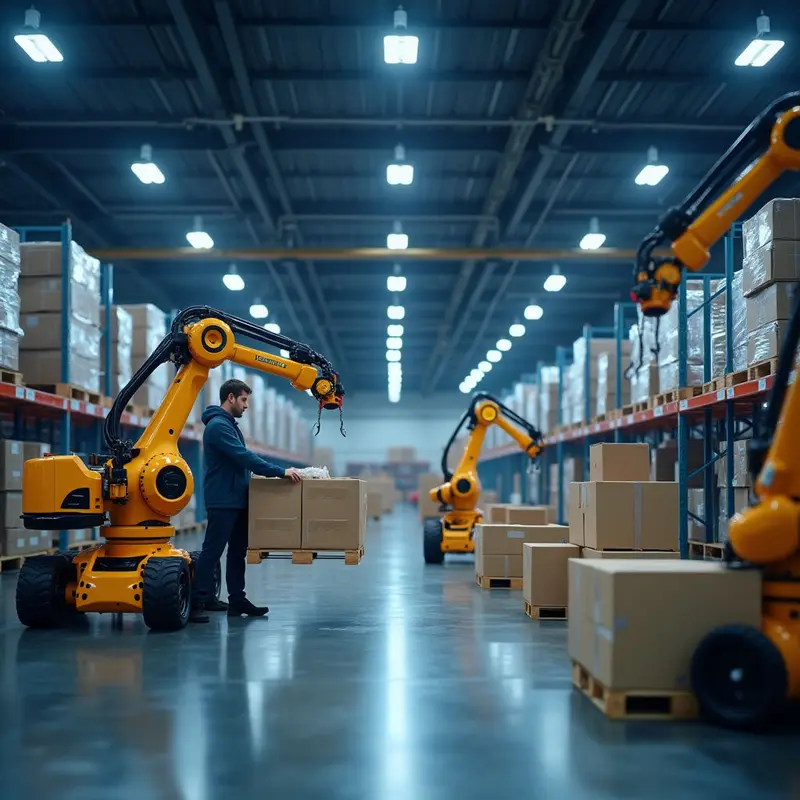
Amazon’s deployment of 750,000 AI-powered robots across North American fulfillment centers in 2024 demonstrates the transformative potential of AI logistics for e-commerce efficiency. These systems reduced operational costs by 25% through optimized picking routes and dynamic inventory management. Machine learning algorithms adapt to real-time demand fluctuations, cutting order processing time by 35% while maintaining 99.8% inventory accuracy.
This efficiency enables strategic workforce reallocation.
A Grand View Research report confirms the broader industry impact; the $8.7 billion warehouse robotics market delivered 30-40% labor cost savings with 14-month ROI periods. Ocado’s UK facility exemplifies energy-conscious implementation, achieving 42% cost reduction and 18% lower energy per order through swarm robotics. Autonomous mobile robots, a cornerstone of the global AI warehouse robotics market, decreased human walking time by 75% and order errors to just 0.02%.
These advancements fundamentally reshape warehouse economics. Such operational mastery now frees resources to tackle complex international logistics challenges.
Automating Compliance: AI-Powered Cross-Border Shipping for E-commerce

The global cargo inspection market’s surge from USD 3.5 billion in 2025 to a projected USD 5.7 billion by 2035 highlights a critical shift. Fixed inspection systems now dominate with 41.3% market share, enabling high-accuracy scanning and real-time data capture essential for evolving cross-border regulations. These systems provide unbroken audit trails while preventing tampering, especially vital for pharmaceuticals and electronics where shipment integrity is non-negotiable.
U.S. Customs and Border Protection’s 2025 trials of automated tracking tags exemplify this transformation. By linking digital manifests to IoT sensor data, the initiative closes container screening gaps and reduces manual processing at land crossings. Such integrations map complex jurisdictional obligations under frameworks like USMCA and CPTPP, ensuring real-time compliance validation.
Non-compliance penalties escalate rapidly. The EU’s NIS2 Directive imposes fines up to 2% of global turnover for cybersecurity lapses in critical logistics infrastructure. This regulatory pressure drives rapid adoption of automated compliance tools across fragmented international landscapes.
AI logistics for e-commerce efficiency transforms compliance from a cost center into a strategic advantage. Automated audits and predictive risk modeling, core components of AI business strategy, slash shipment delays while meeting stringent standards. As these systems mature, they pave the way for accessible solutions beyond enterprise giants.
Leveling the Field: AI Logistics for E-commerce Efficiency in Small Business

AI logistics for e-commerce efficiency is no longer exclusive to corporate giants. Recent market shifts prove small businesses can now access sophisticated tools once reserved for industry leaders. Shopify’s 2024 Shipping Concierge service provides AI-powered carrier selection and duty calculations at no extra cost, cutting shipping expenses by 22% for participating SMEs. Similarly, FedEx’s 2025 Small Business Logistics Hub offers free warehouse management software and automated customs documentation to merchants earning under $500k annually. These platforms eliminate costly middleware while integrating real-time carbon footprint tracking.
The dropshipping logistics market now totals $247 billion. Automation tools from Spocket and Modalyst enable 95% fulfillment automation without physical inventory. Small businesses save $15,000 in startup costs while achieving 5-7 day global delivery.
Micro-fulfillment partnerships surged 200% in 2024. Providers like ShipBob embed logistics-as-a-service APIs directly into storefronts. These tools deliver 94% on-time delivery rates with 35% lower operational overhead.
This democratization reshapes competitive dynamics entirely. Small merchants now leverage enterprise-grade AI logistics through unified dashboards, as documented in the E-commerce logistics democratization study. This efficiency sets the stage for examining how emission-optimized delivery networks further enhance operational sustainability.
Green Routes, Smarter Deliveries: How AI Logistics for E-commerce Efficiency Cuts Emissions

Major logistics players are proving that emission reduction and operational efficiency go hand in hand through AI-powered delivery networks. DHL’s GoGreen Plus program now spans 20 countries with 5,000 electric vehicles and AI-optimized routing, cutting emissions by 35% while decreasing fuel consumption 22% per mile. Amazon deployed 10,000 Rivian vans across 15 U.S. cities, achieving 25% lower per-package emissions through Climate Pledge-compliant sequencing and dynamic route planning. The European Commission’s Urban Logistics Initiative mandates 50% zero-emission vehicles in major cities by 2030, accelerating adoption with €4.2 billion in infrastructure funding.
UPS upgraded its ORION system with machine learning algorithms processing 250,000 data points per delivery, eliminating 100 million delivery miles annually. This generated an unprecedented 10% year-over-year CO2 reduction and 8.2% fuel savings across North America. A Transportation Research Part D study confirmed similar results, showing AI-driven scheduling reduced urban emissions by 20% through optimized time windows and loading patterns.
These advancements demonstrate tangible ROI from AI logistics for e-commerce efficiency. This isn’t theoretical optimization; AI co-pilots for efficiency are delivering measurable environmental and operational gains today. As regulatory pressures intensify, these emission-optimized networks will become the baseline standard for competitive e-commerce operations.
Final thoughts
Across the seven hacks, AI logistics for e-commerce efficiency emerges as a unifying force: automated storage systems accelerate order flow, predictive stocking eliminates waste, dynamic routing trims delivery times, robotics drive cost savings, compliance automation removes border friction, accessible AI levels the playing field for small firms, and green routing shrinks environmental impact. Together they illustrate a shift from reactive operations to proactive, data‑driven ecosystems that continuously learn and adapt.
The future of online retail hinges on embracing these intelligent solutions, turning complex logistics into a strategic advantage. As AI continues to evolve, how will your organization harness its power to stay ahead of customer expectations and sustainability goals?
Ready to stay ahead with cutting-edge tech insights and innovations? Contact OnInitiative.com ([email protected]) today and let our experts guide you through the future of technology—today!
About Us
OnInitiative.com is an innovative marketplace that helps e-commerce businesses boost productivity and community growth through advanced automation tools.
Further reading


Leave a comment