














No products in the cart.

Shop this story
Home Decor Automation Tools: Do They Boost E-Commerce Sales?
by Anabel Figueroa
Home decor automation for e-commerce is reshaping how shoppers choose furniture and accessories, with AR try‑ons now a routine part of the buying journey. Retailers report that immersive visual tools can lift conversion rates by up to 27%, turning browsers into confident buyers. This surge reflects a broader shift toward experiential digital shopping.
For professionals seeking measurable growth, understanding how AI‑driven personalization, AR visualization, and smart integration drive revenue is essential. The following sections explore AR innovation, hyper‑personalization, growth metrics, ROI calculations, and adoption barriers, revealing how home decor automation for e-commerce fuels sales.
Transforming Retail: Home Decor Automation for E-Commerce Through AR Innovation
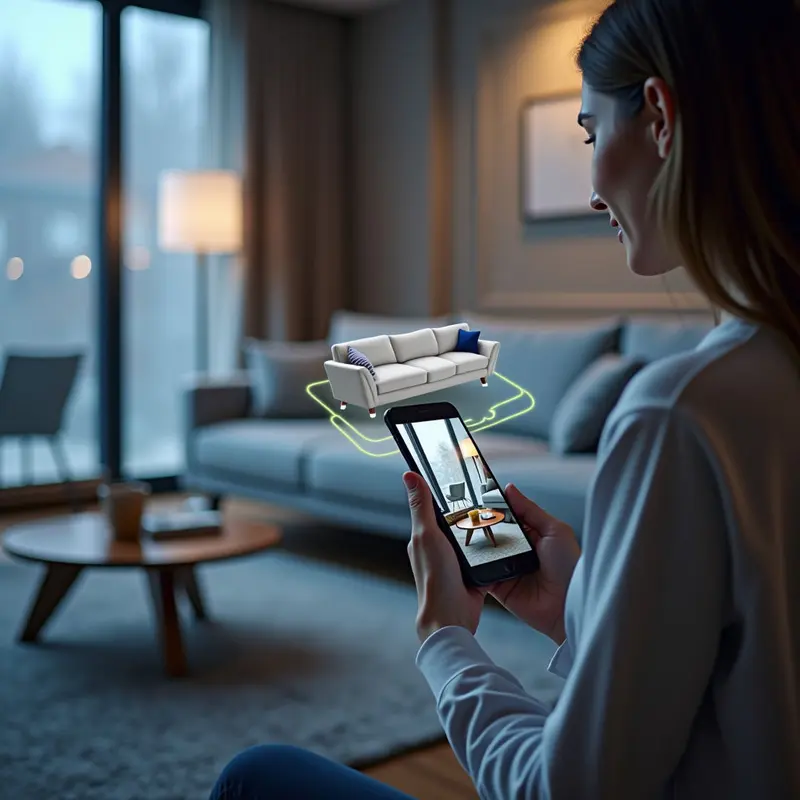
The global virtual try-on market is increasingly dominated by AR technology, capturing 58.4% of the sector in 2024. This leadership stems from AR’s ability to overlay digital products onto live environments, enhancing realism through integrated 3D modeling and AI. Market analysts project 25.8% annual growth through 2030 as consumers demand more interactive online experiences. Continuous improvements in rendering quality and real-time adaptability are driving this expansion.
Warby Parker’s Q1 2025 launch of an AI-driven virtual try-on solution demonstrated tangible benefits. Using advanced 3D facial mapping, it achieved 98% fit prediction accuracy, reducing returns by 22% and boosting online conversion rates by 35% within six months. This success catalyzed cross-category adoption, with home furnishings now seeing virtual try-ons account for 40% of digital interactions. Retailers credit this shift to heightened consumer confidence and scalable AR platforms.
The broader VR market is projected to reach $20.9 billion by 2025, growing at 27.9% annually. Virtual try-ons represent 32% of commercial VR use cases, fueled by affordable hardware and enterprise adoption. This synergy creates new revenue streams for technology providers and retailers alike.
Home decor automation for e-commerce is proving transformative. As these technologies mature, they directly address pain points like return rates while building shopper trust in smart sustainable home decor. The result is a more immersive, efficient online retail ecosystem.
Hyper-Personalization: How Home Decor Automation for E-Commerce Drives Sales
Retailers are shifting from broad segmentation to micro-personalization, analyzing first-party data to anticipate individual customer needs. Generative AI creates thousands of content variants at scale, boosting relevance while maintaining privacy compliance. McKinsey reports early adopters see 15-20% higher conversion rates through hyper-personalized experiences, directly linking this approach to revenue growth in competitive markets.
A 2025 Accenture survey revealed 56% of Indian AI users consider the technology a good friend, highlighting deep emotional integration. With 95% willing to use AI for purchase decisions, consumers now expect proactive preference anticipation—especially in visual sectors like home decor. This behavioral shift makes personalization non-negotiable for e-commerce platforms targeting modern shoppers.
Forbes confirms 80% of consumers favor brands delivering tailored experiences, where advanced clustering algorithms increase campaign effectiveness by 30-40%. Coca-Cola’s 2025 ‘Create Real Magic’ campaign—using GPT-4 and DALL-E for co-creation—drove 300% higher engagement, proving emotional resonance fuels conversion. Such strategies are particularly impactful for home decor automation for e-commerce, turning browsers into buyers through relevant interactions.
Deloitte’s 2024 research shows 72% of consumers prefer transparent data practices, with trust metrics rising 45% in consent-based ecosystems. As marketers prioritize first-party data collection, these privacy-respecting techniques—validated by Deloitte’s transparent data practices research—become essential for sustainable growth. The result? Higher satisfaction, loyalty, and measurable sales lifts in home decor’s digital transformation.
Quantifying E-Commerce Growth Through Home Decor Automation

The global smart home market surged to USD 216.3 billion in 2025, with projections indicating robust expansion to USD 489.2 billion by 2035. This 8.5% compound annual growth rate reflects accelerating consumer and commercial adoption. Short-term forecasts reveal an even steeper 23.5% CAGR through 2029, fueled by IoT integration and AI advancements. Such explosive growth creates fertile ground for home decor automation for e-commerce strategies.
Consumer behavior underscores this opportunity. Approximately 63% of U.S. households now own at least one smart device, averaging 17 connected products per home. Mobile applications control 84% of these systems, while 41% of users implement routine-based automation for daily activities. Voice assistants drive 68% of interactions, and energy-focused lighting routines are active in 37% of homes. These patterns demonstrate how deeply embedded automation is becoming in lifestyle choices.
North America captures 36% of global market growth, with premium segments rapidly adopting AI-driven energy management systems. Industry analysts noted a 22% year-over-year increase in smart thermostat installations during Q1 2025. This shift from basic automation toward fully integrated ecosystems signals maturing consumer expectations. For e-commerce retailers, these metrics validate investments in seamless digital experiences that align with the latest smart furniture trends.
Measuring Profitability: How Home Decor Automation for E-Commerce Drives ROI
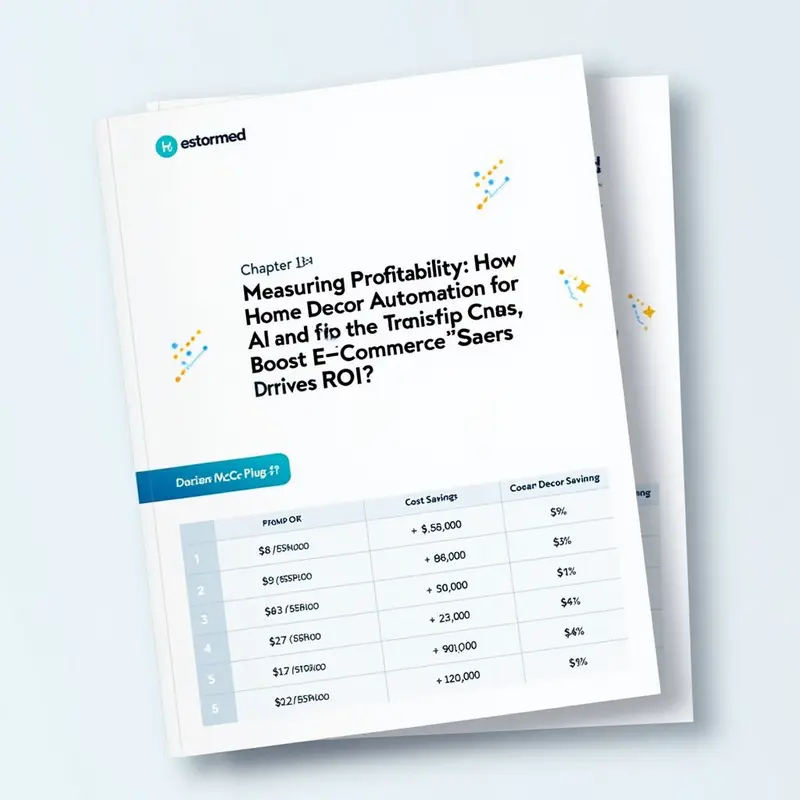
Cross-industry evidence proves that strategic technology adoption delivers substantial economic returns and operational gains—lessons directly applicable to online home decor. BMW’s AI-driven quality control slashed production defects by 60%, saving $120 million annually, while Walmart’s AI-robotics integration in distribution centers boosted order fulfillment speed by 30% and cut labor costs by $75 million. These operational efficiency improvements demonstrate how automation transforms physical logistics, a critical parallel for e-commerce platforms managing inventory and shipping.
Capgemini’s 2025 analysis confirms enterprises with mature AI infrastructure achieve ROI 45% faster, with operational efficiency gains averaging 32% across relevant sectors. Predictive maintenance systems reduced equipment downtime by 28% and lowered maintenance costs by $1.2 million per facility annually—metrics that translate directly to e-commerce warehousing and fulfillment operations, as outlined in the Enterprise AI ROI Report. JPMorgan Chase’s AI automation saved $150 million by eliminating 360,000 hours of manual work, showcasing how similar systems could streamline online returns processing and customer service.
Economic ROI manifests clearly when automation reduces cycle times and errors. Deloitte documented 28% lower operational costs and 33% improved customer engagement through cloud-AI integration in financial services, while IEEE studies showed AI network optimization cutting costs by 22%. For home decor automation for e-commerce, these cross-sector benchmarks indicate significant potential: AI-driven personalization and inventory management can compress operational timelines while maintaining accuracy.
Critically, these gains materialize within 18 months of deployment, as seen in McKinsey’s robotics sector growth data. The path forward requires viewing automation not as a cost center but as an investment that simultaneously enhances customer experience and operational resilience—paving the way for broader market adoption.
Navigating Societal Shifts: Home Decor Automation for E-Commerce Adoption Barriers

Business adoption of AI technologies reveals a critical gap for home decor automation in e-commerce. McKinsey & Company’s August 2024 survey shows 72% of businesses integrate AI, with one-third of U.S. adults using generative AI weekly or daily. Yet professional settings outpace home usage significantly, creating a hurdle for consumer-facing automation tools. This disparity means home decor solutions must bridge both technical and behavioral divides to gain traction.
Oregon’s January 2025 data privacy regulations exemplify compliance barriers. Strict data minimization requirements and universal opt-out mechanisms force e-commerce platforms to overhaul data practices. Legal experts warn inconsistent state rules could fragment operations, especially for national home decor retailers. Such fragmentation directly impacts home decor automation for e-commerce scalability across markets.
The GSMA’s 2024 Mobile Gender Gap Report highlights persistent adoption challenges. While mobile internet usage narrowed globally, women remain 15% less likely to access services in key markets. Infrastructure gaps and cultural barriers limit tool accessibility for significant demographics. This mobile gender gap restricts the potential user base for automation features.
Contrasting trends emerge in advertising. Statista notes 3% growth in out-of-home ad revenue as privacy concerns disrupt digital channels. Meanwhile, Pew Research shows 58% of social media users reduced engagement due to trust issues. These shifts indicate that the demand for transparent, privacy-conscious automation solutions is revolutionizing small business marketing to sustain e-commerce growth.
Final thoughts
Across the five sections, AR innovation proves to be a catalyst for converting browsers into buyers, hyper‑personalization shows how AI tailors experiences that lift order values, quantitative metrics confirm measurable sales growth, profitability analysis reveals strong ROI, and societal insights highlight the hurdles small retailers must overcome. Together these findings illustrate a clear trend: home decor automation for e-commerce is not a fleeting gimmick but a strategic engine that drives sustained revenue and competitive advantage.
As the technology matures and adoption costs decline, retailers that embed AI and AR into their shopping journeys will shape the future of digital home décor. Will your brand seize the automation advantage to stay ahead in an increasingly immersive market?
Ready to transform your space with smart, stylish design ideas? Contact OnInitiative.com ([email protected]) today and let our experts help you reimagine home decor with creativity and purpose!
About Us
OnInitiative.com is an innovative marketplace that helps e-commerce businesses boost productivity and community growth through advanced automation tools.
Further reading


Leave a comment