















No products in the cart.

Shop this story
7 tech trends transforming e-commerce in 2025
by Joseph L
Imagine slashing online return rates by 40% while watching your sales surge through seamless virtual try-ons. This isn’t futuristic speculation; it’s the tangible reality reshaping e-commerce right now as immersive technologies redefine customer confidence. Entrepreneurs navigating the competitive digital marketplace must grasp these evolving tech trends for e-commerce in 2025 to transform browsing into meaningful buying experiences.
The explosive growth of XR, live streaming social commerce, and agentic systems reveals a fundamental shift toward frictionless, personalized shopping journeys. From AI-optimized supply chains preventing costly stockouts to blockchain-verified transparency building unshakeable trust, these innovations directly address entrepreneurs’ core challenges. This article explores seven pivotal technologies delivering measurable results like 67% conversion boosts and 91% higher order values, equipping you to future-proof your business strategy effectively.
1. XR: Why immersive tech slashes returns by 40%

Slipping into a tactile feedback suit to feel fabric textures while shopping online is no longer science fiction. It’s today’s Extended Reality revolution reshaping how entrepreneurs engage customers. XR now blends virtual, augmented, and mixed realities with haptic, olfactory, and neuro-responsive technologies. For you, this means slashing return rates by up to 40% through cross-device virtual try-ons that boost purchase confidence. Picture Sarah in Chicago testing a Gucci bag in her living room via AR, its digital twin adjusting to her coffee table’s light and depth.
That’s real-world magic.
The U.S. XR market’s explosive growth, from $73.98 billion in 2025 to a projected $977.17 billion by 2034, signals an undeniable opportunity. Brands like Nike and IKEA already leverage persistent 3D stores where shoppable hotspots reveal product stories, blending emotional commerce with personalized journeys. WebXR eliminates app barriers, letting shoppers explore browser-based showrooms instantly. From virtual food tastings to automobile test drives, these features transform passive browsing into active participation.
Biometric authentication streamlines checkouts while AI-powered marketing strategies personalize recommendations to your mood. Pepsi Max’s AR bus shelter campaign demonstrated how location-based immersion drives viral engagement. Space-based retail is emerging as XR’s next frontier.
Frictionless; immersive. This is how you future-proof your e-commerce strategy. Ready to merge physical and digital realms? Live streaming social commerce awaits as the next evolution.
2. Live streaming social commerce: Decoding the 67% conversion surge

Scrolling TikTok and instantly purchasing a demonstrated blender defines the rise of live streaming social commerce integration, reshaping 2025’s e-commerce tech trends. During Alibaba’s Singles Day, 89% of goods sold came through live streams while Walmart achieved seven times more TikTok views and a 25% follower increase. The magic lies in shoppertainment, blending entertainment with direct purchases via AR filters and interactive Q&A.
These real-time features build trust.
Platforms like TikTok Shop and Shopee Live enable instant in-app checkouts, letting consumers discover, engage, and buy without switching screens. Authentic electronics demos and mom-and-baby testimonials showcase products in relatable scenarios. A young parent might join a live stream for organic baby gear, ask specific questions, and complete checkout within seconds.
Brands integrate these streams into broader funnels using paid ads and CRM follow-ups, while AI optimizes engagement and inventory management in real time. This trend meets demands for convenience and meaningful engagement. It’s not just shopping; it’s community-driven discovery fostering genuine connections. As social platforms evolve into full commerce hubs, the distinction between browsing and buying vanishes, a shift reflected in the 67% conversion boost. The path toward autonomous transactions is now clear.
3. Agentic commerce: Mastering autonomous transactions for competitive edge
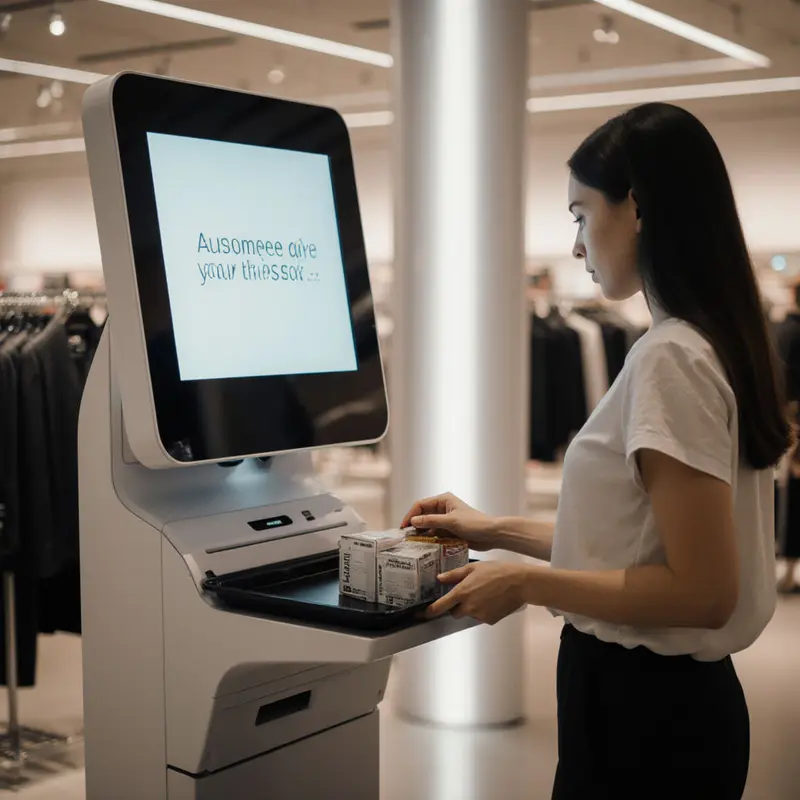
AI agents autonomously book business trips within set budgets. This is agentic commerce, a transformative shift where they act as autonomous customer representatives. By 2025, these agents will orchestrate multi-step, end-to-end transactions across billing, CRM, and supply chain systems without human intervention.
Agents verify refunds, switch SaaS plans, suspend telecom services, or manage returns by connecting with backend systems. They move beyond predictive and generative AI, executing autonomous actions like travel bookings through integrations such as OpenAI’s Operator in ChatGPT. Payment giants like Mastercard and PayPal now actively support emerging protocols including the Agent Payments Protocol (AP2), facilitating secure, automated transactions between consumer and merchant AI agents.
These platforms integrate advanced fraud detection, leveraging behavioral biometrics and real-time transaction monitoring to analyze patterns and preempt emerging threats. They prevent account takeovers while reducing false positives, ensuring seamless, frictionless checkout experiences for customers.
Entrepreneurs gain significantly faster resolutions, substantial cost savings, and new revenue streams through automated ‘standing intents’.
Security evolves through robust consent attestation and granular programmable spend policies. Platforms like ESW’s Agentic Hub provide real-time buyer intelligence and secure transaction management, streamlining workflows for merchants.
This seamless automation fundamentally reshapes e-commerce competition. Strategic focus shifts to an AI-powered business strategy 2025, driving innovation and growth as AI handles repetitive tasks. The era of autonomous transactions sets the stage for AI-optimized supply chains that respond instantly to new demands.
4. AI-optimized supply chain logistics: Why predictive analytics slash stockouts by 40%

Maria, a small apparel entrepreneur, breathes easy as her AI-optimized supply chain prevents holiday stockouts. This isn’t theoretical. AI-driven route optimization, for instance, slashes delivery times by up to 20%, while warehouse robotics similarly boost picking speeds.
UPS leveraged systems like ORION to save over $400 million annually through smarter fuel use. Real-time control towers provide full visibility across parcels and loading processes.
Seventy-four percent of supply chain leaders rank AI as the top transformation driver, surpassing ESG or geopolitical concerns. Companies using AI report up to 40% fewer stockouts and 30% less vessel downtime. Predictive analytics spot demand spikes, while digital twins simulate risks before escalation.
The transformation is measurable.
With over 75 billion IoT devices connecting globally by 2025, blockchain-backed transparency prevents fraud across tamper-proof networks. AI automates routine tasks like order processing and contract reviews, minimizing costly human errors. This visibility sets the stage for unified omnichannel systems where every trend converges. AI-optimized logistics turns supply chain chaos into your competitive advantage.
5. Unified commerce: Why one platform drives 8.9% sales growth

Sophie adds items to her cart online, then walks into your physical store later. She picks up exactly where she left off. No fragmented data. No lost sales. Modern consumers expect this seamless journey and consistent brand recognition across every touchpoint.
Unified commerce delivers tangible results: retailers adopting this approach see an average 8.9% boost in annual sales growth, a 16% reduction in total cost of ownership through simplified operations, and quarterly omnichannel GMV growth averaging up to 150%.
Real-time inventory stays accurate everywhere. One unified customer record follows shoppers across POS and e-commerce. Merchandisers enact changes instantly through a single administrative UI without heavy IT reliance.
This changes everything.
Unlike rigid omnichannel setups requiring multiple costly integrations, unified commerce operates on one centralized platform with composable architecture. It transforms raw data into personalized loyalty rewards and predictive insights. Consistent checkout experiences build trust at every interaction.
For entrepreneurs navigating tech trends and evaluating self-hosted software benefits for e-commerce in 2025, this integration isn’t optional. It paves the way for the flexible payment ecosystems explored next.
6. BNPL ecosystems: Why 91% AOV growth is non-negotiable in 2025

Mobile BNPL payments now lift average order values by 91% for holiday inventory, transforming how Gen Z entrepreneurs finalize purchases on their phones. This isn’t hypothetical; it’s the reality. Mobile devices generated 79.8% of BNPL revenue through August 2025. The 2025 holidays alone will drive $15.6 billion to $17.3 billion in mobile BNPL spending. This represents a significant increase from 2024’s $14.4 billion.
Half of U.S. holiday shoppers now plan to use BNPL for budget control and interest-free flexibility. More than half also report being more likely to purchase when BNPL is available. Notably, Gen Z already prefers BNPL over credit cards for gifts. Beyond gifting, one-third of Gen Z users apply BNPL to groceries, and DoorDash partners with Klarna for food delivery financing.
Small businesses also benefit significantly. Offering BNPL boosts their average order value by 62% and checkout conversions by 30 to 40 percent. With 72% of Americans planning BNPL use next year, this trend transcends demographics. Over 40% of consumers aged 16 to 34 have adopted it, compared to 12% of older shoppers.
Global BNPL volume reached $300 billion in 2024 and is projected to hit $560 billion soon. Despite economic headwinds and high interest rates, usage continues to climb across diverse spending categories. For entrepreneurs, embedding BNPL is essential to achieve 91% AOV growth. It aligns with how modern shoppers expect to buy.
For entrepreneurs, this seamless integration isn’t just convenient; it’s the foundation for blockchain-verified trust in every transaction.
7. Blockchain transparency: Why trust is e-commerce’s ultimate currency in 2025

Clicking ‘buy’ on luxury skincare now lets you instantly verify its organic journey from farm to shelf. This is blockchain-verified transparency architectures in action, a defining tech trend for 2025 e-commerce. These systems replace guesswork with immutable truth, giving every product step an auditable record.
IZBERG’s marketplace exemplifies this shift. Buyers scan a digital passport to confirm authenticity, eliminating counterfeits. Sellers simultaneously prove ethical sourcing in fashion or agri-food, building unshakeable trust.
Beyond individual marketplaces, shared platforms like TradeLens connect entire supply chains. Blockchain with IoT sensors tracks real-time temperature for pharmaceuticals, ensuring regulatory compliance while preventing spoilage. The MediLedger Project even automates U.S. drug safety law enforcement.
Operational benefits cascade through the system. Administrative costs drop as blockchain streamlines cross-border documentation. Stablecoins for e-commerce open emerging markets through fraud-resistant transactions, per BVNK’s 2025 payment guide.
This makes trust tangible.
For entrepreneurs, verifiable shipment milestones mean fewer disputes and stronger loyalty. Blockchain architects a new standard where trust is the ultimate currency.
Final thoughts
These seven technologies collectively dismantle traditional e-commerce barriers, creating fluid experiences where virtual try-ons prevent returns, live streams build community, and autonomous agents handle transactions seamlessly. Blockchain verification and unified commerce platforms transform trust into a tangible asset while AI logistics and BNPL ecosystems directly boost sales growth and customer loyalty for forward-thinking entrepreneurs.
Mastering these tech trends for e-commerce in 2025 means moving beyond isolated tools to integrated systems that anticipate customer needs and streamline operations. As the line between physical and digital shopping vanishes, the critical question becomes: how quickly can you harness these converging innovations to make trust your most valuable currency in an increasingly competitive marketplace?
Ready to stay ahead with cutting-edge tech insights and innovations? Contact OnInitiative.com ([email protected]) today and let our experts guide you through the future of technology—today!
About us
OnInitiative.com is an innovative marketplace that helps e-commerce businesses boost productivity and community growth through advanced automation tools.
Further reading


Leave a comment