














No products in the cart.

Shop this story
Don’t buy hosting in 2026 until you set up Tailscale mesh
by Joseph L
Buying hosting used to feel like the main decision. Pick a provider, lock in a plan, then figure out access later. In 2026, that order can bite you, especially once your setup sprawls across a home lab, a cheap VPS, and whatever device you’re holding right now. A Tailscale private mesh setup flips the script because it makes “where is this running?” a smaller question.
The uncomfortable part is that most of the pain shows up slowly. One more port opened. One more key copied. One more rule you meant to clean up. Then a weekend disappears into remote access duct tape. If you care about self-hosting because you like control, it’s worth asking if your network is still serving you, or if you’re serving it.
Trend analysis: Why 2026 marks the mesh VPN shift
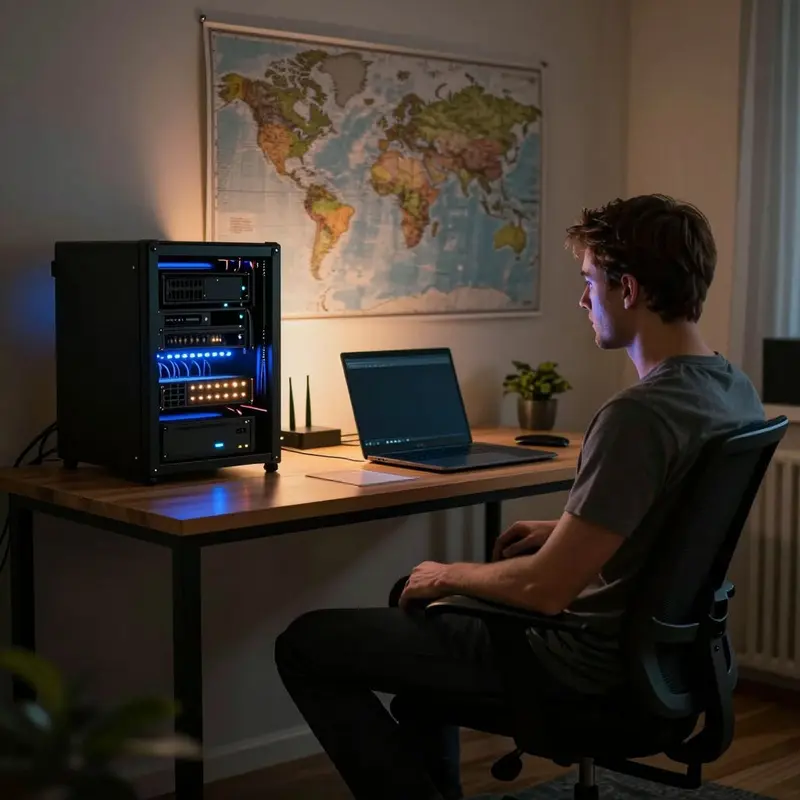
The way self-hosters connect their services is splitting into two distinct eras, and 2026 is where the divide becomes impossible to ignore.
If you’re the kind of person who runs their own servers, manages home labs, or hosts personal services outside the cloud, the infrastructure decisions you make right now carry more weight than they used to. Legacy VPN setups still dominate, with 41% of organizations clinging to them, but only 27% have moved to mesh VPN architectures. That gap isn’t a sign that mesh is fringe. It’s a sign the shift is still early enough to matter.
The industry’s not migrating toward mesh just because it’s newer. It’s migrating because the underlying model is fundamentally different. Traditional VPNs route everything through a central chokepoint, while mesh networks connect devices peer-to-peer so your traffic takes the shortest path between two points without passing through a server you don’t control. For a self-hoster, that distinction is the whole game.
Nearly half of all organizations surveyed identified stronger security as their primary driver for rethinking their network architecture. That pressure doesn’t just apply to enterprises. When you’re hosting your own infrastructure, every chance of data exposure is your responsibility, and the tools that were “good enough” in 2020 are showing their age.
A Tailscale private mesh setup sits at the center of this shift. It uses identity-based authentication rather than shared keys or certificates you have to rotate manually, and end-to-end encryption is guaranteed across the network by default. For users on premium tiers, features like TSFlow give more granular control over traffic routing. The compounding effect is a network that’s both simpler to manage and harder to compromise.
What’s easy to miss is how fast this choice compounds. Pick a model that reduces manual rotation, shortens traffic paths, and defaults to end-to-end encryption, and your day-to-day ops gets calmer every month you keep adding services. Tailscale’s specific position in this landscape, and why its approach changes what’s actually possible for secure self-hosted networking, is where the picture gets sharper.
Technological role: How Tailscale makes any device local

Picture your home server, a cloud VM, and a laptop at a coffee shop all talking to each other like they share the same local network, without a bastion host in the middle collecting traffic and charging you for the privilege.
That’s exactly what a Tailscale private mesh setup delivers, and the mechanics behind it matter more than the marketing. Traditional VPNs route everything through a central point, which means every packet you send takes a longer path and passes through more infrastructure you have to trust and maintain. Tailscale flips that by prioritizing direct peer-to-peer connections between your devices, so your traffic takes the shortest route instead of a detour through someone else’s server.
Up to 100 devices can join your mesh on the free plan, which covers most real self-hosted environments without costing anything. That isn’t a teaser number. It’s enough to connect your NAS, your VMs, your containers, your phone, and your workstation, all inside a private network you control.
What makes this practical instead of theoretical is how Tailscale deals with the messy reality of firewalls, NAT, and unreliable connections. Three mechanisms carry the weight:
- Direct peer-to-peer connections are always attempted first, keeping latency low and keeping your traffic off shared infrastructure.
- When direct connections aren’t possible, DERP relay servers step in automatically, maintaining connectivity without you touching a config file.
- The entire coordination layer is handled for you, so adding a new device doesn’t require opening firewall ports or rewriting routing rules.
Together, these cut the operational tax that used to come with every new device or service you added to your stack.
And that’s why this changes the calculus on hosting decisions. Once the connection layer is no longer a project, you can treat a new VM, container, or laptop like “just another node” and keep moving, instead of rebuilding your access story every time you add something. Direct peer-to-peer connections are what make that feel local instead of stitched together.
Digital ecosystems: When pfSense and Kubernetes actually click
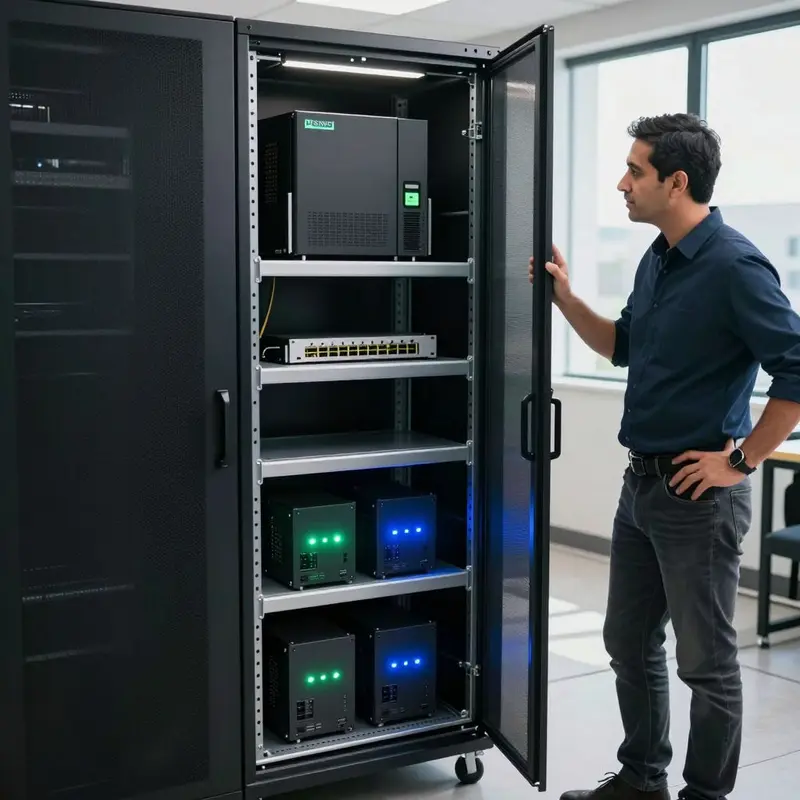
Seven million active pfSense Plus installs. That number tells you something important: the infrastructure community had strong opinions about routing and firewall control long before mesh networking became a practical choice for self-hosters. The question now isn’t whether your existing tools are capable. It’s whether they’re wired to work with your Tailscale private mesh setup, or quietly against it.
The good news is that several tools already in your stack were built with this kind of integration in mind. pfSense Plus supports Tailscale ACL integration natively, so your access control policies don’t need to live in two separate places. You define the rules once, and your firewall enforces them without you maintaining a parallel set of exceptions. That alignment between network-layer control and mesh-layer identity is what makes the ecosystem feel coherent, not bolted together.
Kubernetes fits into this picture differently. Where pfSense handles the perimeter, Kubernetes handles scale. When your mesh grows past a handful of nodes into something with real workload density, Kubernetes is what keeps things orchestrated without you manually tracking which service lives where. The two tools operate at different layers, and that separation is useful: you don’t have to choose one philosophy over another.
The CNCF community has been pushing best practices for exactly these kinds of multi-tool environments, and the consistent signal is that isolation of concerns matters. Each tool should own its domain clearly, so when something breaks, you know exactly where to look.
Practically, your tooling decisions compound. If your firewall, orchestration layer, and access policies agree on where identity lives and who gets to do what, troubleshooting becomes a fast trace instead of a scavenger hunt. That kind of fit is what turns a Tailscale private mesh setup into the stable foundation that makes every subsequent decision easier to scope, easier to test, and easier to hand off.
Strategic recommendations: Where a Tailscale mesh actually pays off

Not every workload deserves the same answer, and that’s exactly where most people waste time on networking decisions. Knowing when a Tailscale private mesh setup is the right call means you stop forcing it into situations where it adds friction, and start deploying it where it removes a whole category of problems.
Four scenarios consistently reward the approach:
- Remote and multi-site connectivity: if you’re running services across two or more locations without wanting to pay for or maintain a centralized VPN server, Tailscale handles the routing directly between nodes, and it supports SSO and MFA natively so access control doesn’t become a separate project.
- Zero Trust access to cloud resources: when you need to grant scoped, temporary access to a service running on a cloud provider, Tailscale’s overlay lets you issue just-in-time permissions without opening inbound firewall rules or managing static credentials.
- Edge and IoT environments: devices at the edge often sit behind restrictive or unpredictable network conditions, and Tailscale’s peer-to-peer architecture keeps those connections reliable even when the underlying network isn’t cooperating.
- Replacing legacy VPN infrastructure: roughly 27% of companies had already shifted to peer-to-peer mesh VPNs like Tailscale by 2025, most of them moving away from appliances that required dedicated hardware and centralized chokepoints.
What ties these use cases together isn’t the tech. It’s the assumption underneath it: identity, not network location, should determine access.
Use that as your filter: where does your current setup spend the most time proving someone “belongs” on the network? If you’ve got people or services reaching across trust boundaries and you want access that’s auditable, revocable, and low-maintenance, the mesh approach fits. If you’re running a single private server with one user and no plans to expand, the overhead isn’t worth it. Pick the use case that’s costing you the most time today, get that connection clean, and let the rest of the network follow.
Final thoughts
The real shift isn’t that mesh is faster or easier, although it often is. It’s that your network stops being a place you log into and becomes a set of relationships you can change on purpose. When that clicks, hosting looks less like a commitment to one box and more like permission to move workloads without rebuilding trust every time.
Think in terms of identity over location, then treat everything as a node you can add, remove, or quarantine without drama. That mindset makes your tools feel like a system instead of a pile. A Tailscale private mesh setup isn’t just a connectivity trick. It’s the point where your self-hosted stack starts acting like it was designed, not accumulated.
Further reading


Leave a comment