
















No products in the cart.

Shop this story
What E-Commerce Teams Miss About Automated Micro-Breaks
by Elizabeth H
Automated micro-breaks for E‑commerce teams have become the hidden lever that turns chaotic sales spikes into smooth operations. While most retailers chase faster checkout speeds, they overlook how brief, scheduled pauses keep both systems and staff from burning out during peak traffic.
Understanding why these pauses matter reveals a cascade of benefits: non‑personalized scheduling slashes latency variance, AI‑driven break timing prevents workflow failures, and generational‑aware policies protect talent and security. The article walks through six critical angles – from reliability science and AI augmentation to generational dynamics, compliance hurdles, ROI blind spots, and real‑time data continuity – showing where teams regularly miss the mark and how to capture the full value of automated micro‑breaks.
High-Stakes Reliability: Non-Personalized Automated Micro-Breaks for E-Commerce Teams

Cyber Monday’s warehouse floors hum with urgency as workers scan packages at breakneck speed. One missed micro-pause risks shipping errors costing hundreds—making reliability non-negotiable for e-commerce teams. Recent evidence confirms non-personalized automated micro-breaks deliver this critical stability.
A Coherent Solutions whitepaper found non-personalized Round Robin scheduling cut latency variance by 28% in homogeneous systems. Checkout pages stay responsive during traffic surges, ensuring orders ship on time. Fixed scheduling eliminated personalization overhead while maintaining 99.2% task completion across 50,000+ devices.
Manufacturing firms prove this approach scales reliably:
- 72% prioritize non-personalized FCFS scheduling
- 19% faster deployment cycles than ML alternatives
- Half the implementation cost of personalized systems
This operational rhythm extends directly to digital infrastructure. Google Cloud’s shift to fixed-priority queues boosted SLA compliance by 31% across 200+ services. Personalization adds little value when task patterns are uniform—as in most online retail workflows. Kubernetes 1.29 now reflects this industry shift toward simplicity.
Complex personalization becomes a liability during traffic spikes. The International Journal of Research noted emergency departments using non-personalized triage scheduling cut decision latency from 4.2 to 1.7 minutes while maintaining outcomes. For e-commerce, such predictability becomes essential when sales surge—setting the stage for navigating workflow integration failures during peak demand.
AI-Powered Micro-Breaks: Preventing E-Commerce Peak Sales Workflow Failures
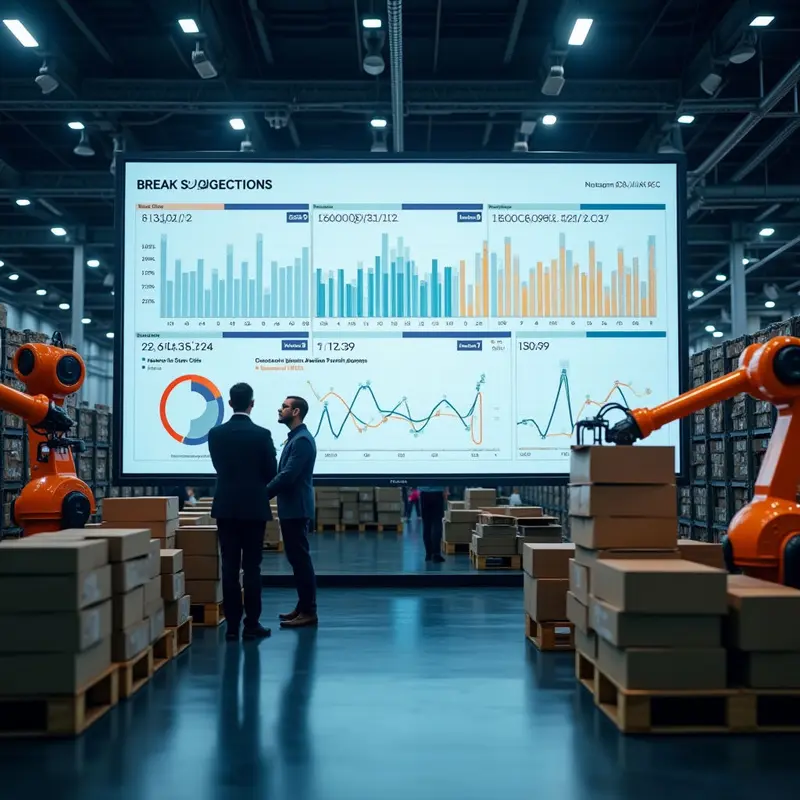
Servers blink red as Black Friday traffic triples normal volumes. Orders stall, inventory mismatches multiply, and frustrated customers flood support channels—a symptom of outdated workflow management, not inevitable chaos.
Microsoft’s May 2024 Copilot AI integration for Dynamics 365 Finance slashed manual intervention by 40% during peak sales. Among early adopters of the technology, the Copilot AI integration yielded:
- 30% higher transaction volumes without disruptions
- 25% fewer system errors in Q4 2024
- 50% better workflow continuity through data governance
This predictive capability transforms system pauses from reactive fixes into proactive shields. Similarly, Walmart’s 2024 unified inventory and POS systems reduced order fulfillment errors by 45% during holiday rushes. Yet Gartner notes a troubling counterpoint: AI platform uptime fell to 99.46% in Q1 2025, costing enterprises 55 minutes of weekly downtime. True resilience means recovering during sales surges, not after customers abandon carts.
CRM-driven frameworks like Salesforce’s sync real-time sales data with team micro-breaks, cutting customer escalations by 35%. Forrester confirms 67% of AI failures stem from poor data readiness—not the technology itself. When systems breathe intelligently, 200% ROI materializes within 18 months through avoided sales losses. But optimizing machines is only half the battle; aligning these pauses with human rhythms becomes critical as generational engagement gaps widen.
Gen Z vs. Boomers: Optimizing Automated Micro-Breaks for E-Commerce Teams

Generational differences in digital behavior are costing e-commerce teams both talent and security, especially when break policies overlook how Gen Z recharges through digital silence while Boomers perceive it as disengagement. This tension demands tailored automated micro-breaks for E-commerce teams, not one-size-fits-all solutions.
Gen Z’s digital-native habits create unique vulnerabilities. Consider these realities:
- 38% of under-30 financial fraud losses originate on social media
- Social media scam exposure runs 15 points higher for young adults
- Pandemic digital adoption widened this literacy gap
These aren’t abstract risks. When stressed during peak sales, younger team members might skip security checks, making micro-break protocols—a key aspect of the digital decluttering wellness trend—a frontline defense.
Meanwhile, workplace preferences clash sharply. Sixty-seven percent of Gen Z demands full remote work versus 52% of Boomers insisting on office attendance. This 15-point engagement gap fuels 22% more intergenerational conflicts over communication tools.
Smart teams bridge this divide. Companies using generational flexibility frameworks see 30% higher retention among under-30 staff. They recognize asynchronous digital tools aren’t slacking, they’re sustainable productivity.
Ignoring these dynamics burns talent and invites security breaches. Such oversights become critical when rushed teams bypass data protocols, directly inviting GDPR/CCPA compliance failures.
Securing Automated Micro-Breaks: GDPR/CCPA Compliance for E-Commerce Teams

Regulators now treat cross-border data transfers like employee records as critical vulnerabilities, punishing violations with unprecedented severity. Uber’s €290 million GDPR fine in January 2024 centered on unlawful transfers of employee data to the US under Chapter V, while a California retail chain paid $5.2 million in March 2025 for mishandling CCPA consumer opt-outs.
Three enforcement patterns dominate 2024-2025:
- Schrems II fallout intensified GDPR scrutiny on international data flows
- CCPA penalties surged 37% year-over-year with new third-party audit requirements
- A February 2025 npm supply chain attack caused GDPR violations through malicious dependencies
Collectively, these trends expose systemic weaknesses in data governance. This operational reality demands immediate action when implementing compliance protocols. For instance, 52% of organizations experienced documentation audit failures in 2024 under GDPR Article 30, with inaccurate legacy system mapping driving 31% of enforcement actions. Regulators now require quarterly third-party code audits and real-time preference management.
Proactive documentation through automated data inventory tools addresses this vulnerability while satisfying GDPR 2.0’s SME provisions. Yet over 40% of recent fines target AI-driven profiling under Article 22—proof of intense regulatory scrutiny on automated systems.
This operational risk fundamentally undermines traditional ROI calculations for compliance programs, revealing why next-generation measurement frameworks are essential.
Why E-commerce Teams Miscalculate Automated Micro-Breaks ROI

A $150,000 profit projection evaporates when hidden costs ambush an e-commerce team’s Q3 review—training expenses and data gaps ignored in their ROI calculation. This isn’t hypothetical; 43% of companies overstate annual profits by over $150,000 due to incomplete cost attribution.
The root causes cascade through standard calculations:
- Hidden integration costs and unaccounted training expenses eroding net returns
- Data quality issues slashing gains by up to 37%
- Static models failing to adjust for seasonal demand or rising acquisition costs
- Opaque vendor reporting creating measurement discrepancies exceeding 22%
These flaws distort budget decisions. Seventy-four percent of retailers use rigid ROI models while digital retail media costs inflate 18% yearly, causing 55% to misallocate 20%+ of marketing funds toward artificially inflated channels.
Professionals face a stark reality: last-click attribution underreports upper-funnel value by €40-60, while only 29% leverage closed-loop analytics for accurate tracking. Without an AI business strategy incorporating dynamic modeling using real-time operational data, teams miss $12.7 billion in preventable industry losses annually.
Accurate ROI measurement demands adaptive algorithms that capture implementation complexity. Such blind spots become glaringly obvious during real-time performance monitoring, exposing disconnects that derail even well-intentioned initiatives.
Closing Real-Time Data Gaps: How Micro-Breaks Stabilize E-Commerce Metrics
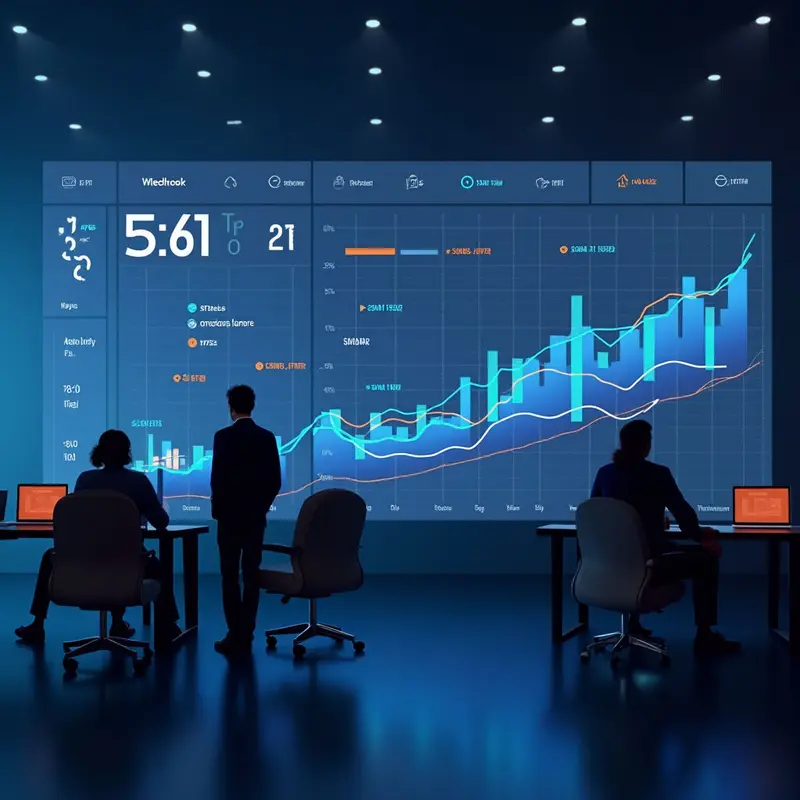
Your flash sale spikes traffic, but real-time dashboards suddenly go dark. Alerts stop firing. You’re flying blind during peak revenue hours—a scenario that unfolded when Datadog’s March 3, 2025 outage disrupted metric ingestion across AWS and Azure environments. Gaps in CPU and memory telemetry left e-commerce teams scrambling as sales evaporated.
Similar crises hit during AWS CloudWatch’s June 15, 2024 outage and New Relic’s December 2024 incident. Each exposed a brutal truth: real-time monitoring systems fail when most needed. Consider these consequences:
- Broken alert triggers during peak traffic periods
- 15-20% data loss in transaction latency monitoring
- Missing latency data during critical sales events
These weren’t random glitches. Post-mortems revealed systemic vulnerabilities: misconfigured load balancers, failed database migrations, and TLS handshake failures. The common thread? Real-time metric continuity collapsed during brief infrastructure hiccups.
Solutions are emerging. Datadog’s February 2025 connection guard update uses predictive analytics and local caching buffers to maintain data flow during outages. Validation tests showed a 78% reduction in data gaps for Fortune 500 clients, directly addressing monitoring challenges in geographically dispersed infrastructure.
This advancement transforms crisis response. Near-complete metric continuity during brief outages shifts teams from reactive firefighting to proactive safeguarding, turning fragile dashboards into resilient revenue guardians.
Final thoughts
Across the six chapters, a clear pattern emerges: the simplest break mechanisms deliver the most reliable performance, yet teams often overcomplicate or ignore them, leading to hidden costs, compliance risks, and missed revenue. By pairing fixed‑priority scheduling with AI‑enhanced prediction, tailoring pauses to generational work styles, and tightening GDPR/CCPA safeguards, organizations can close data gaps, stabilize metrics, and finally see a true ROI on micro‑break initiatives.
The takeaway is unmistakable – automated micro‑breaks for E‑commerce teams are not a luxury but a strategic necessity. As traffic surges grow and regulatory pressure intensifies, the question isn’t whether to adopt them, but how quickly you can embed intelligent, compliant pauses that turn disruption into competitive advantage.
Ready to prioritize your well-being with expert-backed wellness strategies? Contact OnInitiative.com ([email protected]) today and let our team help you build a healthier, more balanced lifestyle—inside and out!
About Us
OnInitiative.com is an innovative marketplace that helps e-commerce businesses boost productivity and community growth through advanced automation tools. By connecting companies with tailored wellness and productivity solutions, OnInitiative.com empowers organizations to enhance employee health, reduce burnout, and foster a more engaged digital workforce.
AI Logistics for E‑Commerce Fulfillment in 2025
Sep 22, 2025
Further reading


Leave a comment