
















No products in the cart.

Shop this story
7 Ways to Speed Up E-Commerce Fulfillment with Robotics
by Joseph L
What if your warehouse could slash shipping delays while cutting costs—without hiring a single extra staffer? For entrepreneurs drowning in returns from picking errors and peak-season bottlenecks, that’s no longer a pipe dream. Real-world pilots prove AI-driven robotics are transforming fulfillment from a profit drain into a competitive weapon, where every misplaced item once eroded margins by up to 30%. Today, faster e-commerce fulfillment with robotics isn’t just possible—it’s delivering measurable ROI right now.
Forget sci-fi fantasies; we’re talking surgical precision in action. From humanoid robots navigating stair-filled backrooms to sensor-packed cobots handling 50% heavier items, these technologies tackle your most painful operational gaps. As Walmart and Target leverage Symbotic’s fleets for real-time inventory accuracy, and Amazon deploys Digit for tote recycling, the blueprint is clear: seamless human-robot collaboration unlocks throughput highways where bottlenecks once festered. Let’s explore how seven game-changing robotics strategies turn warehouse chaos into your next growth engine.
Accelerate Warehouse Navigation with AI-Powered Mobile Robots

Picture your warehouse as a living organism where every movement matters. That’s the reality when AI-powered mobile robots navigate aisles with human-like spatial awareness, transforming static storage into dynamic fulfillment engines. Take DHL Supply Chain’s pilot with Robust.AI’s Carter robot: it learns real-time workflows to slash idle time, directly boosting productivity per square foot.
This isn’t science fiction; it’s ROI in motion.
RightHand Robotics’ RightPick 4 system, launched in early 2024, demonstrates how tangible gains emerge:
- Advanced AI algorithms minimize human intervention in picking
- Sensor upgrades handle heavier items with precision
- Autonomous operation reduces costly errors
- Accelerated order cycles meet peak-season demands
These features collectively deliver faster e-commerce fulfillment with robotics by turning bottlenecks into throughput highways. Meanwhile, Symbotic’s fleet of coordinated robots powers Walmart and Target distribution centers, moving products with surgical efficiency. Their proprietary AI slashes labor needs while lifting accuracy, critical when every misplaced item erodes margins. Even humanoid robots like Agility Robotics’ Digit tackle stair navigation and unloading in tight spaces, addressing labor shortages in physically grueling tasks.
As mobile robots master the warehouse floor, they free human teams for higher-value collaboration, seamlessly transitioning into the strategic implementation of cobots as part of an effective AI business strategy for optimized human-robot workflows.
Cobots: Optimizing Human-Robot Collaboration for Faster Fulfillment
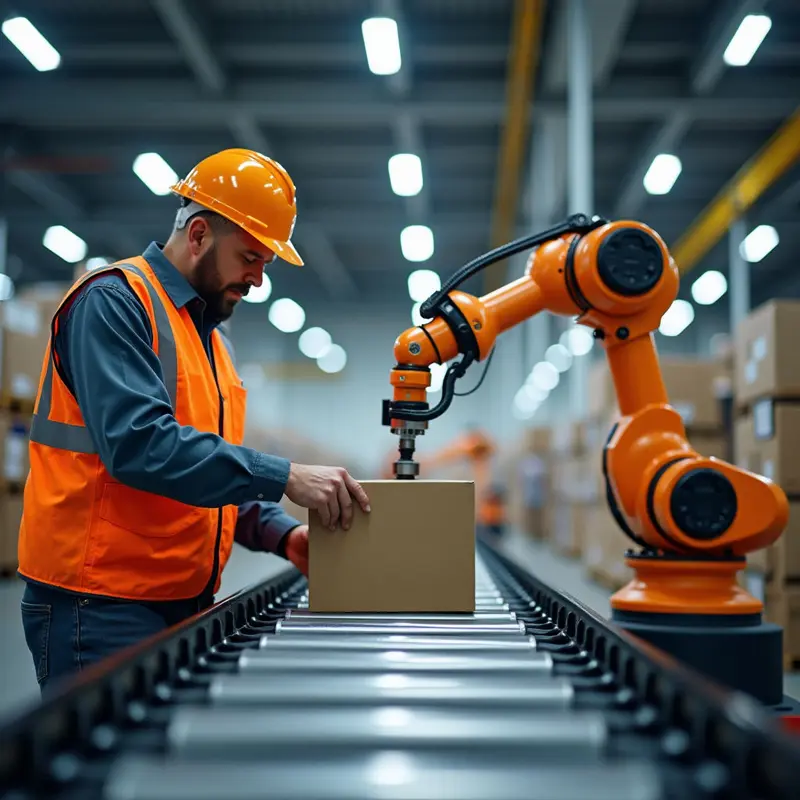
Warehouse workers finally step away from the relentless cycle of tote transport. Collaborative robots (cobots) make this shift tangible—not as replacements, but as precision partners accelerating your entire operation.
DHL Supply Chain’s pilot with Robust.AI’s Carter robot demonstrates this power. Carter uses real-time AI learning to optimize materials handling, boosting productivity while simultaneously reducing costly shipping errors. Beyond parcel handling, this partnership extends to Amazon’s ongoing test of Agility Robotics’ humanoid Digit, which autonomously moves empty totes across Seattle floors. Boston Dynamics’ AgiBot X2-N tackles mixed terrain with its hybrid wheel-leg design, proving enhanced reliability and adaptability in live logistics.
Each example underscores a critical truth: freeing human workers from predictable, physical tasks lets them focus on complex problem-solving and customer service. This human-robot collaboration directly enables faster e-commerce fulfillment with robotics, turning theoretical speed into daily reality.
The result? More agile, error-resistant fulfillment without major infrastructure overhauls—exactly what Gartner recognized in Locus Robotics’ flexible e-commerce fulfillment.
With collective movement now mastered, the industry’s gaze shifts toward systems that manipulate individual items with surgical accuracy.
AI-Powered Piece Picking: Boost Speed and Accuracy
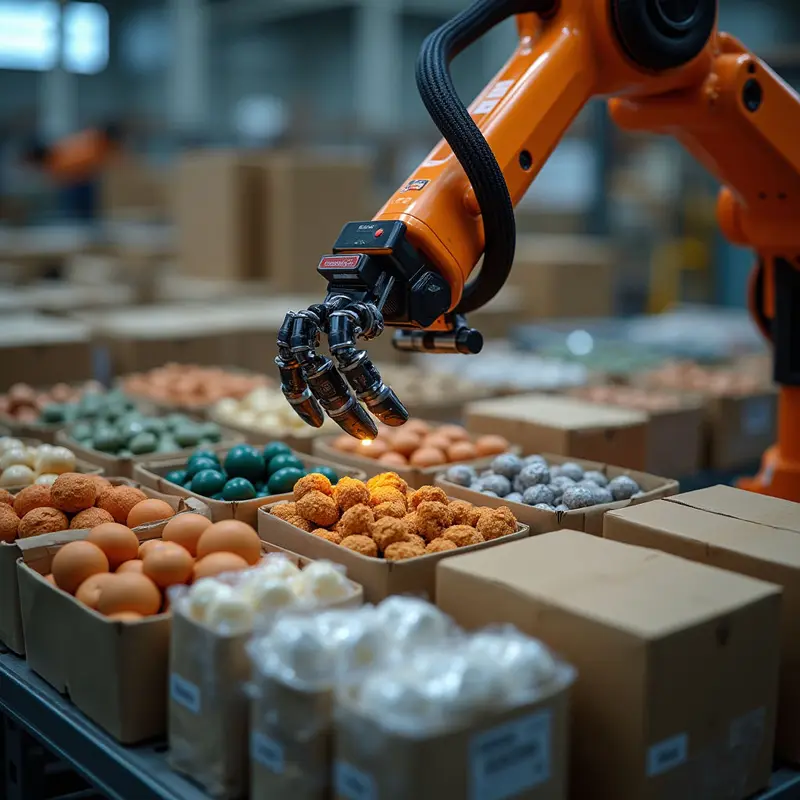
Picture a customer unwrapping yet another incorrect order—this time, a coffee maker instead of the promised blender. For business owners, repeated picking mistakes erode trust and eat into profits through costly returns. AI-powered piece picking now offers a decisive solution, turning warehouse inefficiencies into opportunities for precision. RightHand Robotics’ RightPick 4, launched in January 2024, demonstrates this transformation with upgraded AI algorithms and sensor suites capable of handling items:
- 25% larger than previous models
- 50% heavier than earlier versions
This leap enables fully automated fulfillment of bulky or dense products like fitness equipment and kitchen gadgets, cutting error rates while accelerating throughput. Crucially, these advancements complement other robotic innovations addressing different operational gaps. Amazon’s pilot of Agility Robotics’ Digit humanoid robot tackles tote transportation through complex environments; where wheeled robots fail at stairs, Digit’s bipedal design navigates ramps and uneven floors, directly countering labor shortages.
Together, these technologies respond to an urgent market shift: surging e-commerce demand requires hyper-efficient picking and packing. Leveraging modern AI tools for business, AI-driven systems don’t merely automate tasks—they redefine the boundaries of faster e-commerce fulfillment with robotics.
With labor constraints intensifying, proactive adoption is no longer optional.
The path forward now requires seamlessly integrating agile humanoids like Digit into existing robotic fleets—a strategic evolution toward the next-generation warehouse.
Seamless Humanoid Robot Deployment for Physically Demanding Fulfillment Tasks
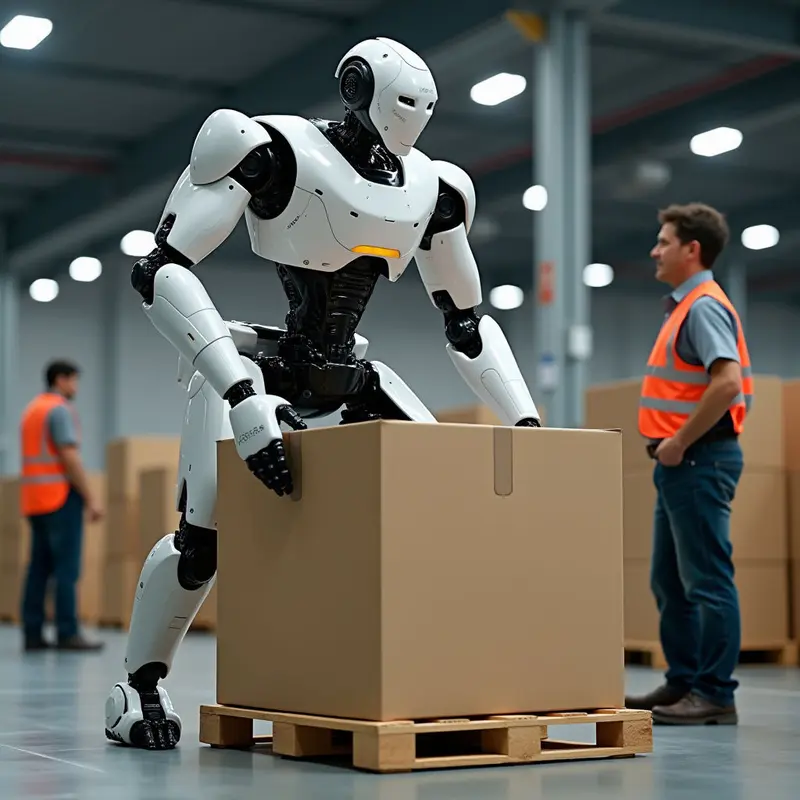
Since 2023, Amazon has deployed Agility Robotics’ Digit in warehouses to navigate tight aisles and ramps while moving heavy totes—tackling physically demanding tasks like tote recycling where wheeled robots stall. This isn’t sci-fi—it’s practical problem-solving for faster e-commerce fulfillment with robotics.
Digit’s bipedal design solves a critical pain point entrepreneurs face: infrastructure limitations. Unlike fixed-path automation, humanoids move fluidly through existing spaces without costly retrofits. GXO Logistics recognized this immediately, signing a multi-year deal with Agility Robotics in 2024 to deploy them in large fulfillment centers specifically to reduce labor costs and boost profitability.
While Digit demonstrates humanoid potential in US warehouses, similar innovations are accelerating globally. The UK’s HMND 01 Alpha—the first industrial humanoid robot developed in just seven months—proves its commercial viability in logistics hubs by handling:
- Picking and sorting inventory
- Machine feeding
- Kitting operations
- Loading and unloading tasks
These aren’t futuristic experiments; they’re commercial solutions addressing severe labor shortages right now. As the UK’s first industrial humanoid, HMND 01 works safely alongside staff, turning physically exhausting jobs into manageable workflows.
As humanoids handle heavy lifting, they free teams to focus on higher-value tasks. This seamless integration sets the stage for optimizing how sorted items flow through your system.
Accelerate Sortation with AI-Driven Robotics
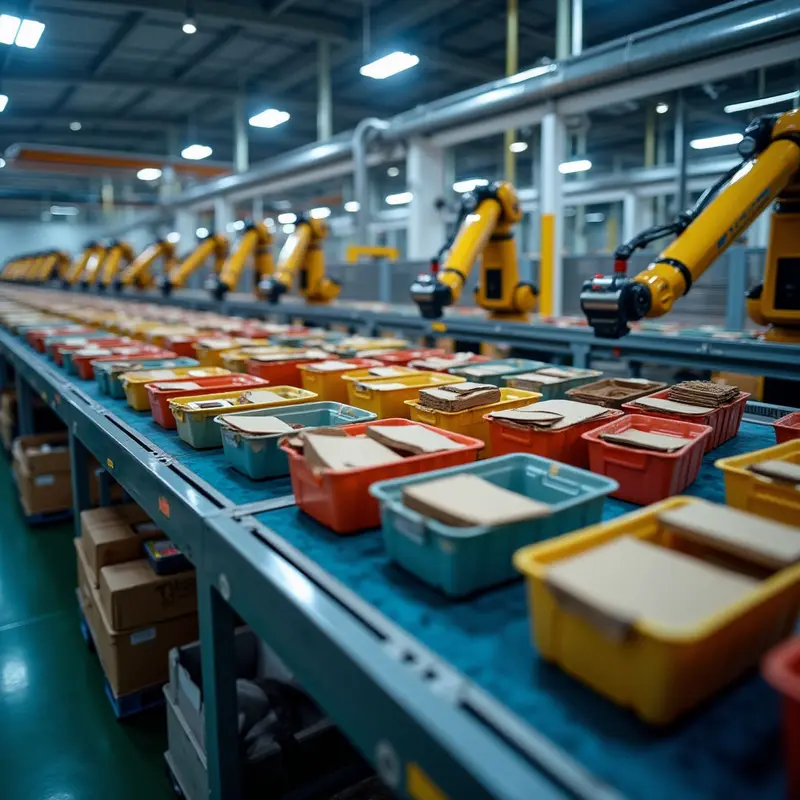
Imagine your warehouse during peak season: packages pile up, sorters scramble, and delays ripple through your entire operation. This bottleneck vanishes when AI-driven robotics take over sortation. DHL Supply Chain’s pilot with Robust.AI’s “Carter” robot demonstrates the shift—its real-time learning optimizes materials handling while reducing errors. Similarly, RightHand Robotics’ RightPick 4 system (launched early 2024) autonomously processes heavier items using advanced sensors, cutting human intervention. FedEx’s investment in Nimble’s robotic arms boosted picks per hour while lowering labor costs.
These aren’t isolated experiments. Amazon Logistics expanded AI-powered sortation in 2025, directly improving package flow. Such deployments consistently increase warehouse capacity by 30-50%. Real-time learning transforms throughput without overhauling infrastructure.
The impact? Accelerated order processing through robotic systems scales operations during demand spikes while protecting margins. As throughput surges, the next frontier emerges through open source robotics, enabling seamless tracking of every item’s journey. Seamless inventory visibility becomes the critical foundation for these high-speed systems.
Automate Real-Time Inventory Management with Robotic Sensors
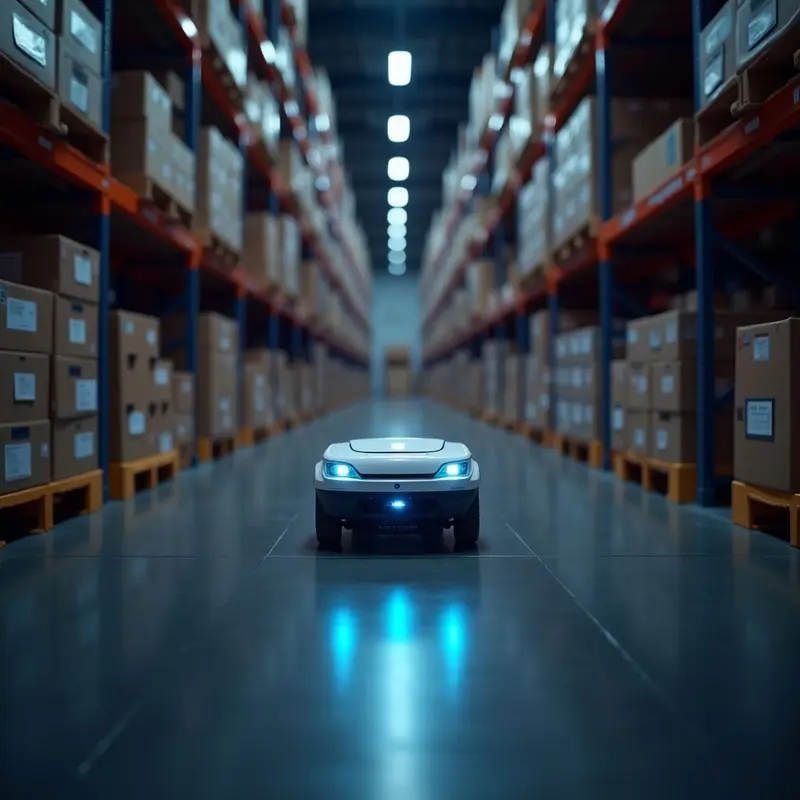
Symbotic’s autonomous mobile robots and AI orchestration have eliminated frantic backroom inventory searches for Walmart and Target, transforming distribution centers with real-time visibility, reduced errors, and higher throughput via automated storage and vision systems.
This sensor-driven methodology is gaining traction across the sector. RightHand Robotics’ RightPick 4 autonomously handles heavier items, minimizing human intervention in picking, while DHL’s Carter cobot optimizes workflows by learning from actual warehouse conditions.
These solutions share a critical advantage: sensor-driven accuracy. They leverage sales trend analysis to forecast demand and auto-reorder stock, cutting stockouts and overstocking risks by up to 30%. Real-time data means you’ll always know what’s in stock, where it is, and when it’s moving.
Real-time visibility is non-negotiable for faster e-commerce fulfillment with robotics. It turns inventory from a cost center into a strategic asset. As adoption grows, ensuring uninterrupted operation through predictive maintenance becomes essential.
AI-Powered Predictive Maintenance Cuts Robotic Downtime, Accelerating E-Commerce Fulfillment
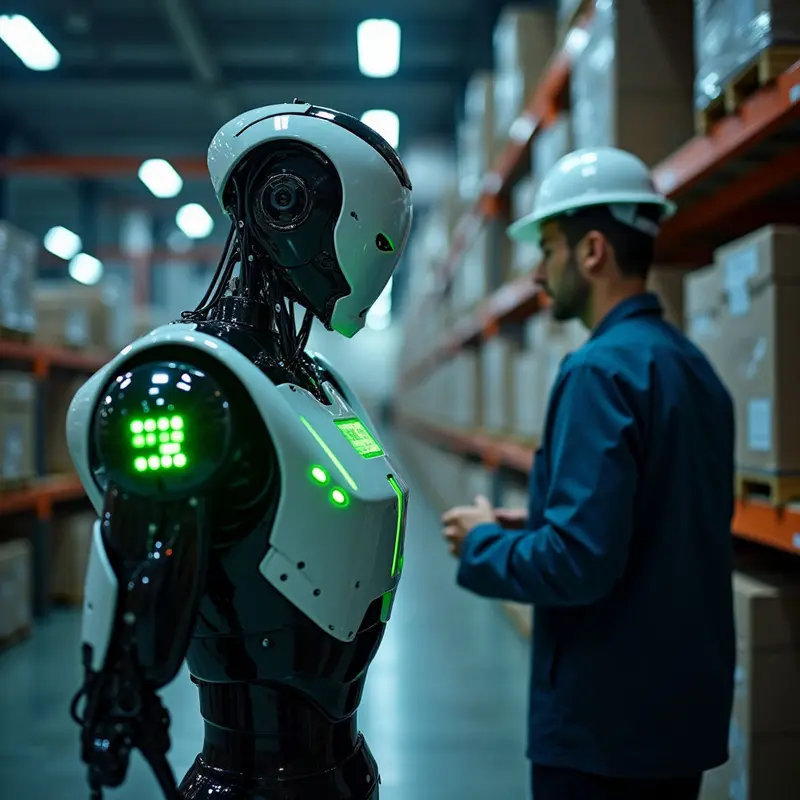
Imagine your warehouse robots suddenly halting during Cyber Monday, a nightmare avoided through smart foresight. When UPS launched its AI-driven predictive maintenance system for trucks in August 2025, real-time vehicle monitoring slashed unexpected downtime, directly cutting operational costs.
This same logic transforms robotic fulfillment: Geek+’s November 2024 warehouse management upgrade handles over 5,000 robots while processing 10,000 tasks per second through:
- Enhanced CPU and memory efficiency
- Integrated AI optimization
- Proactive failure detection
These systems spot subtle anomalies before they escalate, scheduling maintenance during off-peak hours. The Material Handling Integration market now widely adopts such AI and IoT solutions, demonstrating how AI revolutionizing business turns reactive repairs into strategic planning.
Predictive maintenance isn’t just technical upkeep—it’s operational insurance.
For entrepreneurs, this means fewer bottlenecks during sales surges and consistent throughput. By anticipating robotic failures, you turn reliable robotic fulfillment into a standard practice, not a lucky break.
Final thoughts
The journey from chaotic backrooms to surgical fulfillment flows isn’t about isolated gadgets—it’s a symphony of interconnected solutions. Mobile robots slash idle time while cobots liberate human talent for complex problem-solving, and AI-powered sortation scales throughput by 50% during sales surges. When predictive maintenance anticipates robotic hiccups before Cyber Monday hits, and humanoid workers conquer terrain wheeled bots can’t, reliability becomes your default setting—not a gamble.
For entrepreneurs, the message is urgent: robotics isn’t a luxury upgrade but the bedrock of modern fulfillment. As labor shortages tighten and customer expectations soar, those who harness faster e-commerce fulfillment with robotics will own tomorrow’s market share. So ask yourself: when competitors’ orders ship in hours while yours take days, will you be leading the revolution—or scrambling to catch up?
Ready to elevate your business with data-driven strategies and expert insights? Contact OnInitiative.com ([email protected]) today and let our team help you grow smarter, faster, and more efficiently!
About Us
OnInitiative.com is an innovative marketplace that helps e-commerce businesses boost productivity and community growth through advanced automation tools.
Further reading


Leave a comment